

There’s a persistent assumption that “sale” and “quality” don’t belong in the same sentence when it comes to luxury goods. Yet when it comes to fine jewelry, that assumption falls apart quickly. Why sale jewelry retains quality isn’t a marketing claim — it’s rooted in the physical properties of precious metals, the durability of gemstones, and the manufacturing standards that define high-end makers. A Cartier bracelet on sale is still a Cartier bracelet. The discount changes the price. It does not change the platinum, the craftsmanship, or the resale trajectory.
Table of Contents
- The durable appeal of iconic branded jewelry
- How expert craftsmanship strengthens jewelry longevity
- Factors influencing resale value and documentation importance
- Choosing durable gemstones and settings for lasting quality
- Applying quality insights to make informed purchase decisions
- Why craftsmanship transparency and documentation trump flashy design
- Explore high-quality sale jewelry crafted for longevity at Trinity Carter
- Frequently asked questions
Key Takeaways
| Point | Details |
|---|---|
| Brand equity matters | Jewelry from renowned makers retains value better due to strong demand and trusted quality. |
| Craftsmanship ensures durability | Advanced manufacturing and quality controls create jewelry that withstands daily wear. |
| Documentation supports resale | Gemological reports and original receipts add credibility and increase selling prices. |
| Gemstone properties influence longevity | Choosing hard, tough, and stable stones with protective settings enhances lasting quality. |
| Purchase informed and maintain | Verifying maker, craftsmanship, and provenance helps you invest in enduring pieces. |
The durable appeal of iconic branded jewelry
Most luxury categories shed value the moment they leave the store. A designer handbag, a limited-edition watch collaboration, a seasonal silk scarf — they all carry the weight of trend cycles and material fragility. Jewelry is categorically different. The reason comes down to what the object actually is: a combination of rare earth materials and skilled labor, neither of which depreciates on a seasonal schedule.
Brand equity is the first pillar. When you purchase from a house with decades of design history, you’re buying into a demand ecosystem that doesn’t evaporate during economic uncertainty. Iconic jewelry collections have longer product life cycles and stronger resale value dynamics than other luxury accessories. That’s not sentiment — that’s secondary market data. Pieces from established houses consistently outperform fashion accessories at auction because the buyer pool remains deep regardless of economic conditions.
“Jewelry’s intrinsic value — the gold, the platinum, the exceptional stones — creates a price floor that other luxury goods simply don’t have. You can’t melt down a handbag.”
The material advantage is significant. Gold, platinum, and high-quality gemstones carry intrinsic value independent of any brand name. When you buy high-end jewelry in the UK from a reputable maker, you’re acquiring something with a measurable commodity floor. Even in a worst-case scenario where brand prestige evaporates entirely, the raw materials retain worth. That’s a safety net no leather good or silk garment can offer.
Key reasons branded jewelry sustains value better than other luxury goods:
- Brand recognition sustains buyer demand across economic cycles
- Material durability means the object itself doesn’t degrade the way fabric or leather does
- High-end makers have historically achieved mid- to high single-digit annual price increases on core collections
- Intrinsic material value in gold and gemstones creates a price floor independent of fashion trends
- Investor psychology treats fine jewelry as a tangible hard asset, similar to art or rare wine
Understanding these dynamics reframes how you think about adult jewelry quality. It’s not just about aesthetics. It’s about what the object is made of and who made it.
How expert craftsmanship strengthens jewelry longevity
Craftsmanship is where quality retention becomes concrete and measurable. The gap between a well-made piece and a poorly made one isn’t always visible to the naked eye at purchase — but it becomes very apparent after two years of regular wear.
Modern jewelry combines CAD design, laser welding, and hand finishing with rigorous multi-stage inspections to enhance durability and maintain resale value. This hybrid approach is important because it eliminates the inconsistency of purely handmade production while preserving the artisan detail that machines alone can’t replicate. You get the best of both: repeatability and refinement.
Here’s how the manufacturing process directly translates to long-term wearability:
- CAD-designed frameworks ensure structural proportions are precise before a single gram of metal is cast, reducing the likelihood of stress fractures at load-bearing points
- Laser welding creates joins that are molecularly stronger than traditional soldering, particularly at prong bases and clasp connections where failure is most common
- Multi-stage quality control catches micro-defects in stone settings and surface finishing before pieces reach the market, not after a customer returns them
- Reinforced stress points at hinges, clasps, and ring shanks mean the piece is engineered for the physical realities of daily wear
- Repair-friendly design allows skilled jewelers to service pieces without compromising structural integrity, extending the usable life of the jewelry significantly
What affects jewelry quality at the manufacturing level is often invisible to buyers focused on visual appeal. The thickness of a ring shank, the depth of a prong, the quality of a clasp mechanism — these details determine whether a piece lasts five years or fifty.
Pro Tip: When examining a piece before purchase, check the clasp mechanism and prong tips under magnification if possible. Rough prong tips scratch skin and snag fabric, which signals rushed finishing. Smooth, rounded prong tips are a reliable indicator of careful quality control throughout the manufacturing process.
Factors influencing resale value and documentation importance
Jewelry sale value retention isn’t automatic. It depends on a specific combination of factors that serious buyers need to understand before committing to a purchase. The retail price is almost irrelevant in the resale market. What matters is who made it, how rare it is, what condition it’s in, and whether you can prove all of the above.
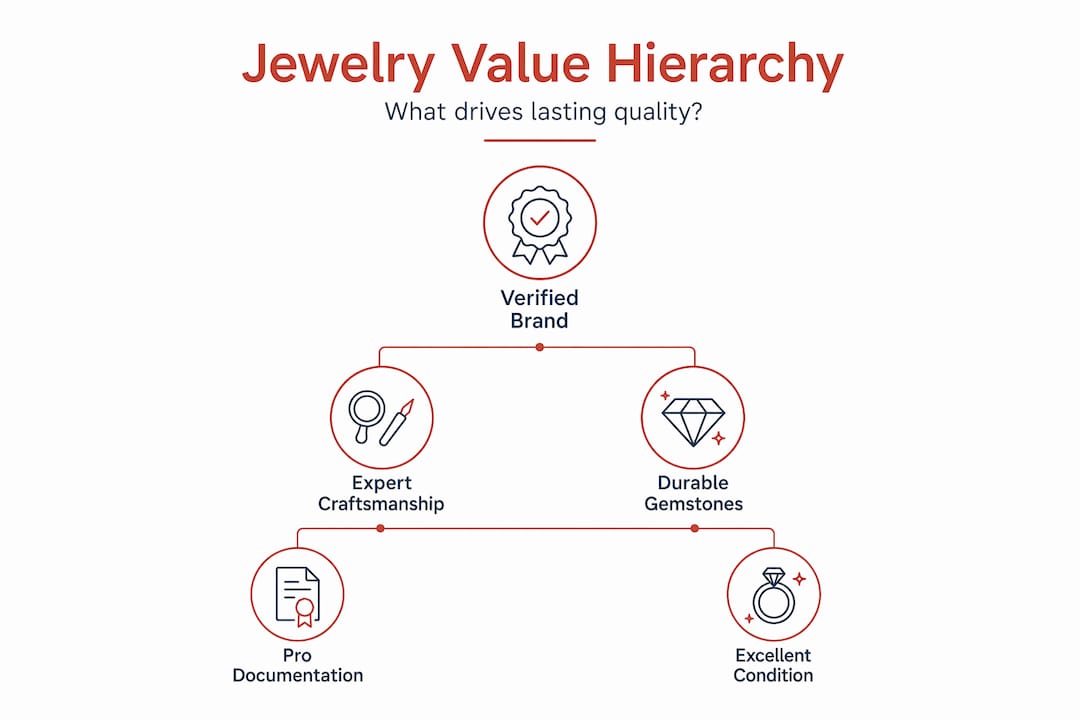
Auction and resale pricing depends on maker signature, rarity, condition, and verified craftsmanship rather than the original retail tag. This is why a signed Cartier estate piece in average condition often outperforms an unsigned piece of identical material quality in pristine condition. The signature is a quality guarantee that the secondary market trusts.
| Factor | Impact on resale value | Example |
|---|---|---|
| Maker signature | Very high | Cartier estates recover 60–70% of retail value |
| Gemological certification | High | GIA-certified diamonds command consistent premiums |
| Condition | High | Unpolished, unaltered pieces retain more collector value |
| Rarity | Medium to very high | Limited editions or discontinued designs appreciate faster |
| Original packaging and receipts | Medium | Adds buyer confidence and supports insurance valuation |
Verified lab reports from institutions like GIA or AGL add credibility to valuable stones and reduce buyer uncertainty in the secondary market. A gemological report is not just a piece of paper — it’s a standardized, internationally recognized verification of a stone’s authenticity, treatment history, and quality grade. Without it, buyers discount their offers to account for uncertainty.
Documentation essentials for any serious jewelry purchase:
- Gemological certificate from GIA, AGL, or equivalent recognized institution
- Original receipt showing purchase price, date, and seller details
- Maker’s certificate of authenticity where applicable
- Professional appraisal for insurance purposes, updated every three to five years
- Original box and packaging, which add resale credibility and protect the piece during storage
Pro Tip: Request a professional appraisal within 90 days of any significant jewelry purchase. The appraisal establishes a documented baseline value for insurance purposes and creates a paper trail that strengthens your position in any future resale negotiation.
Choosing durable gemstones and settings for lasting quality
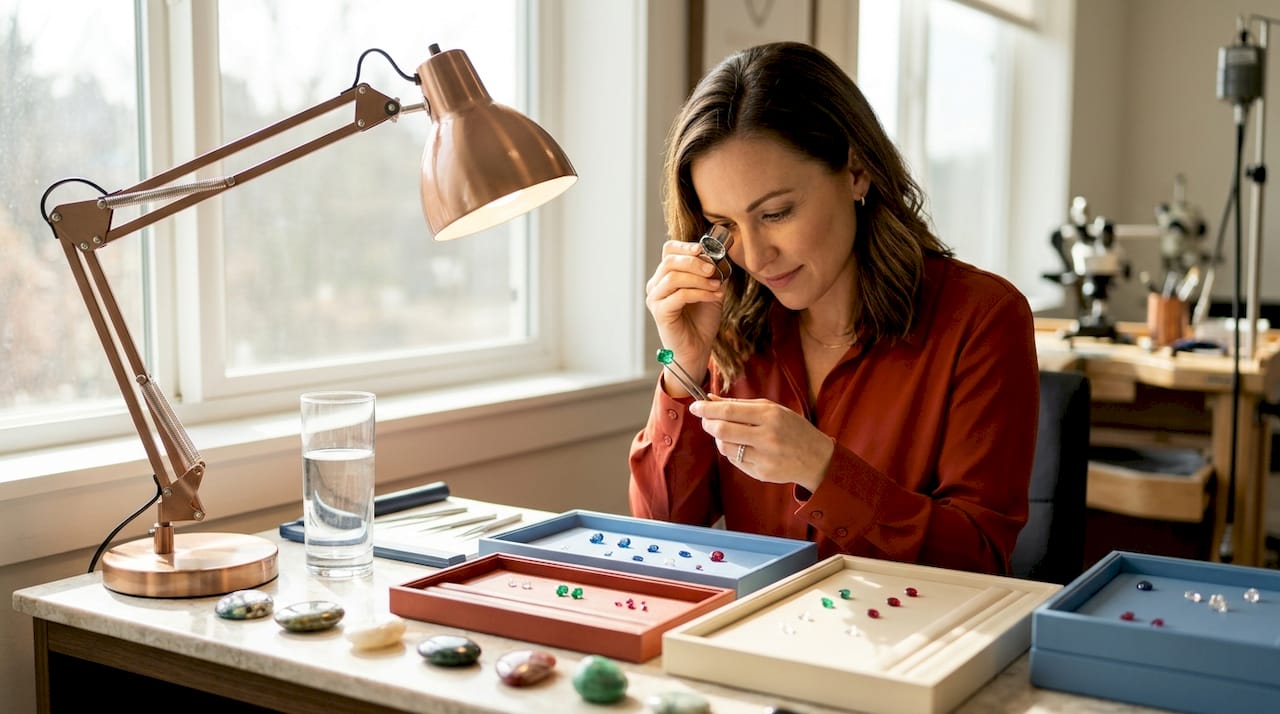
The benefits of quality jewelry extend to the gemstone level. Not all stones are created equal in terms of physical durability, and the setting style you choose either protects or exposes the stone to damage. Getting this combination right is the difference between an heirloom and a repair bill.
Hardness, toughness, and stability are distinct gemological properties crucial to gemstone durability and heirloom potential. Hardness (resistance to scratching), toughness (resistance to breaking), and stability (resistance to heat, light, and chemicals) work together. A stone can be extremely hard but brittle — tanzanite scores well on hardness but has poor toughness, making it unsuitable for daily-wear rings.
| Gemstone | Hardness (Mohs) | Toughness | Best setting style |
|---|---|---|---|
| Diamond | 10 | Good | Prong, bezel, pavé |
| Ruby | 9 | Excellent | Prong, bezel |
| Sapphire | 9 | Excellent | Prong, bezel |
| Emerald | 7.5–8 | Poor | Bezel, protective settings |
| Opal | 5.5–6.5 | Very poor | Bezel only, occasional wear |
Setting styles matter as much as stone selection. Bezel settings, where metal surrounds the entire stone perimeter, offer the most physical protection and are ideal for active wearers. Prong settings maximize light exposure and visual impact but leave the stone more vulnerable to impact. Pavé settings, where small stones are set close together in shallow holes, require skilled maintenance to prevent stone loss over time.
For metal choice, platinum is denser and more wear-resistant than gold alloys. It doesn’t thin the way yellow gold does with repeated polishing, making it the stronger long-term choice for rings and bracelets that take daily impact. High-karat gold (18ct and above) is softer but carries higher intrinsic value and is preferred for pieces that see less mechanical stress.
Applying quality insights to make informed purchase decisions
Knowing the theory is useful. Applying it at the point of purchase is where it actually protects your investment. When you’re evaluating exclusive jewelry shopping online or in person, these are the practical steps that separate an informed purchase from an expensive mistake.
Documentation supports higher prices and is critical in auction and resale markets, so verifying it before purchase is non-negotiable for serious buyers.
- Request the gemological certificate before committing to any stone above one carat — verify the issuing institution is recognized internationally, not a house-issued document
- Examine joinery and setting symmetry under magnification; uneven prong spacing or visible solder lines indicate rushed production
- Confirm maker authenticity by checking hallmarks against published records; UK hallmarks are legally required and traceable through the Assay Office
- Retain every document that comes with the piece: certificate, receipt, appraisal, and original packaging
- Match metal and stone to intended use — a platinum bezel-set sapphire ring for daily wear is a fundamentally different investment than a pavé diamond cocktail ring worn occasionally
Pro Tip: When buying from the best online jewelry stores in the UK, look for retailers who publish their hallmarking standards, offer independent gemological certificates, and provide clear provenance information. Transparency at the point of sale is the strongest signal of quality you can find without handling the piece yourself.
Why craftsmanship transparency and documentation trump flashy design
Here’s the uncomfortable truth most buyers don’t want to hear: the visual appeal of a piece is the least reliable indicator of its long-term value. A beautifully photographed ring with a dramatic stone can be poorly set, inadequately documented, and structurally fragile. It will look extraordinary in the display case and disappoint you within a decade.
The buyers who consistently make smart jewelry investments focus on two things that are neither glamorous nor photogenic: manufacturing precision and provenance documentation. These are the unseen pillars of durability. You can’t Instagram a laser-welded join or a GIA certificate, but they are what determine whether your piece appreciates or deteriorates.
We’ve seen this pattern repeatedly in the resale market. Pieces with complete documentation and verifiable maker signatures sell faster and closer to asking price than visually superior pieces with incomplete provenance. The secondary market is ruthlessly rational. Buyers there are not moved by beauty alone — they want certainty, and documentation is the only way to deliver it.
The other overlooked factor is manufacturing transparency. Makers who openly share their production methods, quality control standards, and material sourcing are telling you something important: they have nothing to hide. Opacity about production is almost always a signal of corners being cut somewhere in the process. When a retailer can tell you exactly how a piece was made and what inspections it passed, that transparency is itself a quality indicator.
Does jewelry quality matter for investment purposes? Absolutely — but quality is defined by what you can verify, not what you can see.
Explore high-quality sale jewelry crafted for longevity at Trinity Carter
After understanding how quality underpins jewelry value retention, the next step is finding pieces that actually meet these standards.
At Trinity Carter, every piece in our collection is designed with longevity in mind — from high-karat gold construction and expert finishing to complete documentation that supports both insurance and future resale. Our Gold Essential V Necklace Pendant is a strong example of how timeless design and durable materials work together in a piece built for daily wear and lasting value. Browse our full necklace collection for pieces that combine classic elegance with the craftsmanship standards this article describes, or explore our ring collection for investment-worthy designs in platinum and high-karat gold. Luxury jewelry delivery across the UK is available on all orders, with care instructions and repair support included.
Frequently asked questions
Why does branded jewelry retain value better than non-branded pieces?
Branded jewelry combines strong market demand, superior craftsmanship, and brand equity that sustain resale prices better than unbranded pieces. Branded jewelry has historically experienced steady price increases and resale value due to brand recognition and durability.
How important is documentation for resale value?
Documentation such as gemological reports and original receipts significantly enhances resale value by verifying authenticity and condition. Documentation supports higher prices and is critical in auction and resale markets.
What gemstone properties matter most for lasting quality?
Hardness, toughness, and stability are the key properties that affect a gemstone’s durability and suitability for everyday wear. Evaluating these three properties helps determine if a gemstone will endure daily wear and last generations.
Can fine jewelry guarantee investment returns?
Fine jewelry often retains or grows in value over time, but it does not guarantee returns and should be viewed as a tangible asset with different risks than stocks or real estate. Jewelry is not equivalent to financial assets; liquidity, transaction costs, and returns vary widely depending on maker, condition, and market timing.
Recommended
- Gold Essential V Necklace Pendant – Trinity Carter
- Gold Essential V Bracelet – Trinity Carter
- Gold Essential V Earring Studs – Trinity Carter
- 14K Gold Plated Essential Flowergram Necklace Pendant – Luxury Floral – Trinity Carter
