

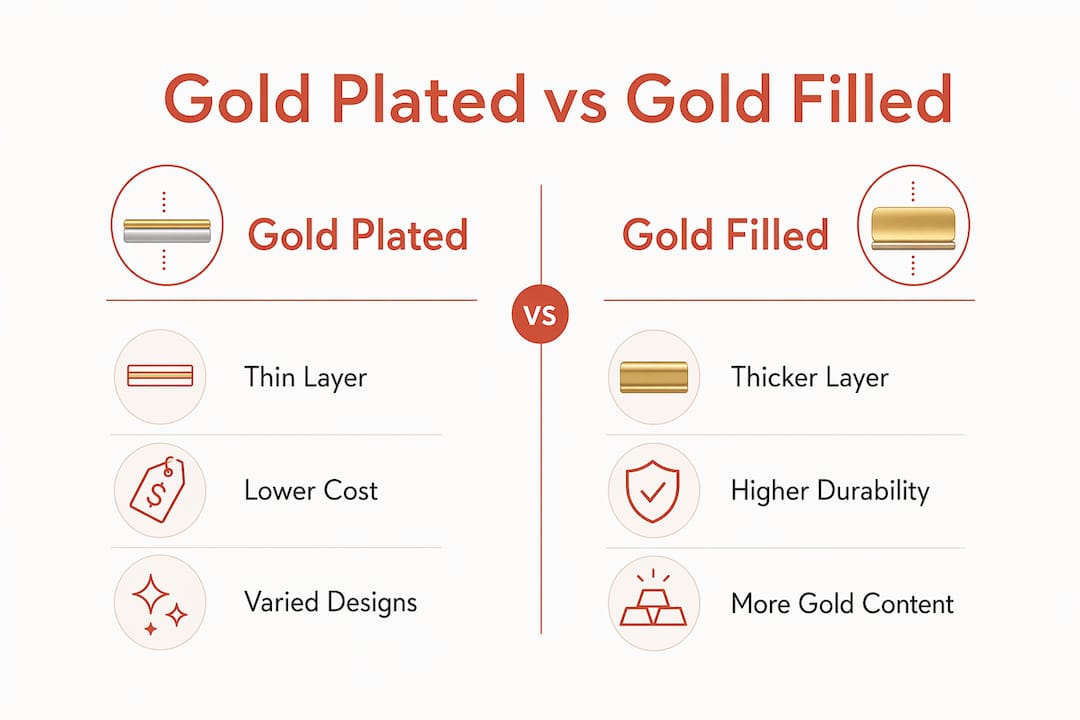
Gold filled generally wins for everyday wear, while gold plated typically wins on price and design variety. The difference comes down to how much gold is actually in the piece and how it’s bonded to the base metal.
| Feature | Gold Plated | Gold Filled | Vermeil |
|---|---|---|---|
| Gold content | Trace layer (up to 2.5 µm) | ≥5% of total weight (1/20) | ≥2.5 µm over sterling silver |
| Typical lifespan | Months to 2 years | 10+ years | 1–5 years |
| Best use | Trend pieces, occasional wear | Daily staples, keepsakes | Mid-range occasional wear |
Before you buy, check one thing: look for a hallmark. “1/20 14K GF” means gold filled. “GP,” “GEP,” or “HGE” means plated. No stamp at all is a red flag worth pausing on.
Table of Contents
- Gold plated vs gold filled: what each one actually is
- How long each finish actually lasts
- How they look and why prices differ
- Allergies, tarnish, and what happens when the gold wears off
- How to tell the difference before you buy
- Caring for plated and gold-filled pieces
- What micron numbers actually mean for shoppers
- Which finish should you actually choose?
- Key Takeaways
- A retailer’s honest take on the gold finish debate
- Trinitycarter’s gold-finish collections, built for real wear
Gold plated vs gold filled: what each one actually is
These three terms describe three different manufacturing processes, and the process is what drives every downstream difference in durability, price, and allergy risk.
Gold plated uses electroplating: an electric current deposits a thin gold layer onto a base metal, usually brass or copper. The FTC’s guidelines require that the gold alloy be at least 10k, but they set no single minimum thickness for standard “gold plated” pieces. That’s why the category is so wide.

Gold filled is a different process entirely. A solid sheet of karat gold is mechanically bonded to a base metal core using heat and pressure. By U.S. industry convention, the gold layer must equal at least 1/20 (5%) of the item’s total weight. The most common stamp you’ll see is “1/20 14K GF.”

Gold vermeil sits between the two. It’s electroplated like standard plated jewelry, but the base must be sterling silver and the gold layer must be at least 2.5 µm thick. That thicker deposit and higher-quality base make it a step above typical plated pieces.
Common stamps to know:
- 1/20 14K GF — gold filled, 14-karat gold jacket at 1/20 of total weight
- GP / GEP — gold plated / gold electroplated
- HGE — heavy gold electroplate (~2.5 µm)
- RGP — rolled gold plate (similar bonding to GF but less than the 5% threshold, so it cannot be labeled gold filled)
- 925 + vermeil — sterling silver base with vermeil plating
How long each finish actually lasts
Gold filled is generally more durable because the gold layer is bonded as a thick jacket rather than a thin surface film, so everyday wear affects it less quickly. Well-maintained pieces routinely last many years, with some vintage gold-filled items holding up for decades.
Gold plated is a spectrum, not a single category. Here’s how the bands break down:
- Under about a half micron (fast-fashion plating) fades quickly under daily wear, suited to very short-term use.
- Around half to one micron (standard plated) may last several months with careful use.
- Thicknesses up to about 2.5 microns (heavy electroplate / HGE) can last a year or two for low-friction pieces.
- Premium plated pieces with thicker layers and good base metals may perform comparably to entry-level gold filled for occasional wear, though not all plated jewelry is disposable.
Factors that shorten any finish’s life: chlorine (pools, hot tubs), sweat, perfume applied at contact points, abrasive polishes, and storing pieces loose where they scratch each other. A plated bangle worn daily through gym sessions will fade in weeks. The same piece worn to dinner twice a month could last two years.
Re-plating is an option for plated pieces. A local jeweler or jewelry repair service can re-plate a worn piece for a modest fee, effectively resetting the clock. Gold-filled pieces rarely need this treatment, but they can’t be re-plated in the same way because the gold is structural, not cosmetic.
How they look and why prices differ
At the moment of purchase, a well-made plated piece and a gold-filled piece look nearly identical. The difference shows up over time: plated finishes fade, dull, or develop patchy spots where the base metal peeks through. Gold filled holds its color and luster far longer.
Price drivers worth understanding:
- Gold content: Gold filled contains significantly more actual gold by weight, which raises material cost.
- Production method: Mechanical bonding is more labor-intensive than electroplating, adding to the price.
- Design complexity: Because gold filled cannot be cast, intricate shapes require plating. That’s not a flaw; it’s a manufacturing reality that keeps complex designs accessible.
- Brand markup: A high price doesn’t automatically mean more gold. Always ask for specs.
On resale and melt value: gold-filled pieces carry some recoverable gold content in bulk, though refiners typically require significant quantities. Plated items have essentially zero melt value. Neither is a financial investment, but gold filled at least has material substance behind the price tag.
Red flag: A piece marketed as “gold filled” at a suspiciously low price with no hallmark deserves skepticism. Legitimate gold-filled jewelry costs more to produce. If the price looks like plated pricing, it probably is.
Allergies, tarnish, and what happens when the gold wears off
This is where the choice gets personal. Gold itself is hypoallergenic. The problem is what’s underneath it.
Gold filled is generally the safer choice for sensitive skin. The thick gold jacket keeps the base metal away from your skin for years. Even with daily wear, the gold layer doesn’t thin fast enough to expose the base in any meaningful timeframe under normal conditions.
Plated jewelry carries more risk, specifically once the plating wears:
- Brass base: Contains zinc and copper; can cause greenish discoloration and mild irritation.
- Copper base: Similar to brass; common in fast-fashion pieces.
- Nickel alloys: The most problematic. Nickel is one of the most common contact allergens, and some plated pieces use nickel-containing alloys in the base. The EU has strict nickel limits; U.S. regulations are less prescriptive, so it’s worth asking explicitly.
Practical steps for sensitive skin:
- Choose gold filled or vermeil (sterling silver base) over standard plated.
- Ask sellers specifically: “What is the base metal?” and “Is it nickel-free?”
- Look for pieces with a protective clear coating, which can extend the barrier life on plated items.
- Vermeil over sterling silver is a solid middle-ground option if gold filled isn’t available in the design you want.
How to tell the difference before you buy
Most of the information you need is on the piece itself or in the product listing. Here’s a practical checklist:
- Check the hallmark first. Look for “1/20 14K GF” (gold filled), “GP” or “GEP” (plated), “HGE” (heavy electroplate), or a micron stamp like “2 µm Au.” Stamps like these are the quickest trust signal a seller can offer.
- Ask for the micron thickness on plated pieces. “Gold plated” alone tells you almost nothing. A seller who can’t give you a number is selling you a guess.
- Ask about the base metal. Especially for earrings and anything worn against sensitive skin.
- Check the karat of the gold layer. 14K is standard; 18K is richer in color but softer.
- Ask about re-plating policy. A seller confident in their product will tell you whether they offer re-plating or can refer you to a service.
- Watch for RGP. Rolled gold plate uses a similar bonding process to gold filled but doesn’t meet the 1/20 weight threshold. It’s not the same thing, even though the process sounds similar.
Pro Tip: For a high-end plated piece, ask the seller for documentation of the plating thickness. Reputable manufacturers can provide this. If they can’t, factor that uncertainty into your decision.
Caring for plated and gold-filled pieces
The single most effective thing you can do for any gold-finish piece is take it off before it gets wet. Chlorine, salt water, and even tap water accelerate wear on plated surfaces.
Daily care rules that apply to both:
- Remove before showering, swimming, or doing dishes.
- Apply perfume and lotion before putting jewelry on, not after.
- Store pieces separately in a soft pouch or lined box to prevent scratching.
- Wipe down with a soft, dry cloth after wearing.
Cleaning differences matter here. For plated pieces, use only a damp cloth with a tiny drop of mild soap, then dry immediately. Avoid abrasive polishing cloths entirely; they remove the gold layer faster than wear does. Gold-filled pieces are more forgiving and can handle gentle polishing, but the same mild-soap approach works well for both.
When re-plating makes sense: if a plated piece has sentimental value or a design you love, re-plating is worth considering. A professional jewelry repair shop can assess whether the piece’s base is in good enough condition to hold a new layer. For gold-filled items, resizing and soldering are possible but require a jeweler experienced with the material, since the bonded jacket can be disrupted by heat.
What micron numbers actually mean for shoppers
A micron is one-thousandth of a millimeter. To put that in perspective, a single sheet of paper is about 100 microns thick. The gold layer on a standard plated piece is a fraction of that.
| Finish type | Typical thickness | Practical wear expectation |
|---|---|---|
| Standard gold plated | — | Weeks to a few months (daily wear) |
| Heavy gold electroplate (HGE) | ~2.5 µm | Up to 1–2 years (low-friction pieces) |
| Gold vermeil | ≥2.5 µm over sterling silver | 1–3 years with care |
| Gold filled (GF) | Tens of microns (≥5% by weight) | 10–30 years |
The gap between standard plated and gold filled is not incremental. Gold-filled jackets are typically measured in tens of microns, making them many times thicker than even heavy electroplate. Because the gold is bonded as a structural jacket rather than a surface film, light polishing and normal friction don’t expose the base metal for years.
There is no single federal minimum micron standard for “gold plated” in U.S. commerce. That’s why “plated” is such a wide category and why demanding a specific number matters. HGE is the closest thing to a regulated upper tier for plated finishes, signaling a deposit around 2.5 µm. Anything below that is at the seller’s discretion.
For gold filled, the math is verifiable: a jeweler can weigh a piece and confirm whether the gold content meets the 1/20 threshold. That’s a level of accountability that standard plated jewelry simply doesn’t offer.
Which finish should you actually choose?
The right answer depends on what you’re buying it for.
- Daily-wear chain or bracelet: Choose gold filled. The lifespan difference is dramatic, and the higher upfront cost pays off over years of wear.
- Milestone gift (birthday, anniversary): Gold filled or solid gold. A piece meant to last deserves material that will.
- Seasonal statement piece or trend item: Gold plated makes sense here. You’re not buying it to wear for a decade; you’re buying it for a season. Spend less, wear it freely.
- Sensitive-skin earrings: Gold filled or vermeil. The sterling silver base in vermeil is a reliable fallback if gold filled isn’t available in the style you want.
- Complex cast design: Plated is often your only option, since gold filled can’t be cast into intricate shapes. Premium plated at 3–5 µm over a quality base is a reasonable choice for pieces you’ll wear occasionally.
- Budget is tight but you want longevity: Look for gold plated necklaces with explicit micron specs rather than guessing. A well-specified plated piece beats an unspecified one every time.
When to consider solid gold instead: if you’re buying a ring worn daily (especially on a dominant hand), an heirloom piece, or anything that will be resized repeatedly, solid gold is worth the investment. Neither plated nor filled handles repeated resizing as gracefully.
Key Takeaways
Gold filled outlasts gold plated by years for daily wear, but well-specified plated pieces remain the smarter buy for trend-driven or occasional-use jewelry.
| Point | Details |
|---|---|
| Gold content gap | Gold filled must be ≥5% gold by weight (1/20); standard plated layers start at very thin thicknesses. |
| Lifespan difference | Gold filled typically lasts many years; plated jewelry lasts from a few months up to a couple of years depending on thickness. |
| Hallmark check | Look for “1/20 14K GF” for gold filled; “GP,” “GEP,” or “HGE” for plated. No stamp is a red flag. |
| Allergy risk | Gold filled keeps base metal away from skin far longer; ask for nickel-free specs on any plated piece. |
| Trinitycarter | Trinitycarter’s gold-plated designs use quality construction suited to fashion and everyday elegance. |
A retailer’s honest take on the gold finish debate
The conversation around gold plated vs gold filled often gets framed as “real vs fake,” and that framing does shoppers a disservice. Gold filled is not solid gold. It’s a base metal with a thick gold jacket, and it’s priced accordingly. Gold plated is not a scam. It’s a legitimate manufacturing method that makes beautiful, well-designed jewelry accessible to people who aren’t spending hundreds of dollars on a single piece.
What actually matters is whether the piece is right for the job. A gold-filled chain worn daily for fifteen years is excellent value. A plated statement earring worn to six events a year is also excellent value. The mistake is buying plated jewelry expecting gold-filled longevity, or paying gold-filled prices for plated specs.
From a retailer’s perspective, the most useful thing a shopper can do is mix their wardrobe intentionally. Keep a few gold-filled or solid-gold staples for daily rotation. Use plated pieces for trend cycles and occasions. Don’t try to make every piece do every job.
Trinitycarter’s gold-finish collections, built for real wear
Trinitycarter designs gold-plated jewelry for women who want the look of luxury without the fine-jewelry price tag. The pieces are inspired by Cartier, Tiffany & Co, and David Yurman, and they’re built for the way most people actually wear jewelry: daily, casually, and with intention.
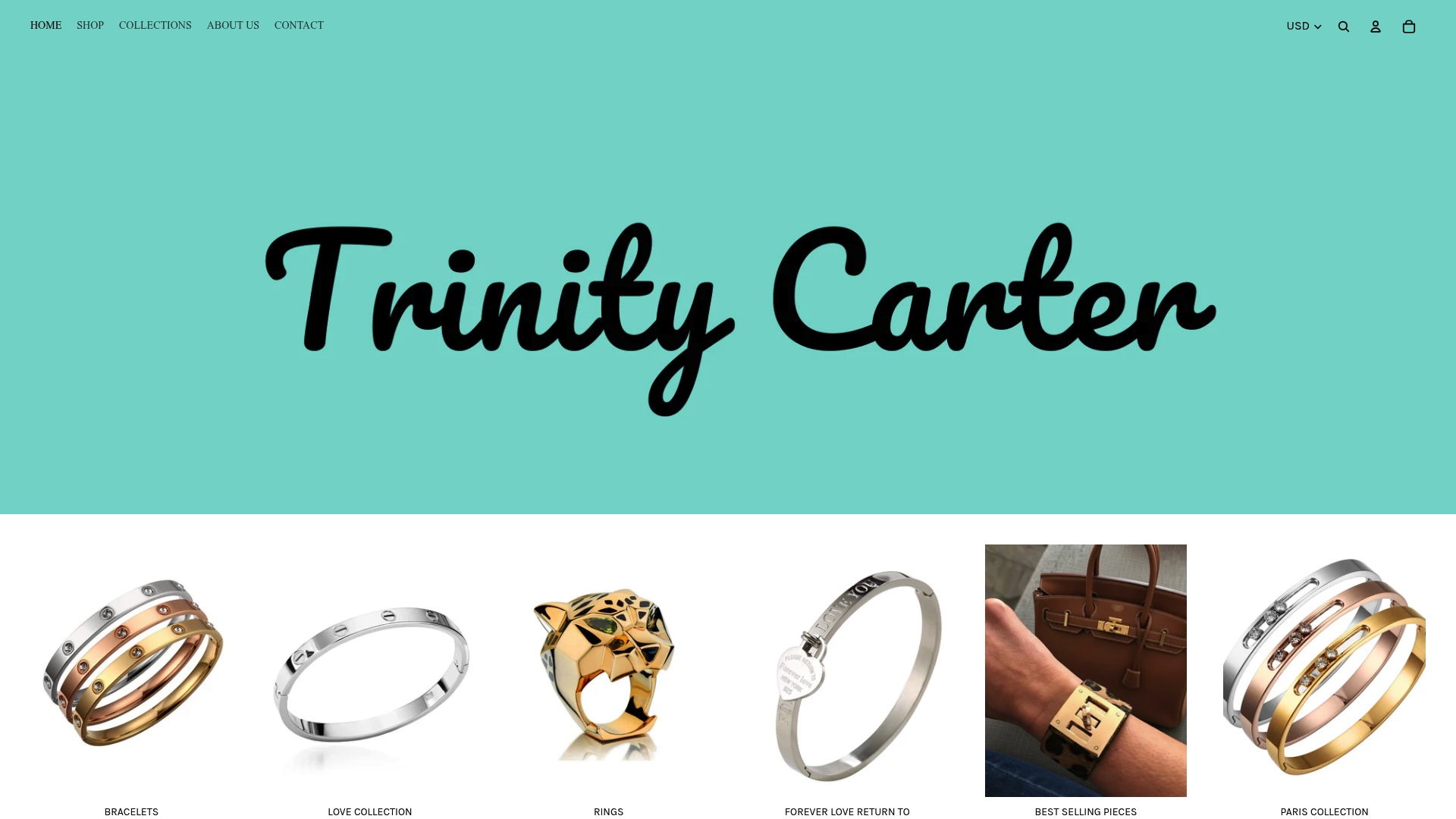
For everyday bracelets, the bracelet collection covers everything from clean minimalist bands to crystal-detailed designs. If rings are your focus, the rings collection includes both statement pieces and understated everyday styles. The Essential V Bracelet is a strong starting point if you want a versatile daily-wear piece that pairs with almost anything.
Browse the collections and check each product page for material details. If you have questions about a specific piece’s plating specs or base metal, reach out directly.
Useful sources
- Garfield Refining: Different Types of Gold Jewelry — Covers FTC guidelines, micron minimums, and a plain-language breakdown of each finish type.
- American Hartford Gold: Gold Filled vs. Gold Plated — Explains the 1/20 weight threshold, common hallmarks, and the mechanical bonding process.
- BriteCo: What Is Gold Vermeil Jewelry? — Detailed comparison of vermeil, plated, and gold filled, including the 2.5 µm vermeil standard.
- Metal Calcs: Gold-Filled vs. Gold-Plated — Covers melt value, RGP distinctions, and hallmark math for verifying gold-filled claims.
- Honho Jewelry: Gold Filled vs Gold Plated Complete Guide — Includes lifespan data and micron thickness comparisons across finish types.
This article is general information for educational purposes. For specific legal, regulatory, or professional guidance on jewelry standards, consult the FTC’s guidelines or a certified gemologist.
