

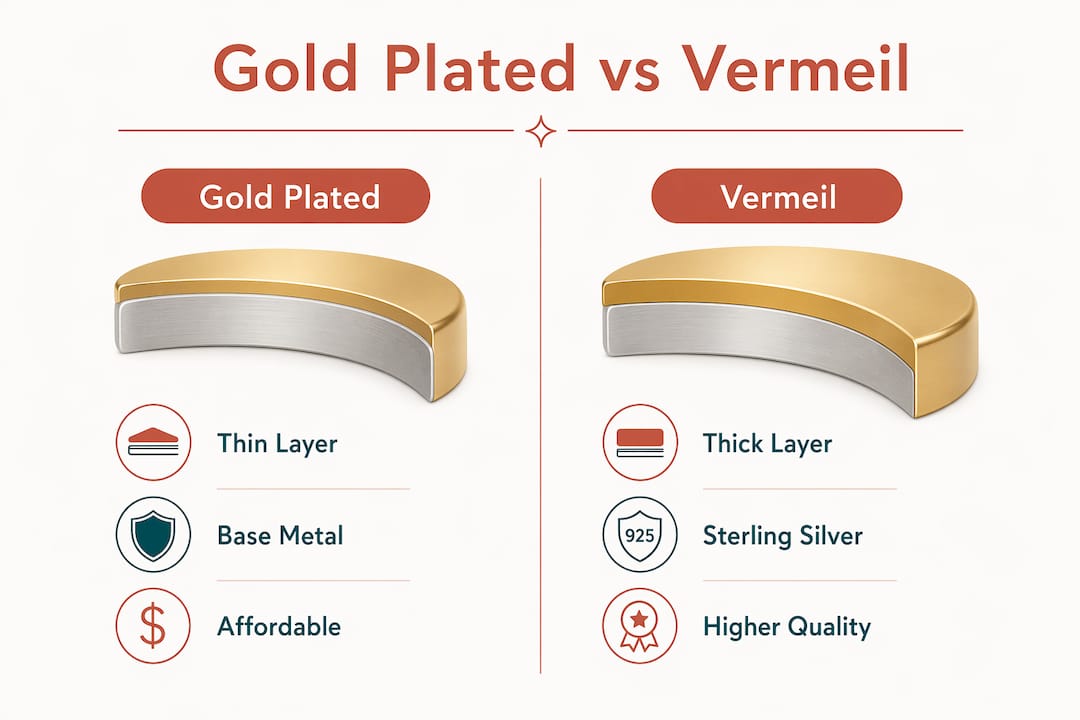
Gold plated and gold vermeil jewelry look nearly identical on a display shelf, but the difference between them is substantial once you know what to look for. Vermeil (pronounced “ver-MAY”) requires a sterling silver base and a gold layer of at least 2.5 microns thick, per Federal Trade Commission standards. Standard gold plating typically sits at 0.5 microns or thinner, applied over brass or copper. That gap in thickness and base metal quality is what separates a piece that holds up from one that turns your wrist green after a few months.
Here is the quick breakdown:
- Gold thickness: Vermeil requires at least 2.5 microns; plated pieces often use 0.5 microns or less
- Base metal: Vermeil uses sterling silver (92.5% pure silver); plated jewelry typically uses brass or copper
- Durability: Vermeil lasts longer under regular wear; plating wears through faster
- Value: Vermeil carries intrinsic worth from its silver base; plated pieces have minimal material value
- Regulation: Vermeil is an FTC-defined standard; gold plating has no minimum thickness requirement
What gold plated jewelry actually is
Gold plated jewelry starts with an inexpensive base metal, usually brass or copper, and applies a thin layer of gold through electroplating. An electric current bonds gold ions to the surface of the base metal, creating a gold-toned exterior. The result looks like gold, costs a fraction of the price, and is widely available across every price tier.
The catch is consistency. There are no strict regulatory standards governing the thickness or karat of gold used in plating, which means a piece labeled “gold plated” could have anywhere from a whisper-thin coating to something more substantial. Most mass-market pieces land at the thin end. You might see “18k gold plated” on a $15 bracelet, but without a disclosed micron count, that label tells you almost nothing about how long the finish will last.
Gold plated pieces are the entry point for gold-toned jewelry. They suit occasional wear, trend-driven purchases, and anyone who rotates their jewelry frequently enough that longevity is not the priority.
What makes gold vermeil different
Vermeil is a federally regulated classification, not just a marketing term. Under FTC guidelines, a piece qualifies as gold vermeil only when it meets three specific criteria: a sterling silver base, a minimum gold purity of 10k, and a gold layer at least 2.5 microns thick. Miss any one of those, and it is legally just gold plated jewelry.
The sterling silver base is what gives vermeil its edge. Sterling silver is 92.5% pure silver, a precious metal with real intrinsic value. That base also tends to be hypoallergenic, which matters for anyone with metal sensitivities. The electroplating process used in vermeil is the same as standard plating, but the material requirements are far stricter.
Vermeil sits in what the industry often calls the “demi-fine” category. It is more affordable than solid gold but a genuine step above fashion jewelry. Pieces typically range from around $50 to $200, though higher-karat vermeil (18k or 22k) can push past that.
Pro Tip: When shopping for vermeil, ask the retailer to confirm the micron thickness and base metal in writing. If they cannot provide that information, the piece may not meet FTC standards.
How gold plated and vermeil compare side by side
The core differences between these two types of gold-finished jewelry come down to four factors: gold thickness, base metal, durability, and value.

| Feature | Gold Vermeil | Gold Plated |
|---|---|---|
| Gold thickness | Minimum 2.5 microns | Often under 0.5 microns |
| Base metal | Sterling silver (92.5% pure silver) | Brass, copper, or alloy |
| Durability | More durable than standard plating | Low; wears through with regular use |
| Value | Higher, due to precious metal base | Minimal material value |
A few other contrasts worth knowing:
- Vermeil’s sterling silver base is hypoallergenic for most people; brass and copper bases in plated jewelry can trigger skin reactions as the gold wears away
- Gold plated pieces have no regulated minimum for karat purity; vermeil requires at least 10k gold
- Vermeil holds a degree of resale or intrinsic value because of its silver content; plated pieces essentially have none once the gold layer is gone
- Both types use electroplating as the manufacturing method, so the production process itself is not the differentiator
The thickness gap is the single biggest practical factor. At five times the gold depth, vermeil simply takes longer to wear through under the same conditions.
How long does each type actually last?
Gold plated jewelry can look great for months or even a couple of years with careful handling, but the thin gold layer wears off quickly with regular use, exposing the base metal beneath. Once that happens, brass and copper bases can cause skin discoloration and irritation. Pieces worn daily, especially rings and bracelets that take friction, tend to show wear fastest.
Vermeil lasts noticeably longer under the same conditions, though it is not permanent. The thicker gold layer and sterling silver base give it more resilience, but exposure to water, body oils, and beauty products will still degrade the finish over time. Think of vermeil as a medium-term investment rather than a forever piece.
Factors that accelerate wear on both types:
- Daily contact with water, sweat, or lotion
- Perfume or hairspray applied near the jewelry
- Friction from clothing, other jewelry, or hard surfaces
- Sleeping or exercising while wearing the piece
Pro Tip: Remove gold plated and vermeil jewelry before washing hands, swimming, or applying skincare. Storing pieces individually in soft pouches prevents scratching and significantly extends the finish.
Value, misconceptions, and what marketers get wrong
Vermeil carries real intrinsic value because both the gold layer and the sterling silver base are precious metals. Gold plated jewelry, by contrast, is mostly base metal with a decorative surface. Once the plating wears away, there is nothing of material worth left. That distinction matters when you are deciding how much to spend.
The biggest misconception buyers run into is treating “vermeil” as a synonym for high quality without verifying the specs. The FTC has flagged that the term “vermeil” is sometimes misapplied to gold plated pieces that do not meet the official thickness or base metal standards. A piece can be labeled vermeil and still use a brass base or a coating thinner than 2.5 microns if the seller is not following the guidelines. You can learn more about how gold plating works before you buy to sharpen your eye for these distinctions.
Common errors buyers make:
- Assuming “vermeil” automatically means better quality without checking the specs
- Believing gold plated jewelry is “fake gold” when it does contain real gold, just in a very thin layer
- Thinking vermeil is solid gold because it has a precious metal base
- Paying a premium for “gold plated” pieces with high karat claims but no disclosed thickness
The 2.5 micron standard for vermeil is not arbitrary. At that thickness, the gold layer is substantial enough to provide meaningful durability and a richer color compared to ultra-thin plating. Pieces that fall below it, regardless of what they are called, behave like standard plated jewelry.
How to care for gold plated and vermeil jewelry
Both types of gold-finished jewelry need the same basic care approach, because both rely on a surface layer that can be worn away. The difference is that vermeil gives you more margin for error before the damage shows.
Moisture, chemicals, and friction are the three main threats. Sweat, tap water, and cleaning products all accelerate the breakdown of the gold layer. Perfume and lotion, applied before putting on jewelry, leave residue that builds up and dulls the finish over time.
Care do’s and don’ts for both types:
- Do wipe pieces down with a dry, soft cloth after wearing
- Do store each piece separately in a soft pouch or lined jewelry box
- Do put jewelry on last, after applying makeup, perfume, and lotion
- Don’t wear pieces in the shower, pool, or ocean
- Don’t use abrasive cloths, ultrasonic cleaners, or chemical jewelry dips
- Don’t stack pieces loosely where they can scratch each other
For cleaning, a slightly damp microfiber cloth followed by thorough drying is usually enough. Avoid anything that creates friction on the surface. If you are evaluating gold plated necklaces or other pieces for everyday wear, factor in how much care you are realistically willing to give them.
Key Takeaways
Gold vermeil is the better-value choice for buyers who want real precious metals at an accessible price, with the 2.5 micron gold thickness standard being the clearest marker of quality over standard plating.
| Point | Details |
|---|---|
| Gold thickness gap | Vermeil requires at least 2.5 microns of gold; standard plating is often under 0.5 microns. |
| Base metal matters | Vermeil uses sterling silver (92.5% pure); plated jewelry uses brass or copper, which can irritate skin. |
| FTC regulation | Only vermeil carries a federally defined standard for thickness, purity, and base metal. |
| Durability tradeoff | Vermeil outlasts standard plating but is not permanent; both degrade with moisture and friction. |
| Verify before buying | The “vermeil” label is sometimes misapplied; always confirm micron thickness and base metal. |
Discover Trinitycarter’s gold-plated collection
Trinitycarter designs gold-plated jewelry with the same aesthetic sensibility as fine jewelry, at a price that makes everyday elegance genuinely accessible. From crystal-set rings to sculptural bracelets, each piece is crafted to look and feel like something worth keeping. Browse the full range of designer-inspired bracelets and gold-plated rings to find pieces that match your style without the fine jewelry price tag.
