

A tennis bracelet works as a versatile anchor piece: wear it alone for quiet polish, pair it with a watch for everyday structure, or layer it as the focal point of a three-piece stack. Check fit with the one-finger rule before you buy, since a bracelet that’s too loose slides and catches on everything. Stacking is optional, not required. What follows are the rules that make either choice look intentional.
TL;DR:
- The ideal bracelet size allows one finger to slide comfortably between the bracelet and the wrist, with an allowance of about 0.5 to 0.75 inches for fit.
- When stacking, start with the tennis bracelet as the focal piece and build your design by contrasting metals, textures, and widths for a deliberate, styled look.
- For daily wear, choose durable metals like platinum or yellow gold, and opt for bezel settings for active routines to prevent snagging, while prong settings maximize sparkle.
- Layering should be minimal at work with two pieces, but can extend to three for evenings, and the tennis bracelet can be worn alone or as part of a layered stack for formal occasions.
- Regular cleaning, storing separately, and yearly professional inspections help maintain the bracelet’s sparkle and security over time.
Table of Contents
- Quick styling rules for wearing a tennis bracelet
- How to layer and stack a tennis bracelet step by step
- How do you measure your wrist for the right fit?
- Mixing metals, textures, and shapes without it looking accidental
- Styling a tennis bracelet by occasion
- Choosing metal and setting for how you actually live
- Caring for your tennis bracelet so it lasts
- What stylists get right about the uncurated stack
- Why the tennis bracelet still anchors every stack we design
- Try the look with Trinity Carter’s stacking-ready bracelets
- Sources
Quick styling rules for wearing a tennis bracelet
Before layering anything, anchor your stack around the tennis bracelet as the hero piece and build outward from there rather than treating it as just one more bangle in the mix. This is the fastest route to figuring out how to style a tennis bracelet without overthinking it every morning.
- Anchor first: Pick the tennis bracelet as your focal point, then add supporting pieces around it.
- Use the 2:1:1 mixed-metal ratio: Two pieces in your dominant metal, one in a secondary metal, one accent piece.
- Stick to a few pieces per wrist to keep the look intentional. Fewer reads as intentional; more starts to look cluttered.
- Sit it below the wrist bone. That’s where a tennis bracelet drapes naturally and won’t dig in when you bend your hand.
How to layer and stack a tennis bracelet step by step
Building a stack is less about matching and more about contrast, done on purpose.
- Start with the anchor. Put the tennis bracelet on first and let it set the tone, then decide what else the wrist needs.
- Sandwich delicate pieces. Place fragile chains between two structured pieces (your tennis bracelet and a cuff or bangle) so they don’t tangle or snap during the day.
- Pair with a watch thoughtfully. Wear the watch on one wrist and the tennis bracelet stack on the other, or slide the bracelet just above the watch face on the same arm if the metals match.
- Try a starter stack. A tennis bracelet, a delicate chain, and a bangle is a reliable formula that stacked bracelet trends point to again and again for a first attempt at layering.
For work, keep the stack at two pieces. For a night out, push to three with varied widths for depth.
How do you measure your wrist for the right fit?
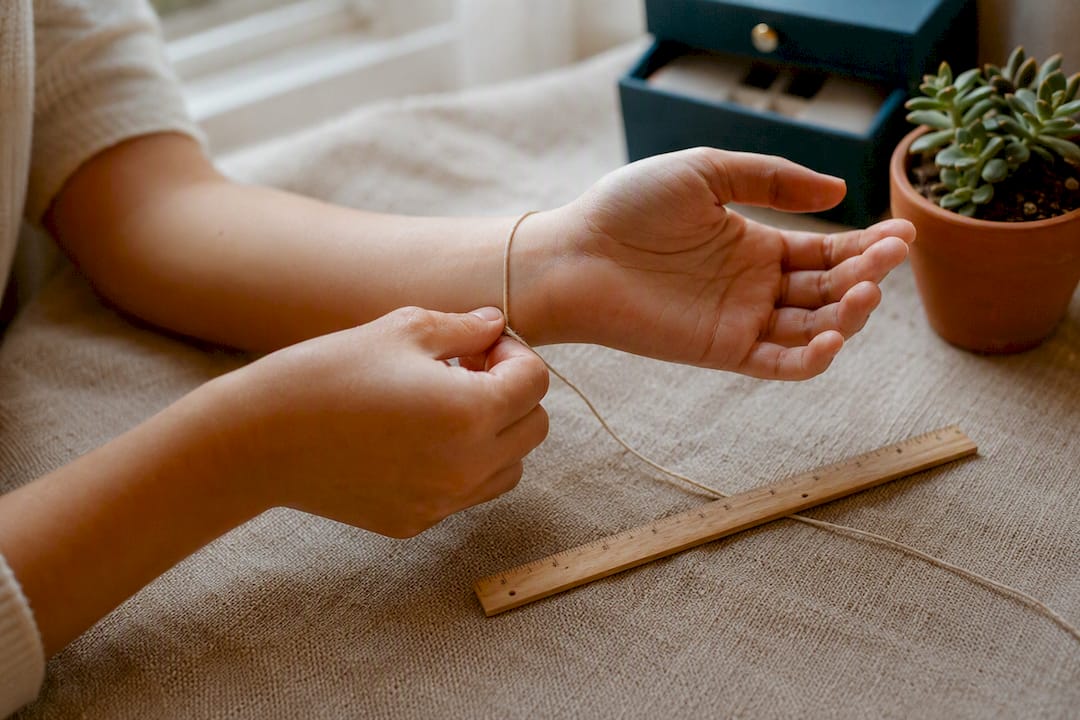
Wrap a flexible measuring tape or a piece of string around your wrist right at the bone, then measure that length against a ruler. From there, add allowance so the bracelet drapes instead of choking your wrist or sliding past your hand.
Recommended sizing guidance adds roughly 0.5 to 0.75 inches to your bare wrist measurement for a comfortable fit. Once it’s on, run the one-finger test: you should be able to slide one finger between the bracelet and your skin. Any looser and it’s prone to catch on sleeves, bag straps, and car doors.
Setting type affects this too. Bezel settings sit lower and more securely against the wrist, which matters if you’re active. Prong settings sit slightly higher and catch more light, but they’re marginally more prone to snagging on daily wear.
| Wrist type | Measurement approach | Allowance | Best setting |
|---|---|---|---|
| Standard chain tennis bracelet | Tape at wrist bone | 0.5–0.75 in | Prong for sparkle, bezel for security |
| Bangle-style tennis bracelet | Measure widest part of hand | Minimal, must slide over hand | Bezel (rigid structure needs it) |
Mixing metals, textures, and shapes without it looking accidental
The 2:1:1 ratio does double duty here. Two pieces in your main metal, one in a second metal, one true accent piece. That imbalance is what keeps a stack from looking like a matched set you bought off a single card.
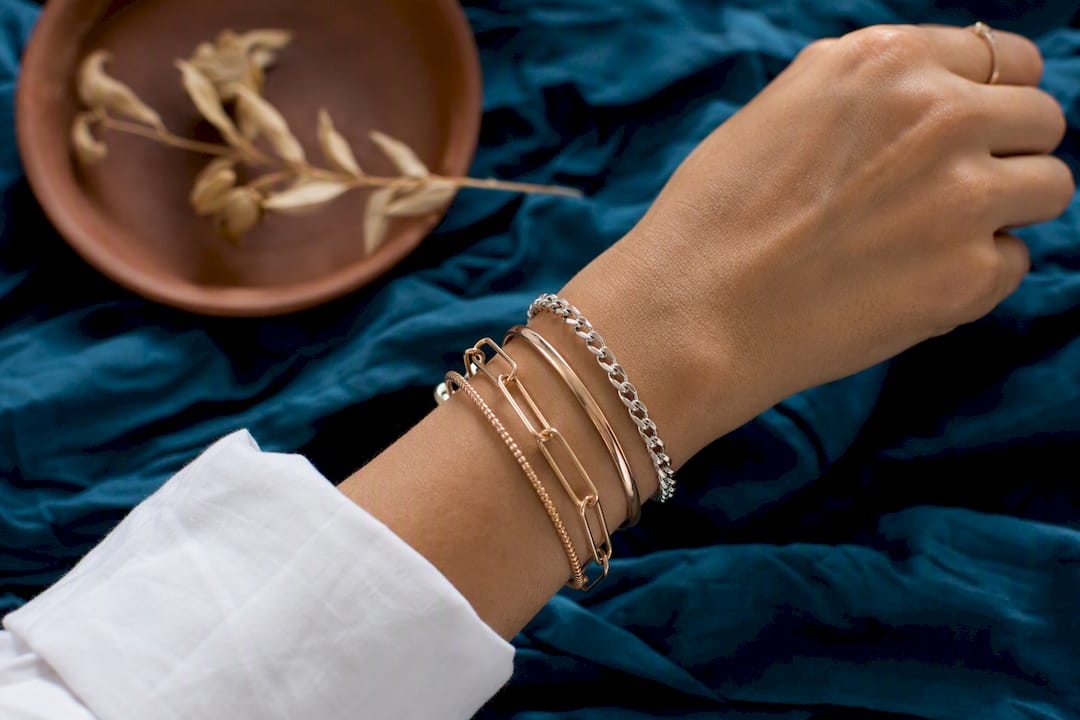
Texture is the other lever. Pair something rigid, like a bangle, against something fluid, like a curb chain, and put a polished tennis bracelet next to a matte cuff. The contrast between hard and soft, shiny and flat, is what reads as styled rather than thrown on.
- Repeat one motif (a diamond accent, a chain link style) across two pieces to tie the stack together visually.
- Contrast finishes: one polished, one brushed or matte.
- Vary widths so nothing competes with the tennis bracelet for attention.
Warmer gold tones tend to sit well against most skin tones, while white metals read cooler and crisper; try both against your wrist in daylight before committing to a stack. Our guide to mixing gold bracelets covers this in more depth if you’re building a gold-forward stack.
Pro Tip: If a stack feels too matched, swap one piece for a different width or metal instead of adding more. Contrast fixes a boring stack faster than volume does.
Styling a tennis bracelet by occasion
The occasion decides how loud your wrist should be, and the tennis bracelet flexes for all of them.
- Casual: One tennis bracelet, worn alone or with a single thin chain. Nothing competing with your jeans and sneakers.
- Office: Controlled sparkle. Pair the tennis bracelet with a slim watch or a single narrow cuff, nothing that jingles during meetings.
- Evening: Layer two to three bracelets with mixed widths for depth. A wider cuff, the tennis bracelet, and a delicate chain reads as dressed without trying too hard.
- Formal: Let the tennis bracelet be the entire statement. Coordinate with your earrings or necklace, but don’t add a second bracelet that competes with it. A tennis bracelet gets more visual weight when it’s the only piece on the wrist. That’s often the strongest formal look you can build.
Choosing metal and setting for how you actually live
Your daily routine should decide the metal before your taste does. Platinum holds up best against scratches and daily wear but costs more upfront. White gold needs occasional replating to keep its bright finish, since the rhodium coating wears down over years of wear. Yellow and rose gold don’t need replating and bring warmth that photographs well against most skin tones. Gold-plated and vermeil pieces get you the same look at a lower price point, with a thinner precious-metal layer that needs a bit more care over time. Our comparison of gold-plated versus vermeil breaks down which holds up better for daily rotation.
Setting matters just as much as metal. Bezel settings wrap the stone in metal for more security during active days, while prong settings expose more of the stone for maximum sparkle but catch on fabric more easily.
- Lab-grown diamonds: Same brilliance as natural stones, typically at a lower price point.
- Colored gems: Sapphires or emeralds add a distinct look but require checking hardness before daily wear.
- Moderate carat weight per stone tends to work best for a piece you’ll wear daily rather than save for occasions.
Caring for your tennis bracelet so it lasts
A little upkeep keeps the sparkle and the setting secure for years.
- Clean it at home with mild soap, warm water, and a soft brush every few weeks, especially if you wear it daily.
- Store it flat or hanging, never tossed loose in a drawer with other pieces that can scratch it or tangle the clasp.
- Check the clasp and prongs monthly by gently tugging each stone to feel for movement.
- See a jeweler once a year for a professional inspection, and sooner if you notice a loose stone or a dull spot that home cleaning doesn’t fix.
What stylists get right about the uncurated stack
Start with one anchor piece, then let the rest evolve slowly rather than buying a whole stack at once. The most convincing stacks look collected, not purchased in one trip, echoing the “oh this old thing” ease that makes a mix of heirlooms and new pieces feel effortless.
Protect heirloom pieces by sandwiching them between sturdier bracelets, and rotate what you wear so no single piece takes all the daily wear.
Why the tennis bracelet still anchors every stack we design
Every stack we build at Trinitycarter starts the same way: pick one piece worth building around. A tennis bracelet earns that role because it holds its own alone and still plays well with others. Apply the same anchor logic to any piece in our collection and the rest of the styling follows naturally.
— Trinity
Try the look with Trinity Carter’s stacking-ready bracelets
If you’re ready to put these rules into practice, our bracelets collection is built with stacking in mind rather than as an afterthought.

The Essential V Bracelet makes a clean anchor piece for a first stack, and its slim profile leaves room to add a chain or bangle without crowding your wrist. If you want more sculptural contrast, the X Cross Cable Bracelet brings a bolder texture that pairs well against a delicate tennis bracelet rather than competing with it. When choosing between the two, match width and metal tone to whatever starter stack you’re building first, then add from there. Browse the full collection and pick your anchor piece today.
Sources
- How to Wear a Tennis Bracelet: An Expert Styling Guide
- Tennis bracelet styling and fit guide
- Bracelet stack: styling tricks everyone is using right now
