

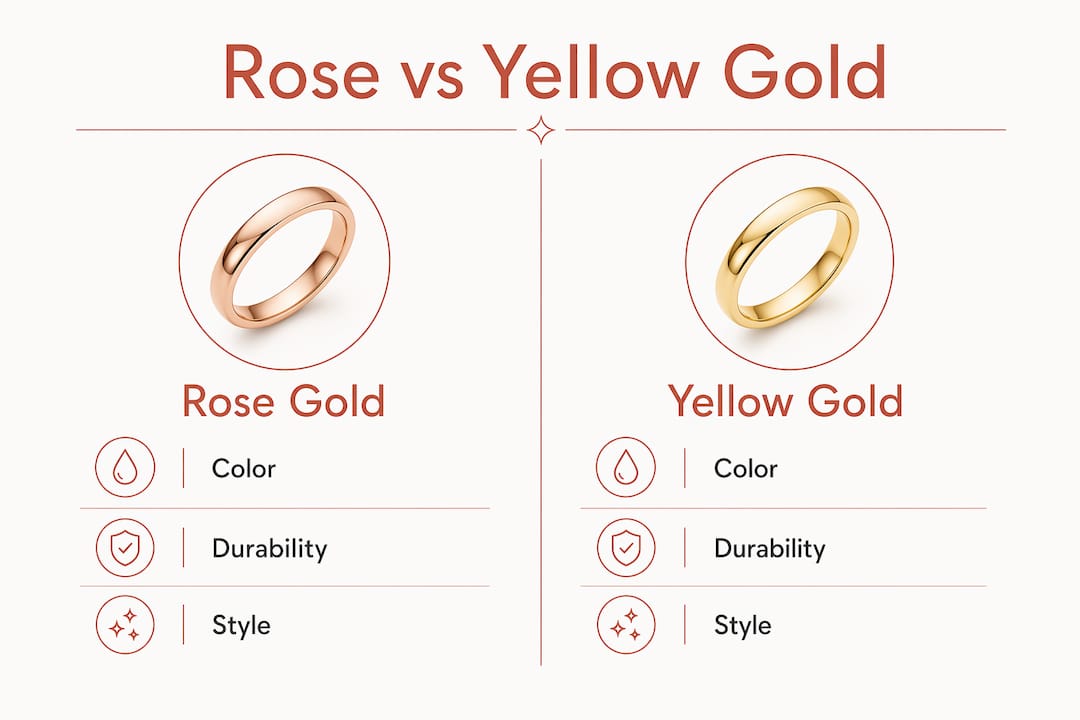
Rose gold and yellow gold differ primarily in one thing: copper. Rose gold contains a higher copper ratio, which gives it that warm pink hue and makes it harder and more scratch-resistant than yellow gold at the same karat. Yellow gold uses a blend of silver, copper, and zinc, producing the classic warm yellow tone most people picture when they think of fine jewelry. Price is nearly identical at equal karat purity. The real decision comes down to color preference, skin tone, durability needs, and personal style.
At a glance:
- Color: Rose gold is pink to blush; yellow gold is warm, classic yellow
- Durability: Rose gold is harder and more scratch-resistant due to copper content
- Resizing: Yellow gold is softer and easier for jewelers to resize or repair
- Price: Essentially the same at equal karat weight
- Skin tone: Rose gold flatters cool, neutral, and deep tones; yellow gold suits warm, olive, and golden undertones best
- Maintenance: Both require the same basic care routine
- Allergies: Rose gold’s copper may irritate sensitive skin; yellow gold is generally better tolerated
| Factor | Rose Gold | Yellow Gold |
|---|---|---|
| Color | Warm pink to blush hue | Classic warm yellow |
| Composition | Gold + copper (+ sometimes silver) | Gold + silver, copper, zinc |
| Durability | Harder, more scratch-resistant | Softer, more prone to scratches |
| Price | Same at equal karat | Same at equal karat |
| Maintenance | Routine cleaning; may develop patina | Routine cleaning; excellent tarnish resistance |
| Style suitability | Romantic, vintage, modern feminine | Timeless, classic, heirloom |
What is rose gold, and where does its color come from?
Rose gold is an alloy of pure gold and copper, sometimes with a small amount of silver added to soften the tone. The copper is what creates that distinctive pink color, and the more copper in the mix, the deeper and redder the hue. Less copper produces a softer blush pink; more copper pushes toward a rich, coppery rose.
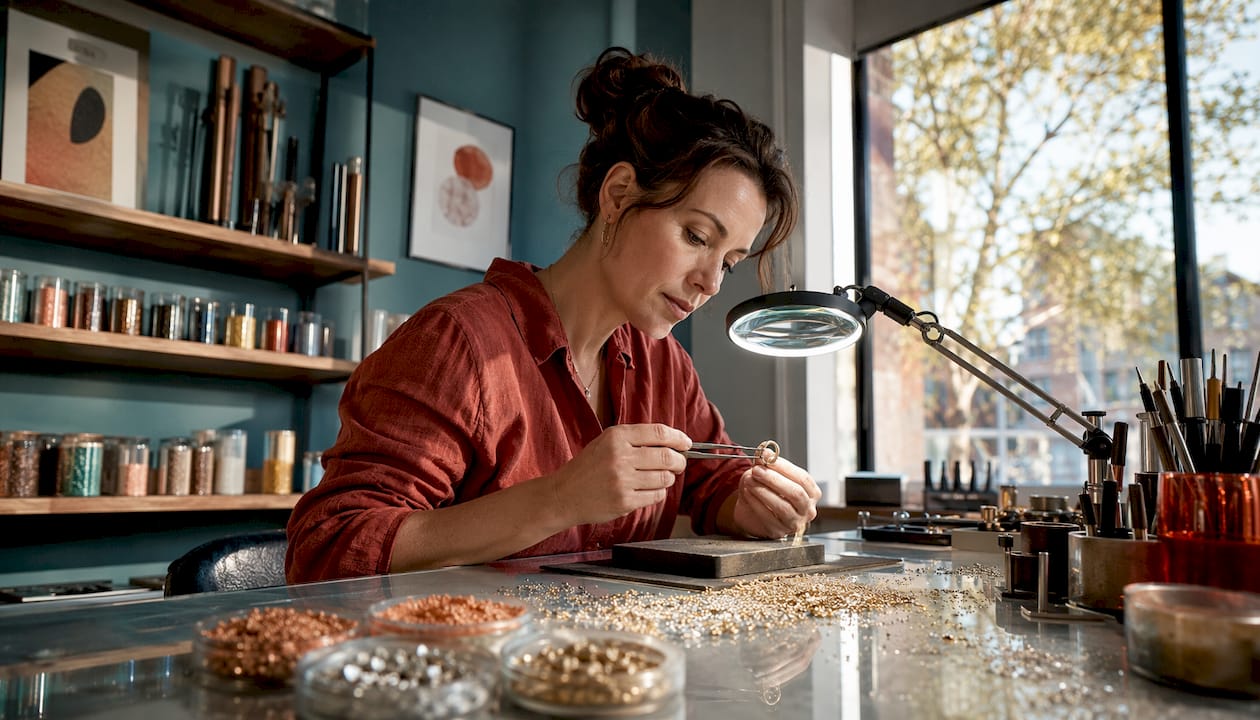
Karat level directly controls how much copper is present. According to GIA’s 4Cs blog, 14K rose gold contains roughly 58.3% gold, 9.2% silver, and 32.5% copper, while 18K rose gold sits at 75% gold, 9.2% silver, and 22.2% copper. That difference in copper content is why 14K rose gold reads as a deeper, more saturated pink, while 18K rose gold appears lighter and more delicate.
Rose gold composition by karat:
- 22K: 91.7% gold, 8.4% copper (very soft blush, rarely used in everyday jewelry)
- 18K: 75% gold, 22.2% copper (popular for fine jewelry; softer pink)
- 14K: 58.3% gold, 32.5% copper (deeper pink; more durable)
- 10K: 41.7% gold, 38.3% copper (richest color; most durable)
Rose gold’s modern popularity is often traced to Russian jewelers in the early 19th century, where it was called “Russian gold.” It surged again in the early 2000s and has held strong ever since, particularly in engagement rings and fashion jewelry. Its romantic, vintage-inspired aesthetic resonates with buyers who want something that feels both current and timeless.
What is yellow gold, and why does it remain a classic?
Yellow gold is pure gold alloyed with metals like silver, copper, and zinc to add strength. Pure gold (24K) is too soft for everyday wear, so jewelers blend it with these metals to create something durable enough to hold stones and withstand daily use. The resulting color stays warm and yellow, closest to gold in its natural state.
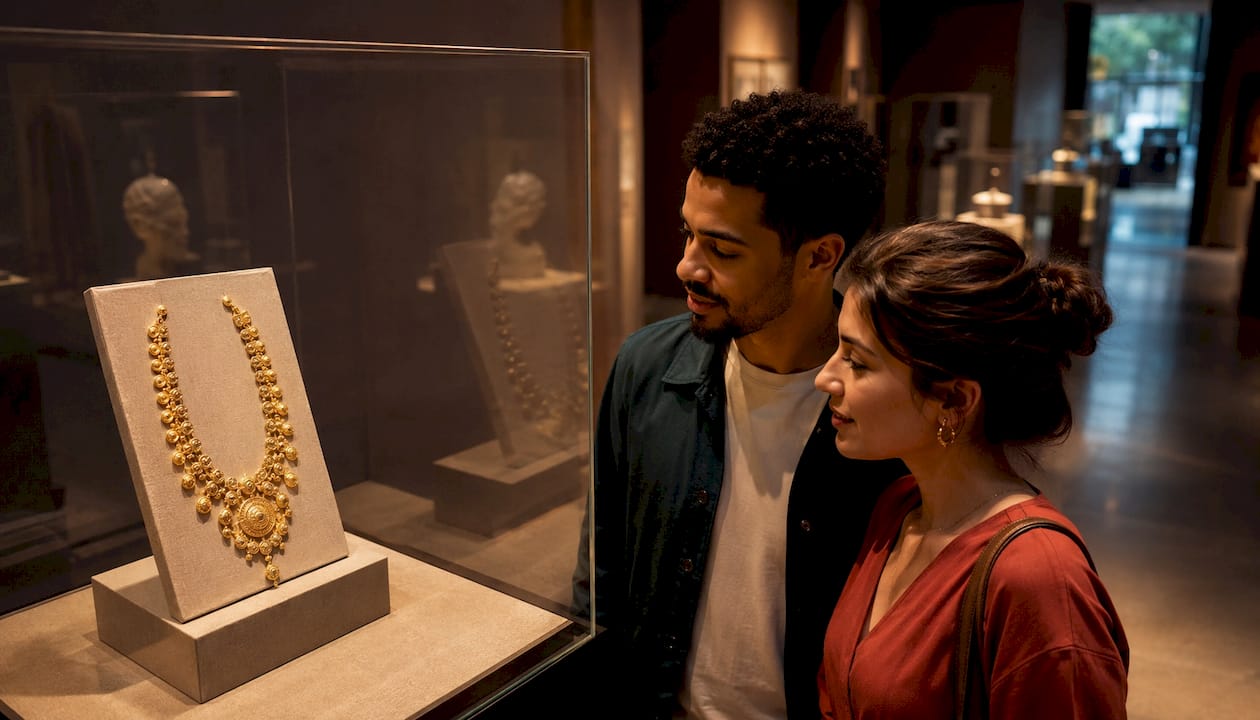
Higher karat yellow gold looks richer and more intensely yellow because it contains more pure gold. GIA notes that 18K yellow gold is 75% gold with 25% alloyed metals, while 14K is 58% gold with 42% alloyed metals. The more alloy present, the more muted the yellow tone.
Yellow gold characteristics by karat:
- 24K: 100% pure gold; too soft for most jewelry
- 22K: 92% gold; rich yellow, used in some fine pieces
- 18K: 75% gold; vibrant yellow, preferred for fine jewelry
- 14K: 58% gold; slightly muted yellow; most common in the US market
Yellow gold carries centuries of cultural weight. Across ancient Egypt, Rome, and nearly every major civilization, gold in its yellow form symbolized wealth, divinity, and power. That heritage is part of why yellow gold remains the default choice for heirloom pieces and traditional engagement rings. It also experienced a strong resurgence among millennial buyers in the early 2020s, reclaiming ground it had lost to white metals in the 1990s and 2000s.
How alloys affect color and durability in rose and yellow gold
The copper in rose gold does more than change the color. It increases hardness and scratch resistance, meaning rose gold holds up better against daily wear than yellow gold at the same karat. A 14K rose gold ring will generally show fewer surface scratches over years of wear than a 14K yellow gold ring.
Yellow gold’s softer alloy blend has its own advantage, though. That softness makes it easier for jewelers to resize, reshape, and repair. Intricate vintage designs with fine filigree or detailed engraving are often executed in yellow gold precisely because the metal responds well to handcrafting. Yellow gold’s malleability makes complex repairs more straightforward, which matters for pieces you plan to wear for decades.
| Property | Rose Gold | Yellow Gold |
|---|---|---|
| Primary alloy metals | Copper (+ sometimes silver) | Silver, copper, zinc |
| Hardness | Higher due to copper | Lower; more malleable |
| Scratch resistance | Better | More prone to surface scratches |
| Resizing ease | Slightly more difficult | Easier |
| Patina development | Yes, copper oxidizes over time | Minimal; excellent tarnish resistance |
| Color variation by karat | Deeper pink at lower karats | Richer yellow at higher karats |
One thing worth knowing about rose gold: copper oxidizes slowly over time, which can give the metal a subtle patina. Some wearers love this effect, describing it as added character and depth. Others prefer to polish it back to its original brightness. Either way, this natural aging process is cosmetic, not structural.
Are rose gold and yellow gold priced differently?
At equal karat purity, rose gold and yellow gold cost essentially the same. The theoretical argument that rose gold should be slightly cheaper because copper costs less than other alloying metals is technically true but practically irrelevant. The difference is negligible compared to what actually drives jewelry prices.
What genuinely affects the price of a piece:
- Karat weight: 18K costs more than 14K regardless of metal color
- Total metal weight: A thicker band uses more gold and costs more
- Design complexity: Intricate settings, filigree, and custom work add labor costs
- Stone quality: Diamond or gemstone grade far outweighs metal color in price impact
- Brand and craftsmanship: Designer markup applies equally to both metals
The myth that rose gold carries a premium price tag likely comes from its association with fashion-forward and luxury branding. But the metal itself is not more expensive. If you see a price difference between two otherwise identical pieces in rose and yellow gold, the gap comes from design or brand, not the alloy.
Maintenance, tarnish resistance, and allergy considerations
Both metals need the same basic care: clean regularly with a soft cloth and diluted mild soap, rinse thoroughly, and dry completely. Remove jewelry before swimming, exercising, or working with abrasive materials. Routine cleaning keeps both metals looking their best and prevents buildup of oils and dirt in settings.
Yellow gold has excellent tarnish resistance at higher karats. The alloy metals present in lower karat yellow gold can occasionally cause minor surface dulling, but nothing that a gentle clean won’t fix. Rose gold does not tarnish in the traditional sense, but its copper content can develop a warm patina over time. This is a slow process and many wearers find it appealing rather than problematic.
Care tips for both metals:
- Clean with diluted dish soap and a soft-bristle brush
- Rinse with lukewarm water and pat dry with a lint-free cloth
- Store pieces separately to prevent scratching
- Remove before applying lotions, perfumes, or cleaning products
- Schedule professional cleaning once or twice a year
Allergy considerations are worth taking seriously. Rose gold’s copper content can cause skin irritation in people with metal sensitivities, particularly at lower karats where copper concentration is highest. Yellow gold is generally better tolerated, though its alloy metals can occasionally trigger reactions in highly sensitive individuals. If you have known metal sensitivities, higher karat options in either metal reduce your exposure to alloy metals, and a jeweler can advise on hypoallergenic alternatives.
Style suitability: skin tone, trends, and how to wear both
Rose gold is widely considered the more universally flattering of the two. Its warm pink tone complements cool, neutral, and deep complexions without creating harsh contrast. On cool-toned skin with pink or blue undertones, rose gold adds warmth gently. On deeper skin, it reads as modern and fashion-forward. Neutral skin tones wear it beautifully across the board.
Yellow gold is the stronger choice for warm, olive, and golden undertones. It harmonizes with the natural warmth in the skin rather than contrasting against it, creating a cohesive, rich look. On olive skin specifically, yellow gold tends to work better than rose gold because heavy copper content in rose gold alloys can sometimes clash with the green-yellow tones in olive complexions. If you have olive skin and love rose gold, 18K is the safer pick since its higher gold content softens the copper tone.
Skin tone matching guide:
- Cool undertones (pink, blue veins): Rose gold is your best match
- Warm undertones (golden, olive, green veins): Yellow gold flatters most
- Neutral undertones: Both work beautifully
- Deep or brown skin: Both are excellent; yellow gold maximizes warmth, rose gold adds modern contrast
- Fair, cool skin: Rose gold adds warmth without overpowering
Style-wise, rose gold dominates romantic, vintage-inspired, and modern feminine aesthetics. Floral motifs, Art Deco settings, and morganite pairings all look exceptional in rose gold. Yellow gold suits classic solitaires, bold minimalist designs, and heirloom-style pieces equally well. It has also become a fresh, fashion-forward choice among younger buyers who want something that feels both classic and current.
Mixing rose and yellow gold in a ring stack or layered necklace look is a strong trend right now. The contrast between the two tones adds depth and allows for personal expression without committing to a single metal. You can explore 2026 jewelry trends to see how both metals are being styled in current collections.
Pro Tip: If you’re unsure which metal suits you, hold both against your inner wrist in natural light. The one that makes your skin look more alive and less washed out is your answer.
How to choose between rose gold and yellow gold jewelry
Start with your skin undertone as a reference point, but do not treat it as a rule. Skin tone guidelines exist to help, not to restrict. The jewelry that makes you feel confident is always the right choice.
Factors worth considering before you buy:
- Undertone: Cool or neutral leans rose gold; warm or olive leans yellow gold
- Durability needs: Active lifestyle or hands-on work? Rose gold’s added hardness holds up better
- Existing jewelry: Consider what you already own and whether the new piece needs to coordinate
- Resizing likelihood: If you expect to resize a ring, yellow gold is easier for jewelers to adjust
- Jewelry type: For everyday wear, rose gold’s durability is an advantage; for heirloom or heritage pieces, yellow gold carries more traditional weight
- Gemstone pairing: Yellow gold creates striking contrast with colorless diamonds; rose gold pairs beautifully with morganite, pink sapphire, and warm-toned stones
Try pieces in both metals when possible. Many buyers who assume they are “a yellow gold person” are surprised by how much they love rose gold in person, and vice versa. If you are genuinely torn, rose gold tends to be the more forgiving starting point across a wider range of skin tones and styles. You can also browse everyday luxury necklaces to see how both metals translate into wearable, daily pieces.
Expert insight: jewelry style and care advice from Trinitycarter
Trinitycarter’s approach to gold jewelry is grounded in the belief that understanding your metal is the first step to wearing it well. As a brand inspired by the craftsmanship of high-end designers and committed to accessible luxury, Trinitycarter works with both rose and yellow gold plated designs to give wearers the full spectrum of choice.
Advanced care and styling tips from Trinitycarter:
- Store rose and yellow gold pieces in separate pouches to prevent surface contact and scratching
- Apply perfume and body lotion before putting on jewelry, never after, to reduce chemical exposure
- For rose gold pieces showing early patina, a gentle polish with a jewelry cloth restores the original brightness
- Yellow gold pieces benefit from occasional professional ultrasonic cleaning to reach intricate settings
- When building a layered look, mixing rose and yellow gold works best when one metal anchors the stack and the other accents it
- Consider karat when buying gold-plated pieces: higher karat plating over a quality base metal extends wear life significantly
Pro Tip: Take your jewelry to a professional jeweler for inspection once a year. They can catch loose prong settings before stones are lost and polish both rose and yellow gold back to their original finish without damaging the metal.
Trinitycarter’s collections span both rose and yellow gold plated styles, from crystal-set rings to delicate pendant necklaces. The Blossom Flowergram Ring captures exactly the kind of romantic, feminine aesthetic that rose gold does best, while the brand’s yellow gold pieces carry the warmth and confidence of a classic.
Environmental and ethical sourcing in gold jewelry
Gold mining carries a real environmental footprint. Traditional mining methods can displace large volumes of earth, introduce mercury into local water systems, and contribute to deforestation in mining regions. This applies equally to the gold used in both rose and yellow gold jewelry, since the base metal is the same regardless of the alloy added afterward.
Ethical sourcing certifications have become increasingly important to buyers. The Responsible Jewellery Council (RJC) certifies companies across the gold supply chain for responsible sourcing practices. The Fairmined and Fairtrade Gold standards go further, certifying gold sourced from artisanal and small-scale mining operations that meet environmental and labor standards. When buying fine jewelry, asking whether the gold is RJC-certified or Fairtrade Gold-certified is a reasonable and increasingly common question.
Recycled gold is another option gaining traction. Gold is infinitely recyclable without any loss of quality, and recycled gold requires no new mining. Many jewelers now offer pieces made entirely from recycled gold, which carries the same physical properties as newly mined gold at a lower environmental cost. Whether you choose rose or yellow gold, opting for recycled or certified-source metal is one of the most direct ways to reduce the environmental impact of your purchase.
Key Takeaways
Rose gold and yellow gold perform nearly identically in price and maintenance, but copper content makes rose gold harder and more scratch-resistant, while yellow gold’s softness makes it easier to resize and ideal for heirloom craftsmanship.
| Point | Details |
|---|---|
| Durability difference | Rose gold is harder and more scratch-resistant due to higher copper content. |
| Price parity | Both metals cost the same at equal karat purity; design and karat drive price variation. |
| Skin tone guidance | Rose gold suits cool and neutral undertones; yellow gold flatters warm and olive skin best. |
| Allergy awareness | Rose gold’s copper may irritate sensitive skin; higher karat options reduce alloy exposure. |
| Ethical sourcing | Look for RJC-certified, Fairtrade Gold, or recycled gold regardless of metal color. |
Both metals are genuinely beautiful, and neither is the wrong choice. If you want to see how rose and yellow gold translate into wearable, everyday pieces, Trinitycarter’s bracelet collection and rings collection offer designer-inspired styles in both tones, built for women who want something that looks expensive without requiring a luxury budget.
