

Gold plating is the process of depositing a thin layer of gold onto another metal’s surface, typically copper or silver, through electrochemical or chemical means. The result is not solid gold but a surface system: a base metal, one or more underplates, and a gold topcoat working together. That distinction matters enormously in practice, whether you’re buying a necklace or specifying contacts for a circuit board. Gold’s electrical resistivity of 21.4 nΩ·m makes it one of the most reliable conductors available, and its resistance to oxidation keeps both jewelry and electronics performing over time. This guide covers the full picture: how the process works, what types exist, how thickness affects durability, and how to care for plated pieces. Trinitycarter applies these same engineering principles to its gold-plated jewelry collections.
- Gold plating is a surface system, not solid gold
- Thickness is measured in micrometers (µm) and directly affects wear life
- Underplate quality matters as much as the gold layer itself
- Hard and soft gold serve different functions in electronics vs. jewelry
- Trinitycarter designs its pieces with these specifications in mind
Table of Contents
- How does the gold plating process actually work?
- What types of gold plating are there?
- How thick is gold plating, and why does it matter?
- Gold plated vs. gold filled vs. solid gold: what actually differs?
- Where is gold plating used, and why?
- How long does gold plating last?
- How to clean and care for gold-plated jewelry
- How can you tell if something is gold plated?
- What should you check before buying gold-plated jewelry?
- Why engineers choose gold: the hard vs. soft gold distinction
- Key Takeaways
- The case for knowing what you’re actually buying
- Trinitycarter gold-plated jewelry: designer-inspired, built to wear
- Useful sources
How does the gold plating process actually work?
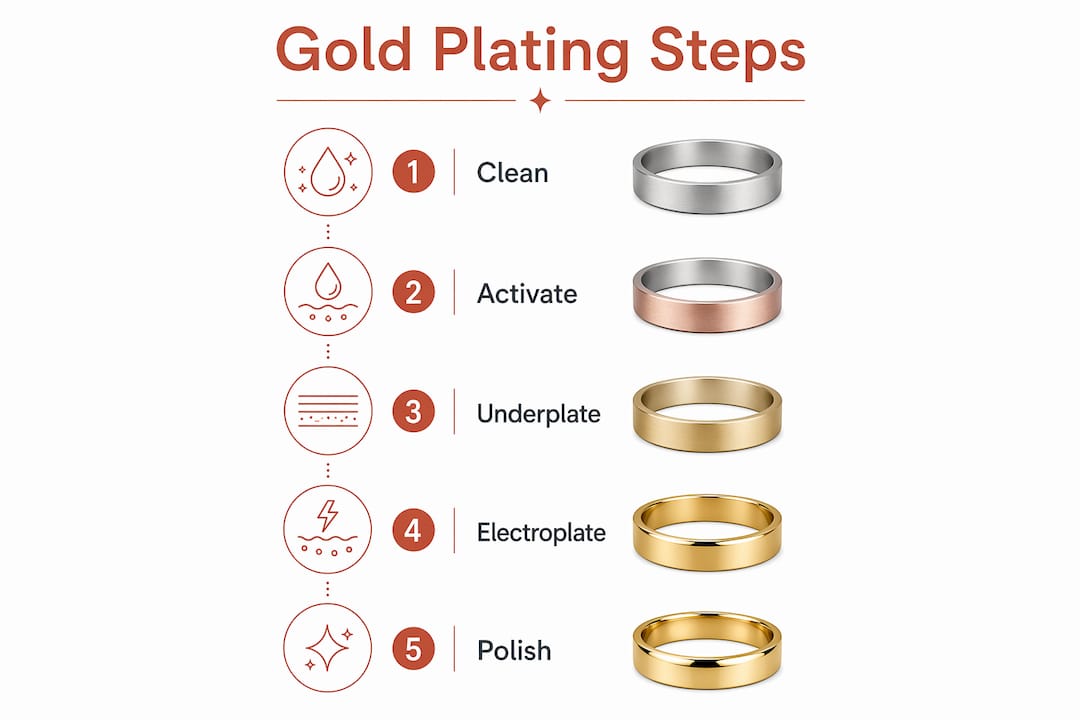
Gold plating is a multi-step process, and the quality of the final piece depends on every stage going right. Skip one step, and the gold layer will lift, flake, or discolor within months.
The professional plating process follows this sequence: clean and polish the substrate, activate the surface with an acid dip, apply underplates, deposit gold in an electrolytic bath, then rinse, dry, and finish.
Surface preparation and activation
The substrate gets cleaned mechanically and chemically to remove oils, oxides, and contaminants. An acid activation step follows, which etches the surface slightly so the underplate bonds at a molecular level. This is the step most often skipped in low-cost operations, and it’s the single biggest cause of peeling.
Underplates: the hidden layer that does the real work
A properly engineered plating stack runs substrate → copper → nickel → gold. Copper improves adhesion and fills surface imperfections. Nickel acts as a diffusion barrier, preventing base-metal atoms from migrating into the gold layer and causing discoloration. Without nickel, gold atoms can diffuse into the base metal over time, turning the surface greenish or coppery even while the gold film looks intact.

Electroplating vs. immersion plating
Electroplating (electrolytic deposition) passes an electrical current through a gold-salt electrolyte solution. The item acts as the cathode, and gold ions deposit onto its surface. This method gives precise control over thickness and is standard for both jewelry and electronics.
Immersion plating (electroless or chemical displacement) relies on a chemical reaction rather than current. Gold displaces a less-noble metal from the surface without external electricity. It produces thinner, more uniform deposits on complex shapes but offers less control over thickness.
| Method | Thickness control | Best for | Typical thickness |
|---|---|---|---|
| Electroplating | High | Jewelry, connectors, contacts | Varies within a small micrometer range |
| Immersion/electroless | Moderate | Complex geometries, PCBs | Very thin deposits |
Pro Tip: If a plater skips the activation step or uses a single thin underplate, the gold layer has nothing solid to grip. Ask specifically whether nickel underplating is included before purchasing or commissioning a piece.
What types of gold plating are there?
Not all gold plating is the same, and the differences matter whether you’re buying a bracelet or specifying a connector.
- Soft gold (Type III, 99.9% purity): Pure gold, very ductile, preferred for soldering and wire bonding in electronics. It scratches more easily but bonds reliably at high temperatures.
- Hard gold (Type I/II, 99.0–99.7% purity): Alloyed for wear resistance with small amounts of cobalt or nickel. Used on connector pins, clasps, and any surface that sees repeated friction. “Hard” here is relative to pure gold, not to base metals.
- Duplex gold: A two-layer system combining a soft gold undercoat with a thin hard gold topcoat. You get corrosion resistance from the soft layer and wear resistance from the hard layer, at lower overall gold consumption than a single thick hard-gold deposit.
- Flash plating: An extremely thin gold deposit, typically less than a quarter of a micrometer. Used for appearance on low-cost fashion jewelry or as a bonding layer before a thicker deposit. Wears quickly under normal use.
- Gold-filled (rolled gold): Not electroplating at all. A thick layer of gold alloy is mechanically bonded to a base metal core under heat and pressure. The gold content is a significant fraction of the item’s total weight, making it far more durable than standard electroplating.
- Vermeil: Gold plated over sterling silver, with a minimum gold thickness required under U.S. Federal Trade Commission guidelines. The silver base makes it more hypoallergenic than copper-based plating.
- Electroless (immersion) plating: Chemical deposition without current. Produces uniform coverage on complex shapes but limited to thin deposits.
How thick is gold plating, and why does it matter?
Thickness is the single most important variable in how long a plated piece lasts. A piece that looks identical to another at purchase can wear through in months versus years depending on the deposit depth.
Gold plating thickness is measured in micrometers (µm), also called microns, representing extremely thin layers. Older industrial specifications may also use microinches.
Most decorative jewelry plating is 0.5–2.5 µm, as noted in industry guidance. Flash plating is less than 0.25 µm and typically wears through in months. Everyday jewelry should have 1–2.5 µm for extended durability; below 0.5 µm, gentle daily wear will expose the underplate within a year.
Gold plated vs. gold filled vs. solid gold: what actually differs?
These three terms describe fundamentally different products, and the gap in durability and cost is larger than most buyers expect.
| Feature | Decorative plated | Gold-filled / rolled gold | Solid gold |
|---|---|---|---|
| Durability / lifespan | Months to a few years | Extended durability over years | Lasts a lifetime |
| Typical gold thickness | Thin deposits within typical micrometer range | Thick bonded layer with notable gold content | Solid gold throughout |
| Cost | Low | Moderate | High |
| Appearance | Identical to solid gold initially | Very close to solid gold | Rich, consistent |
| Allergen risk | Possible (nickel underplate) | Lower | Depends on alloy |
| Re-platable | Yes | Rarely needed | N/A |
| Primary uses | Fashion jewelry, electronics | Everyday wear jewelry | Heirloom, investment |
When to choose each:
- Decorative plated: You want the look of gold at an accessible price point and understand the piece will need care or eventual re-plating. Trinitycarter’s gold-plated necklaces fall here, engineered with proper underplates for extended wear.
- Gold-filled: You want something closer to solid gold durability without the price, and you’re buying a piece you’ll wear daily for years.
- Solid gold: Heirloom pieces, engagement rings, or any item where longevity over decades matters more than cost.
Where is gold plating used, and why?
Gold plating serves two very different industries with very different priorities.
In jewelry, the goal is appearance. Gold’s warm color, resistance to tarnish, and perceived luxury make it the obvious choice for bracelets, necklaces, rings, and earrings. A thin gold layer transforms a brass or silver base into something that looks and feels premium. Gold-plated chains and pendants sell because they deliver the aesthetic of fine jewelry at a fraction of the cost of solid gold. Vermeil pieces over sterling silver add hypoallergenic benefits for sensitive skin.
In electronics, appearance is irrelevant. Gold is chosen because it does not form insulating oxide films the way copper or silver do. Copper oxidizes quickly, and that oxide layer increases contact resistance, causing signal degradation or connection failures. Gold stays chemically stable, keeping contact resistance low and predictable over thousands of connection cycles. You’ll find gold plating on PCB edge connectors, USB contacts, SIM card contacts, and audio jacks.
- Jewelry priorities: Color, tarnish resistance, skin compatibility, cost efficiency
- Electronics priorities: Stable contact resistance, corrosion protection, solderability (soft gold), wear resistance at contact points (hard gold)
- Medical devices: Biocompatibility and resistance to corrosive body environments
The specification shifts accordingly. Jewelry tolerates thin flash for appearance. Electronics demand tighter thickness tolerances and specific gold purity depending on whether the part will be soldered (soft gold) or repeatedly mated (hard gold).
How long does gold plating last?
Realistic expectations depend on three variables: thickness, underplate quality, and how the piece is used.

A well-plated piece with a gold layer within the typical thickness range over a proper nickel barrier can last multiple years under normal jewelry wear. Flash-plated pieces with very thin gold deposits may show wear within months, especially at edges, clasps, and any point of friction. The base metal and underplate matter just as much as the gold itself. When the nickel diffusion barrier is thin or absent, base-metal atoms migrate upward and cause discoloration that looks like tarnish but is actually the gold layer failing from below.
| Wear factor | Effect on plating life |
|---|---|
| Friction (clasps, edges) | Accelerates wear at contact points |
| Sweat and body oils | Chemically degrades thin deposits |
| Perfumes and lotions | Solvents attack the gold layer |
| Saltwater / chlorine | Rapid corrosion of base metal |
| Abrasive cleaning | Physically removes gold in microns per pass |
Complex shapes with nooks, crevices, and tight curves receive thinner deposits during plating because current density is uneven. Clasps, jump rings, and pendant bails are common failure points on jewelry, and they’re also the spots that see the most mechanical wear.
How to clean and care for gold-plated jewelry
The goal is simple: minimize friction, chemical exposure, and abrasion. Most damage to plated pieces is avoidable.
- Remove before swimming, showering, or working out. Chlorine, saltwater, and sweat are the fastest ways to degrade a plated surface.
- Apply perfume, lotion, and sunscreen before putting on jewelry. Let products dry completely first. Solvents and oils attack thin gold deposits.
- Store pieces separately. Tossing jewelry into a shared drawer lets harder pieces scratch softer ones. Use a soft pouch or a lined box.
- Clean gently with mild soap and warm water. Use a soft cloth or a very soft brush, rinse thoroughly, and pat dry. Never scrub.
- Dry completely before storing. Trapped moisture accelerates base-metal corrosion under the gold layer.
- Avoid ultrasonic cleaners and steam cleaners. Both can loosen the plating, especially on pieces with stones or complex geometries.
- Skip the silver polishing cloths. They contain mild abrasives that remove microns of gold with every use.
When to re-plate: Visible color change at edges, a coppery or grayish tint where the gold has worn through, or a dull matte appearance where the piece once had luster. A professional jeweler can re-plate most pieces for a modest fee, and the result looks new. Before sending a piece in, ask the plater about their underplate process, not just the gold thickness they’ll apply.
Pro Tip: Before using any cleaner on a plated piece, test it on an inconspicuous inside surface and wait a few minutes. If the surface dulls or discolors, stop immediately.
How can you tell if something is gold plated?
Several methods work, ranging from a quick visual check to professional lab analysis.
Visual and physical checks
Hallmarks are the first place to look. Stamps like “GP” (gold plated), “GEP” (gold electroplated), “HGE” (heavy gold electroplate), or “vermeil” indicate plating rather than solid gold. Solid gold pieces carry karat marks: 10K, 14K, 18K, 24K.
Wear patterns tell the real story. Plated pieces show the base metal color at edges, clasps, and high-friction points first. A piece that’s gold in the center but coppery or silver-toned at the bail is almost certainly plated.
Magnet test: Gold is not magnetic. If a piece is strongly attracted to a magnet, the base metal is ferrous (iron or steel). This confirms it’s not solid gold but doesn’t distinguish plated from gold-filled.
| Test | What it tells you | Limitations |
|---|---|---|
| Hallmark inspection | Plating type and base metal | Marks can be worn off or faked |
| Visual wear check | Whether plating has worn through | Misleading on new or thick-plated pieces |
| Magnet test | Whether base metal is ferrous | Doesn’t distinguish plated from filled |
| Acid spot test | Gold content at the surface | Damages thin plating; unreliable on flash |
| XRF (X-ray fluorescence) | Layer composition and thickness | Requires professional equipment |
Professional XRF testing
X-ray fluorescence is the gold standard for identifying plated items. An XRF analyzer fires X-rays at the surface and reads the energy signatures of the elements present. It can identify the gold layer, the underplate composition, and approximate thickness without damaging the piece. Jewelers, pawnbrokers, and precious-metal dealers use handheld XRF devices routinely. If you’re buying a significant piece and the seller can’t confirm the plating specs, an XRF test from a local jeweler is worth the small fee.
What should you check before buying gold-plated jewelry?
A short checklist prevents most buyer’s remorse with plated pieces.
- Ask for the stated thickness in µm. Any quality retailer should be able to tell you. Under 0.5 µm is flash; 1–2.5 µm is a reasonable standard for everyday jewelry.
- Confirm the underplate composition. Is there a nickel barrier? If the seller doesn’t know, that’s a red flag.
- Check the base metal. Brass and copper bases are common and fine. Stainless steel bases are more corrosion-resistant. Zinc alloy (pot metal) is the least durable option.
- Ask about the re-plating or repair policy. A brand that stands behind its plating process will have an answer.
- Review the return and care policy. Good retailers provide care instructions with every piece.
Questions worth asking the seller:
- What plating method is used (electroplating or immersion)?
- What is the gold thickness in micrometers?
- Is there a nickel underplate, and is it nickel-free for sensitive skin?
- Is the piece vermeil (gold over sterling silver) or gold over brass?
- Does the brand offer re-plating or repair services?
Trinitycarter’s gold-plated pieces are designed with these questions in mind, with clear product descriptions and care guidance so buyers know exactly what they’re getting. Exploring the best gold-plated pendant necklaces collection is a good starting point for seeing how design and specification work together.
Why engineers choose gold: the hard vs. soft gold distinction
Gold’s engineering case is straightforward. It is highly conductive, extremely ductile, and chemically inert under nearly all conditions encountered in electronics and jewelry. Its resistivity of 21.4 nΩ·m sits below copper’s 16.8 nΩ·m but above silver’s 15.9 nΩ·m. What gold uniquely offers is stability: unlike copper or silver, it does not form an insulating oxide layer. That property is why gold is specified for connector contacts where a reliable, low-resistance connection must be maintained over years of use.
The hard vs. soft distinction is a functional design decision, not a quality ranking. Soft gold, of very high purity, is preferred for soldering and wire bonding because its high purity ensures reliable metallurgical bonds at elevated temperatures. Hard gold, alloyed with small amounts of other elements, is chosen for connector pins and clasps because the alloying increases hardness relative to pure gold, reducing galling and fretting wear over repeated contact cycles. Neither is “better” in the abstract; each is right for its application.
Gold also offers biocompatibility that makes it suitable for medical implants and devices where chemical inertness in a biological environment is non-negotiable.
Key Takeaways
Gold plating is an engineered surface system where thickness, underplate quality, and gold purity determine performance far more than the gold layer’s appearance alone.
| Point | Details |
|---|---|
| Thickness drives durability | Most decorative jewelry plating is 0.5–2.5 µm; flash under 0.25 µm wears through in months. |
| Underplate is critical | A nickel barrier prevents base-metal diffusion and discoloration; skip it and the gold fails from below. |
| Hard vs. soft gold | Hard gold resists wear on connectors and clasps; soft gold (99.9% purity) is used for soldering and sensitive electronics. |
| Care extends lifespan | Avoid perfumes, chlorine, and abrasive cleaning; re-plate when edges show base-metal color. |
| Trinitycarter’s approach | Trinitycarter designs gold-plated jewelry with engineered underplates and provides care guidance so pieces wear well over time. |
The case for knowing what you’re actually buying
Most people shopping for gold-plated jewelry focus on the color and the price. That’s understandable. But the spec that actually determines whether a piece looks good in two years is the one you can’t see: the underplate.
The conventional wisdom is that gold-plated jewelry is inherently disposable. That’s only true for flash-plated pieces with no diffusion barrier. A properly engineered plating stack, with a copper adhesion layer, a nickel barrier, and a 1–2.5 µm gold topcoat, will hold up to daily wear for years if you treat it sensibly. The problem is that “gold plated” as a label covers everything from a 0.1 µm flash on zinc alloy to a 2.5 µm vermeil deposit on sterling silver. Those are not the same product.
What I’d tell any buyer: ask the seller for the thickness and underplate composition before purchasing. A brand that can answer those questions is one that understands what it’s selling. One that can’t is probably selling flash.
Trinitycarter gold-plated jewelry: designer-inspired, built to wear
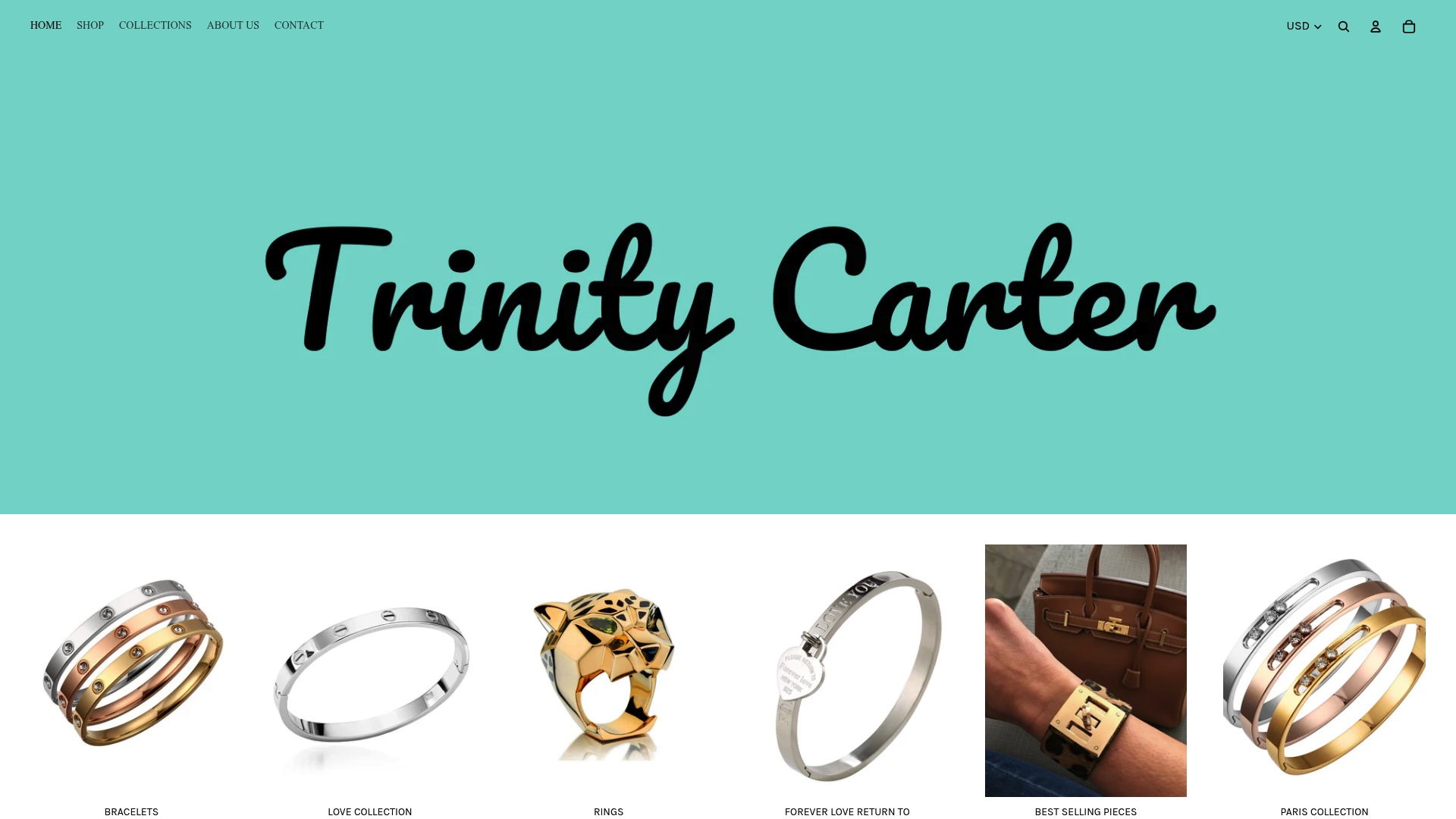
Trinitycarter brings designer-inspired aesthetics to gold-plated jewelry that’s built for everyday wear, not just the occasion box. Each piece draws on the clean lines and feminine details of high-end design houses, translated into accessible price points without cutting corners on construction. The collections span gold-plated bracelets, necklaces, and rings, with crystal accents, floral motifs, and modern silhouettes that hold their look when the plating is done right.
Every piece comes with care guidance so you know exactly how to extend its life. If you want to see how specification and style work together in practice, the Essential V Necklace Pendant is a clean starting point. Browse the full collections and reach out directly for questions about plating specs, base metals, or care recommendations.
Useful sources
| Source | What it covers |
|---|---|
| Wikipedia: Gold plating | Definition, electrochemical process, and distinction from gilding |
| Thermo Fisher: How gold plating is done | Step-by-step process, plating stack, and diffusion behavior |
| Advanced Plating Technologies: Gold plating benefits | Engineering properties, resistivity, biocompatibility |
| Advanced Plating Technologies: Industrial gold plating | Hard vs. soft gold, purity ranges, thickness standards |
| Sharretts Plating: How gold electroplating is done | Consumer-facing process overview and care implications |
| Uneed: Precious metal plating guide | Contact resistance, oxide behavior, electronics rationale |
| Electroplating Machines: Gold plating process | Professional process steps and failure modes |
For professional verification of plating thickness and composition, XRF (X-ray fluorescence) testing is the recognized industry method. Most local jewelers and precious-metal dealers offer this service.
