

Build your workday around five pieces: stud earrings, an 18 inch chain with a small pendant, a watch, one slim ring beyond your band, and a single bracelet that sits above your wrist bone. Pick one of them as your focal piece for the day and let the rest fade into the background. The real skill in work appropriate jewelry isn’t owning more, it’s knowing which piece gets to be loud and making sure nothing else jingles, swings, or catches the light on a video call. Trinity Carter builds pieces around exactly this idea: quiet, comfortable, and easy to wear five days a week.
TL;DR:
- Earrings should be between 3 to 5 millimeters in diameter to balance visibility and subtlety, with secure backs to prevent loss during the day.
- Necklaces around 18 inches in length with a small, dime-sized pendant are most versatile for professional wear across different dress codes.
- Limit jewelry to a focal piece like a pendant or ring, avoiding multiple large or dangling items to prevent noise and distraction in the workplace.
- Use a 10-second shake test before work to identify any jewelry pieces that produce noise or movement, ensuring comfort and appropriateness.
- Prioritize solid metals or high-quality plating for daily wear pieces, inspect clasps and backs carefully, and store jewelry properly to maintain its appearance and longevity.
Table of Contents
- What Counts as Work Appropriate Jewelry: Sizing and Finish Guidance
- Office Jewelry Etiquette: Dos and Don’ts for Sound, Movement, and Setting
- Building a Work Jewelry Collection Without Overspending
- Jewelry for Video Calls: Camera-Ready Rules That Actually Hold Up
- Jewelry Comfort and Safety: Checks That Prevent a Bad Day
- Mixing Metals at the Office Without It Looking Like an Accident
- Everyday Maintenance: Keeping Work Jewelry Looking Sharp All Week
- Why Trinity Carter Fits the Work-Appropriate Jewelry Rules
- A Founder’s Take on Building a Work Jewelry Capsule
- Shop the Work-Appropriate Capsule: Trinity Carter’s Essential Picks
- Sources
What Counts as Work Appropriate Jewelry: Sizing and Finish Guidance
Most style confusion at the office comes down to scale, not taste. You probably already own pieces that could work if you knew the actual dimensions and finishes that read as professional versus the ones that read as too much. A concise office capsule commonly recommended by stylists is diamond or pearl studs, an 18 inch fine chain with a small pendant, a watch, a wedding band, and a single slim ring, and that shortlist holds up whether you’re in a law firm or a creative agency.
Studs. Stay in the 3 to 5 millimeter range for daily wear. Anything larger starts to compete with your face on camera, and anything smaller disappears entirely. Materials matter here more than most people realize: 14k gold, rhodium-plated finishes, and surgical steel all resist tarnish and won’t irritate sensitive ears the way cheaper alloys do. Screw backs or secure friction backs beat basic butterfly clasps for anyone who’s ever lost an earring in a conference room carpet. Trinity Carter’s Essential V Earring Studs sit right in that sweet spot, small enough to disappear into a look, substantial enough to still register as intentional.
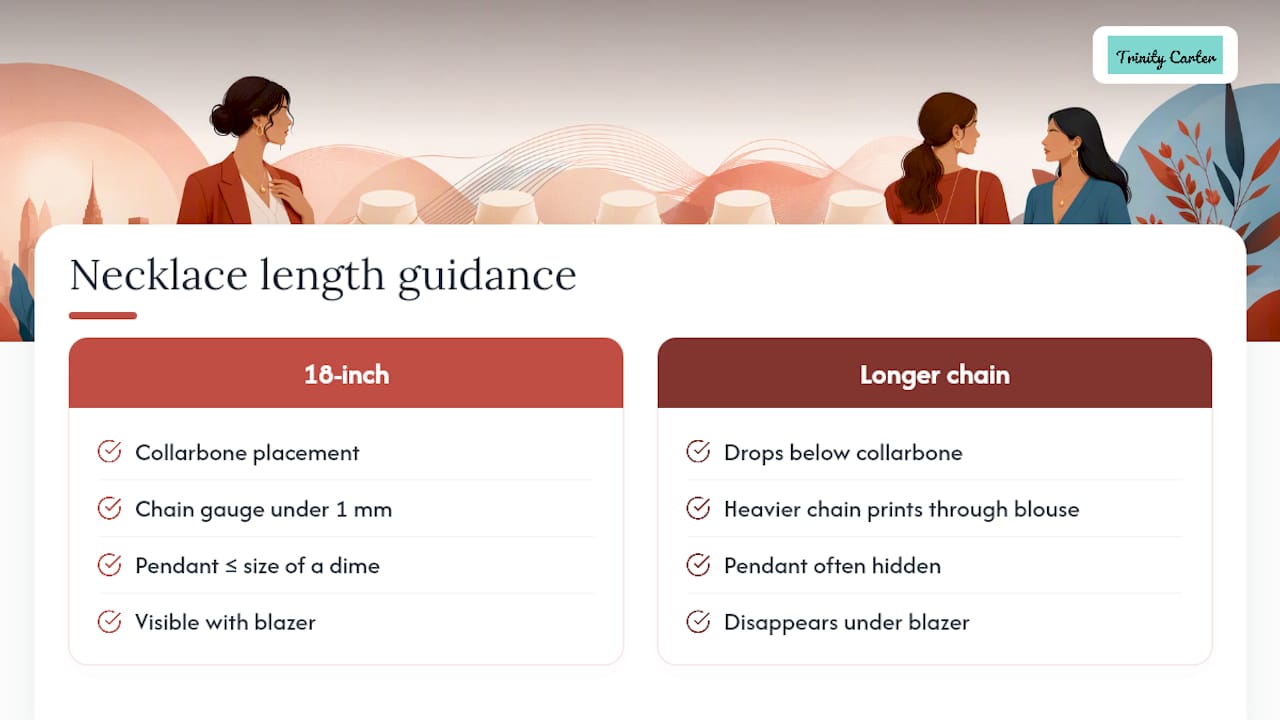
Necklaces. Eighteen inches is the length stylists keep coming back to, largely because it lands right at the collarbone regardless of neckline. Practical guidance points to 18 inches as the most versatile necklace length for professional wear, especially for layered or open-collar looks where a longer chain would disappear under a blazer. Keep the chain gauge under roughly 1 millimeter. Anything heavier starts to look costume-like under fluorescent office lighting, and it will print visibly through a thin blouse. Pendant size should stay modest, roughly the size of a dime or smaller, unless it’s your one chosen focal piece for the day.
Watches. A leather strap reads more formal and works well for client-facing days or business formal environments. A matte metal bracelet strap leans smart casual and holds up better to daily wear and tear. Either way, wear it slightly above the wrist bone rather than loose around it. That small adjustment keeps it from sliding into your palm every time you type or gesture, which is both annoying and, over a full workday, genuinely distracting.
Rings. Your wedding or engagement ring is a given. Beyond that, add exactly one slim accent, either a signet ring or a thin stacking band. Skip multiple large statement rings on the same hand. They catch on keyboards, snag on sweaters, and turn every handshake into a small negotiation. Trinity Carter’s Blossom Flowergram Ring works well in this slot: detailed enough to feel considered, streamlined enough to not compete with a wedding set.
Bracelets. A hinge bangle or a slim chain bracelet that sits above the wrist bone is your safest bet. Anything with dangling charms or multiple stacked bangles will clatter against your desk every time you reach for your keyboard, and that sound carries further than you’d think in an open office.
Office Jewelry Etiquette: Dos and Don’ts for Sound, Movement, and Setting
The fastest way to undo a polished look is noise, both the kind people hear and the kind they see. Etiquette and stylist sources consistently flag jingling and excessive sparkle as the two biggest workplace distractions, and once you start paying attention, you’ll notice them everywhere: the coworker whose bangles announce her arrival before she does, the interviewer whose ring catches the overhead light every time she gestures.
Here’s how to keep both under control:
- Cut acoustic noise at the source. Charm bracelets, multi-bangle stacks, and long dangly earrings are the usual offenders. Swap them for a single hinged bangle or one slim bracelet that stays put.
- Limit visual noise with a scale ceiling. Keep earrings under about 1 inch in drop length for daily wear, and avoid necklaces with multiple charms or beads that catch light from every angle.
- Skip anything highly reflective near your face on camera. Large faceted stones and mirror-polished metal surfaces throw glare under office lighting and video call ring lights alike.
- Adjust for your specific dress code. Business formal environments (law, finance, consulting) call for the most restraint, usually just the core five-piece capsule with nothing added. Business casual gives you room for one layered necklace or a slightly larger pendant. Creative workplaces tolerate more personality, think a stack of thin rings or a mixed-metal moment, but the “one focal piece” rule still applies even there.
- Have a rescue swap ready. If your outfit feels like it needs more but your jewelry budget for the day is used up, reach for a sculptural signet ring instead of adding a second necklace or a pair of chandelier earrings. It reads as intentional rather than excessive.
Stylists sometimes use a points system, assigning a numeric value to each visible piece, to keep the overall look from tipping into clutter across different dress codes. Some practical points systems assign roughly 11 to 13 dots as a ceiling for a fully accessorized outfit, which sounds oddly specific until you realize it forces you to actually count what you’re wearing instead of guessing.
Pro Tip: Before you leave for work, do a 10 second shake test. Move your wrist and shoulders the way you would reaching for a filing cabinet or leaning into a video call. If you hear anything, take one piece off.
Building a Work Jewelry Collection Without Overspending
You don’t need to buy a full capsule at once, and honestly, you shouldn’t. The smarter approach is sequencing your purchases so the highest-impact pieces come first and the experimental ones come later, once you know what you actually reach for every morning.
Studs and a reliable watch deserve first priority. Multiple style sources point to these two as the highest-impact, longest-lasting investments in a working wardrobe, mostly because they’re worn constantly and seen up close in every meeting and video call. A fine 18 inch chain comes next, since it layers under almost every neckline you own. Only after those three are settled should you add a statement accent, whether that’s a signet ring, a sculptural cuff, or a pendant with more presence.
On the plated-versus-solid question: plated gold and rhodium finishes make sense for pieces you’ll rotate frequently or want to update with trends, like a pendant or a stacking ring. Solid metals, or at minimum higher-quality plating with a thick base layer, are worth the extra cost for anything touching your skin daily and taking friction, like a watch band or an everyday bracelet clasp.
Before buying, run through this checklist:
- Inspect clasps and backs in person or in product photos. A flimsy spring ring clasp on a necklace is a return waiting to happen.
- Try new pieces with the actual outfits you wear most, not just what looks good against a plain white shirt in a mirror selfie.
- Check the return policy before buying, especially for anything ordered online where fit and drape are hard to judge from photos.
- Prioritize comfort over trend cycles. A piece you take off by 2 PM every day isn’t earning its place in your capsule.
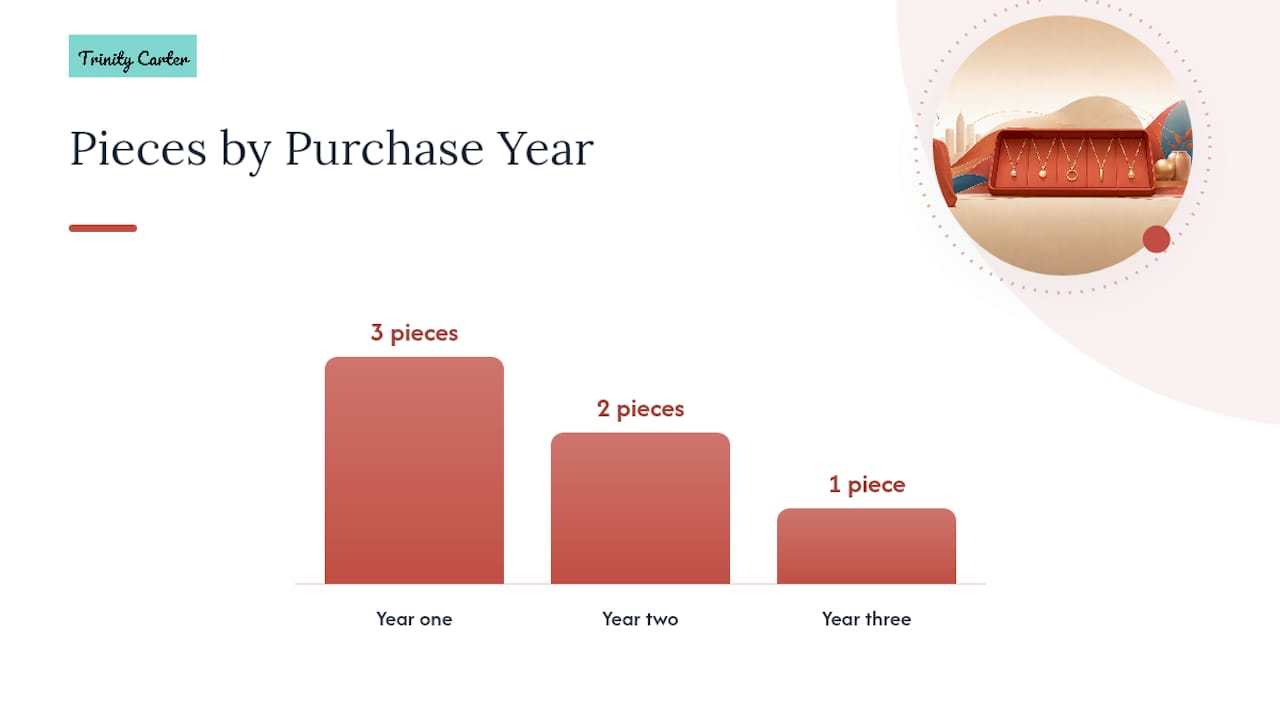
A simple three-year buy plan looks something like this: year one, studs, a watch, and a fine chain with a small pendant. Year two, one accent ring and a slim bracelet, giving you the full five-piece capsule. Year three, one true statement piece, a sculptural cuff, a more architectural pendant, or a second watch for formal occasions, purchased with intention rather than impulse. Trinity Carter’s Essential V Necklace Pendant and gold stud earrings are the kind of year-one pieces that hold up under this plan precisely because they’re not chasing a trend.
Jewelry for Video Calls: Camera-Ready Rules That Actually Hold Up
Video calls compress everything to your head and shoulders, which means the pieces near your face carry more visual weight than they would across a conference table. Stylist advice consistently notes that ears and the collar area become the highest-value real estate in virtual meetings, since that’s essentially all the camera sees.
Studs and short pendants read well on camera because they stay still and stay in frame. Long drop earrings and anything that swings when you turn your head, on the other hand, become a distraction fast, especially on a laggy connection where the movement smears slightly. A collarbone-length necklace also does more visual work than people expect: it draws the eye toward your face rather than down toward your chest, which matters more with certain necklines and hair lengths than you’d think.
Run this quick check before any client call or interview:
- Look at yourself on camera for 10 seconds before joining, not just in a mirror. Lighting changes how metal reads on screen.
- Check for glare, particularly from large stones or high-shine metal directly under a ring light or overhead fixture.
- Remove any bracelet that could jangle if you’re taking notes or typing during the call.
- Confirm your necklace sits above your neckline rather than disappearing into a crew neck or turtleneck.
Three ready-made kits cover most meeting types. For a first interview or new client pitch: studs, a delicate pendant, and your watch, nothing else. For an internal team meeting: swap in one slim ring for a bit of personality. For a high-stakes presentation or board meeting: studs and watch only, letting your voice and slides carry the room without any visual competition.
Jewelry Comfort and Safety: Checks That Prevent a Bad Day
A piece that looks perfect but pinches, spins, or falls apart by 3 PM isn’t actually work appropriate, no matter how it photographs. A few technical checks catch most problems before they happen.
For earrings, screw backs or secure leverbacks beat standard friction backs for anything you’ll wear eight or more hours a day. Practical buying guidance recommends checking fastening types carefully for pieces worn daily, since a loose back is often what causes lost earrings, not the earring itself.
Ring fit matters more than most people budget for when shopping online. A ring that spins on your finger will pull your attention toward it constantly, and that fidgeting habit is exactly the kind of visible distraction the office etiquette rules above are trying to prevent. Get properly sized in person when you can, and remember that fingers swell slightly by the afternoon, so a ring that feels snug at 9 AM should still turn freely, not slide off, by 5 PM.
Necklace clasps come down to two common types: spring ring and lobster clasp. Lobster clasps generally close more securely and are easier to operate one-handed, which matters when you’re getting dressed for an early meeting. Test any clasp a few times before you trust it for a full workday, and replace anything that feels loose or sticky.
Skin sensitivity is worth planning around rather than discovering the hard way. Nickel-free, rhodium-plated, and surgical steel options are the safer bets for daily wear against skin, and they also hold their finish longer under regular contact with hand sanitizer and lotion, both office staples now. Cheap base-metal jewelry, by contrast, tends to develop a greenish tarnish within weeks of daily wear, a telltale sign the plating is too thin or the base alloy is low quality.
Pro Tip: Keep a small tube of clear nail polish in your desk drawer. A thin coat on the inside of a ring band or earring post can buy you a few extra weeks before sensitivity flares up, though it’s a stopgap, not a permanent fix.
Mixing Metals at the Office Without It Looking Like an Accident
Mixed metals get a bad reputation mostly because most mixing happens by accident rather than by design. Contemporary styling guidance supports intentional mixed-metal looks as a legitimate choice, so long as there’s a clear thread tying the pieces together rather than random pairing based on whatever was in your jewelry box that morning.
The simplest fix: pick one accent metal and repeat it across at least two pieces. If your watch has rose gold hardware, let your ring or bracelet echo that tone even if the rest of the piece is a different metal. That repetition is what separates “intentional mix” from “didn’t check the mirror.”
For layering necklaces, cap yourself at two layers in an office setting. Vary the lengths noticeably, say 16 inches and 20 inches, so they don’t overlap and tangle, and keep both chains thin. A thick chain layered with a delicate one usually looks like a mistake rather than a choice.
For rings specifically, either commit to one dominant metal across both hands or use a small accent metal, like a rose gold band next to silver studs, to visually connect your hands and neckline. That kind of repetition reads as coordinated even to people who couldn’t articulate why it works.
Safe combos for conservative offices: gold studs, a silver watch, and one rose gold ring, unified by keeping everything matte rather than high-shine. For creative workplaces, you can push further: a stack of three thin rings in mixed tones, paired with matching mixed-tone studs, still reads intentional as long as the scale stays small across the board.
Everyday Maintenance: Keeping Work Jewelry Looking Sharp All Week
A quick 30-second check each morning saves most of the headaches people associate with daily jewelry wear. Look at clasps for any looseness, check earring backs are seated fully, and glance at any stone settings for wobble before you walk out the door.
Cleaning depends on what you’re working with. Plated pieces should avoid harsh chemicals entirely, including standard jewelry cleaner formulated for solid gold, since it can strip the plating layer faster than normal wear would. A soft, dry cloth after each use and an occasional wipe with a barely damp cloth is usually enough. Solid metals can handle a mild soap and warm water soak followed by a soft brush for detail work, though pearls and certain gemstones need a dry-cloth-only approach regardless of setting.
Storage matters more than people give it credit for. Tangled necklaces and scratched plating are almost always a storage problem, not a quality problem. Lay chains flat or hang them individually rather than tossing them in a drawer together, and keep rings and earrings in a lined box or soft pouch rather than loose in a bag where they’ll knock against each other during your commute.
A small desk kit solves most mid-week emergencies:
- A spare pair of earring backs, since these are the most commonly lost small part.
- A tiny tube of super glue for an emergency stone reset (temporary only, get it professionally fixed later).
- A soft polishing cloth for a quick shine before an unplanned client meeting.
- A small zip pouch to safely stash jewelry if you need to remove it for a task during the day.
Pro Tip: Transport pieces you’re not currently wearing in a small pouch inside your bag rather than loose in a pocket. Keys and phones scratch plated finishes faster than almost anything else you’ll encounter during a normal workday.
Why Trinity Carter Fits the Work-Appropriate Jewelry Rules
Trinity built this brand around a specific frustration: designer-inspired pieces that actually held up to daily wear were either priced out of reach or made with finishes that faded within a season. Trinity Carter designs gold-plated pieces with the details borrowed from names like Cartier and Tiffany & Co, but sized and finished for someone who’s wearing them nine hours a day, not just for an evening.
That shows up in the specifics this guide has walked through. Studs sit in the 3 to 5 millimeter comfort zone with secure backs rather than flimsy butterfly clasps. Pendant chains land at 18 inches, the length stylists keep recommending for a reason. Rings and bracelets are built slim enough to avoid snagging on keyboards or sleeves, with finishes designed to resist the tarnish that plagues cheaper costume jewelry after a few weeks of regular contact with skin and hand sanitizer.
If you want more detail on pairing a pendant with specific necklines, Trinity Carter’s guide on choosing a necklace for a V-neck dress walks through proportion in more depth, and the minimalist pendant necklace breakdown covers why a single small pendant so often outperforms a busier design in professional settings.
A Founder’s Take on Building a Work Jewelry Capsule
Pick a focal piece and resist the rest. That’s the whole rule, and it’s harder to follow than it sounds, because the instinct on a day you feel underdressed is to add more, not less. Add restraint instead. One good pendant or one considered ring says more than five small pieces fighting for attention.
There’s a real tension between wanting your jewelry to say something about you and needing it to disappear into a professional setting for eight hours straight. You don’t have to choose between personality and polish. You just have to choose which piece gets to carry the personality on any given day, and let the rest of your capsule do quiet, reliable work in the background.
Try it with one piece before you try it with five. Wear a single pendant for a week and see how it changes the way you get dressed in the morning.
— Trinity
Shop the Work-Appropriate Capsule: Trinity Carter’s Essential Picks
Every piece in this section was designed around the sizing and comfort rules covered above, not fitted to them after the fact. That’s the difference between jewelry that survives a real workweek and jewelry that just photographs well.
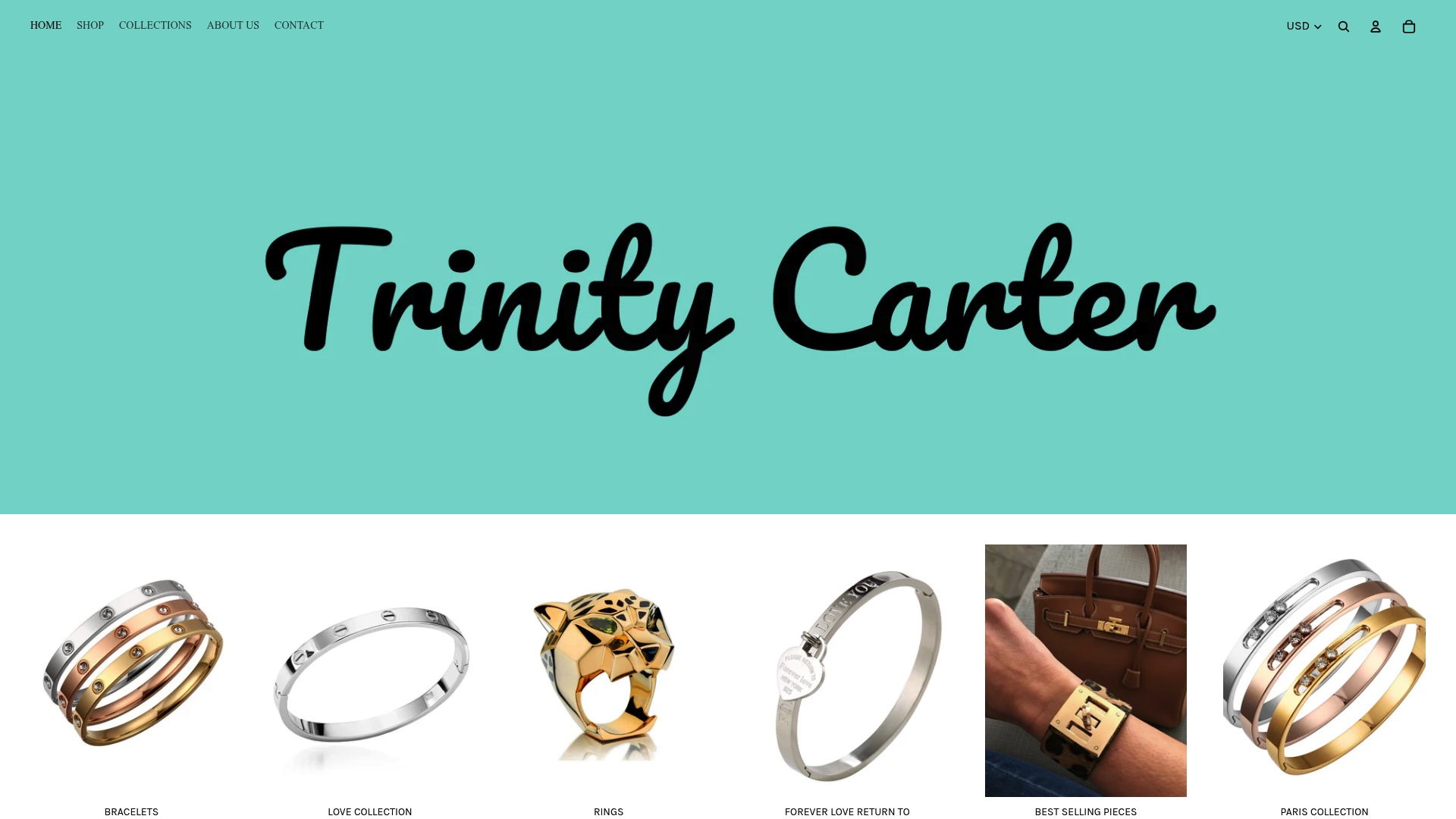
The Essential V Earring Studs sit at the ideal daily-wear scale with secure backs built for eight-plus hours of wear, and they’re subtle enough to pair with a bolder necklace on days when you want your focal piece elsewhere. The Essential V Necklace Pendant hits the 18 inch length this guide keeps circling back to, landing right at the collarbone for nearly any neckline. The Essential V Bracelet is cut to sit above the wrist bone, so it won’t slide into your palm mid-typing or catch on a sleeve during a handshake. The Blossom Flowergram Ring works as that one slim accent ring, detailed enough to register as intentional without competing with a wedding set.
Compared to building a capsule piece by piece from a handful of different retailers, shopping one line means the finishes, sizing logic, and metal tones are already coordinated for you. Browse the full necklace collection and start with one piece this week rather than buying the whole capsule at once.
Sources
For readers who want to dig deeper into any of the rules above, these sources cover the technical and etiquette side of work appropriate jewelry in more detail.
JewelryShopping.com’s guide to work jewelry lays out the five-piece capsule concept referenced throughout this guide, with additional notes on seasonal adjustments. StyleCaster’s jeweler-sourced advice goes deeper into the “quiet luxury, one focal piece” philosophy and why it tends to outperform maximalist accessorizing in professional settings. MioLook’s guide to office jewelry etiquette breaks down the points system for managing visual noise across different dress codes, useful if you want a more numeric approach to daily outfit planning. Sophia Jewelers’ office edit covers necklace length and stud sizing in the kind of granular detail worth bookmarking before your next jewelry purchase.
- The Best Jewelry for Work According to a Jeweler (2026) — StyleCaster
- Office and work jewelry: business style rules — MioLook
