

Yes, perfume can damage certain jewelry materials, especially pearls, porous gemstones, and plated pieces. On harder metals like high-karat gold or platinum, it typically leaves residue rather than lasting harm. The single best habit: spray your perfume first, wait for it to dry, then put your jewelry on. Skip that step regularly and the damage often becomes permanent, particularly for pearls and opals.
TL;DR:
- Pearls, porous gemstones, and plated jewelry are most vulnerable to perfume damage, with pearls being particularly at risk due to nacre breakdown.
- Applying perfume first, waiting for it to dry, and then putting on jewelry significantly reduces chemical damage over time.
- Regular cleaning should involve gentle methods; pearls require special care without soaking or ultrasonic cleaning to prevent damage.
- Deep or persistent damage, such as eroded nacre or cracked porous stones, often cannot be fixed without professional restoration.
- Daily habits like using a microfiber cloth to wipe jewelry and avoiding direct perfume application are essential for maintaining jewelry’s appearance and integrity.
Table of Contents
- Which Jewelry Materials Are Most at Risk From Perfume?
- Why Perfume Ingredients Attack Metal and Gemstones
- How to Protect Your Jewelry From Perfume Damage
- Cleaning Perfume Residue Off Your Jewelry Safely
- When to Take Perfume-Damaged Jewelry to a Professional
- Everyday Elegance Means Everyday Habits
- Everyday Jewelry Built to Handle Real Life
- Sources
Which Jewelry Materials Are Most at Risk From Perfume?
Not all jewelry reacts to perfume the same way, and knowing where your pieces fall on that spectrum tells you how careful you actually need to be.
Pearls sit at the top of the risk list. Their nacre is made of a protein called conchiolin, and alcohols, acids, and surfactants in perfume break it down over time. Once that luster is gone, there’s no polishing it back.
Plated and vermeil jewelry come next. The thin metal layer on top is vulnerable to solvents and skin oils, which loosen the bond and expose the base metal underneath. Low-karat gold and rose gold have similar issues because the copper and other alloys mixed in react more readily to chemical exposure than pure gold does.
Here’s how the rest break down:
- Sterling silver and base metals: perfume compounds speed up tarnishing and dull the surface faster than normal wear.
- High-karat gold, platinum, and stainless steel: chemically resistant, but residue still builds up and dulls the shine over time.
- Opal, turquoise, and amber: porous and moisture-sensitive, so perfume can cause staining, dehydration, or the fine cracking known as crazing.
If you own a mix of these, treat pearls and porous stones like you’d treat anything genuinely fragile. Everything else just needs regular attention.
Why Perfume Ingredients Attack Metal and Gemstones
Perfume isn’t one substance. It’s a blend of ethanol, essential oils, fixatives, and solvents, and each interacts differently with what’s on your skin. Ethanol dissolves oils and evaporates fast, but it can pull moisture out of porous stones along the way. Essential oils and fixatives leave behind a fine film that traps dust and dulls facets on gemstones over weeks of repeated exposure.
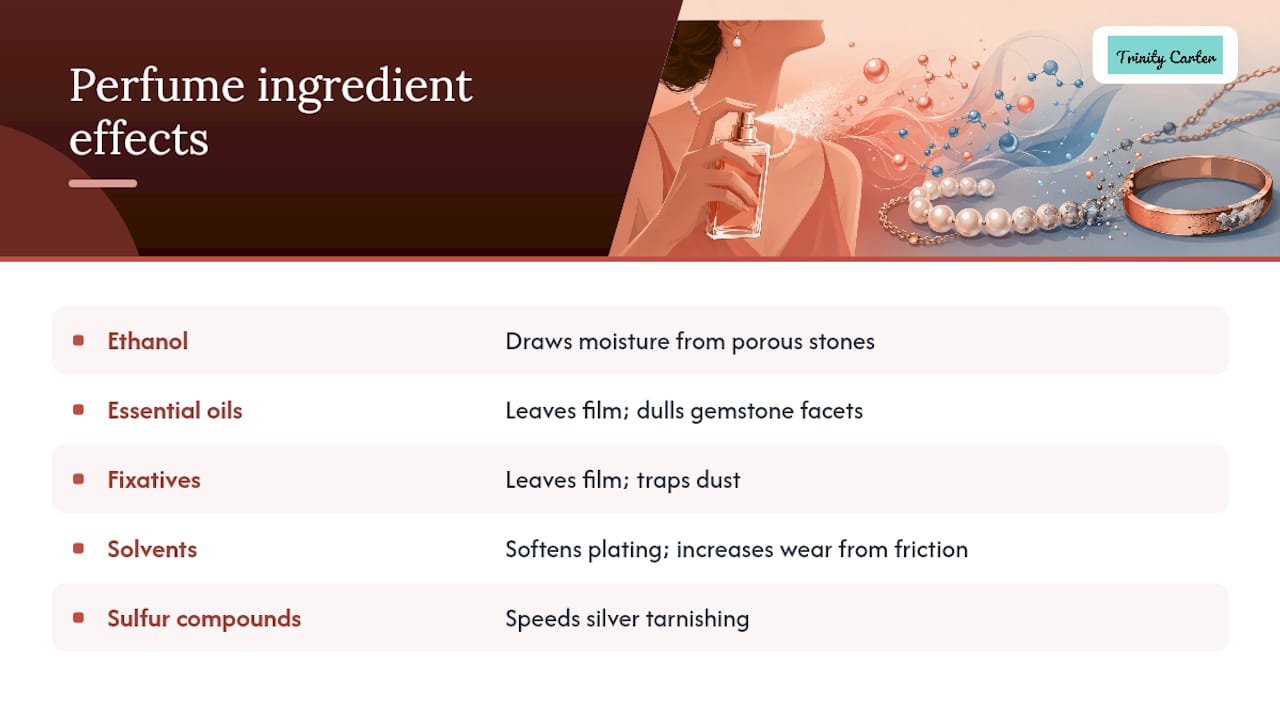
Sulfur compounds in some fragrances speed up the natural tarnishing process on silver. That’s why a piece you wear daily with perfume tarnishes faster than one that sits in a drawer. For plated jewelry, the mechanism is partly mechanical: solvents soften the surface just enough that everyday friction, a sleeve rubbing against a bracelet, wears through the plating faster than it otherwise would.
None of this happens in one spritz. It’s cumulative chemical exposure, similar to how sunlight slowly fades a photograph rather than burning it instantly.
How to Protect Your Jewelry From Perfume Damage
The fix is mostly about sequence and timing, not expensive products. Here’s the order that actually works:
- Apply your perfume first, on skin only, never directly onto a ring, chain, or bracelet.
- Wait five to ten minutes for it to dry and settle before putting jewelry on.
- Remove jewelry before showering, swimming, or applying lotion and sunscreen.
- Store plated and delicate pieces in separate soft pouches, away from harder items that can scratch them.
- Give your most perfume-exposed pieces an occasional day off instead of wearing them constantly.
Pearls need their own set of rules on top of this. Never spray perfume anywhere near them while wearing them, and put them on as the very last step before you leave the house. Cosmetics, hairspray, and jewelry go on in a specific order for a reason; pearls should be last in, first out.
Pro Tip: Keep a small microfiber cloth in your bag or car. A quick wipe at the end of the day removes the light film perfume and skin oils leave behind, before it has a chance to sit and do damage overnight.
Spraying directly onto jewelry is the single most common mistake people make, and it’s also the easiest one to fix. Just change where the bottle points.
Cleaning Perfume Residue Off Your Jewelry Safely
For most metals and hard gemstones, cleaning is simple: mild soap, warm water, and a soft cloth or brush, followed by drying immediately so no moisture lingers in settings or clasps.
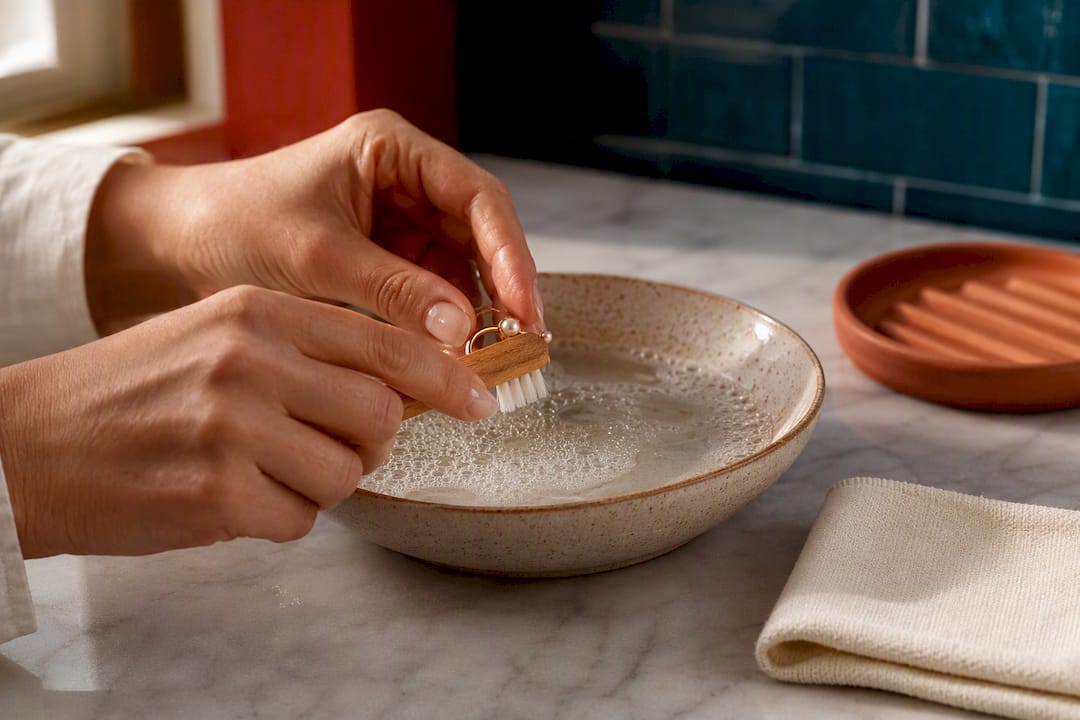
Pearls are the exception. Never soak them, and skip ultrasonic or steam cleaners entirely. A soft, barely damp cloth wiped gently across the surface, then air-drying flat, is the safest routine. Plated pieces also need a lighter touch than you might think. A gentle wipe is fine, but abrasive polishing cloths or powders can strip the plating faster than the perfume ever would.
Avoid these entirely on any jewelry:
- Bleach or chlorine
- Ammonia-based cleaners
- Acetone or nail polish remover
- Toothpaste (it’s mildly abrasive and scratches soft metals)
- Harsh commercial polishes not made for jewelry
If you spot deep etching, a loose stone, or structural damage that a gentle cleaning doesn’t improve, stop the DIY approach and get the piece looked at professionally before it gets worse.
When to Take Perfume-Damaged Jewelry to a Professional
A jeweler can usually handle polishing, re-plating worn spots, tightening loose settings, replacing clasps, and steam-cleaning hard gemstones. What they generally can’t undo: pearl nacre that’s already eroded, opal crazing, or deep chemical etching on porous stones. Those changes are typically permanent.
When you bring a piece in, mention roughly when you noticed the change, what it looked like at first, and any cleaning you already tried. That helps a jeweler figure out whether it’s fixable or just needs damage control going forward. Get it inspected if you notice cloudiness that won’t wipe away, flaking on a plated surface, or any new cracks on a stone.
Everyday Elegance Means Everyday Habits
At Trinity Carter, we design jewelry to be worn constantly, not saved for special occasions, so care advice has to be realistic for daily life, not a set of rules nobody follows. The habits that protect your pieces are small: perfume first, jewelry last, a soft cloth kept nearby. We’ve written more detail on keeping plated finishes looking new for exactly this reason. Good care shouldn’t feel like a chore.
— Trinity
Everyday Jewelry Built to Handle Real Life
If you’re shopping for pieces you’ll actually wear every day, not just for special occasions, look for designs made with that in mind. Trinity Carter’s collections lean into that idea directly: gold-plated bracelets and necklaces designed to hold up to daily wear when you follow a few simple habits, without the price tag of fine jewelry.

The Essential V Bracelet is a good example of what we mean: a simple, versatile piece meant to go from your morning routine straight through your evening without needing to be babied. Pair the right care habits with jewelry that’s actually made for regular wear, and you get pieces that still look sharp months in. Browse the current bracelet collection and see which piece fits your everyday rotation.
Sources
- Perfume Damage — How Cosmetics, Sprays, and Lotions Degrade Pearls and
- Taking Care of Gemstones - Do’s and Don’ts Guide
- The secret art of pairing jewelry with perfumes
