

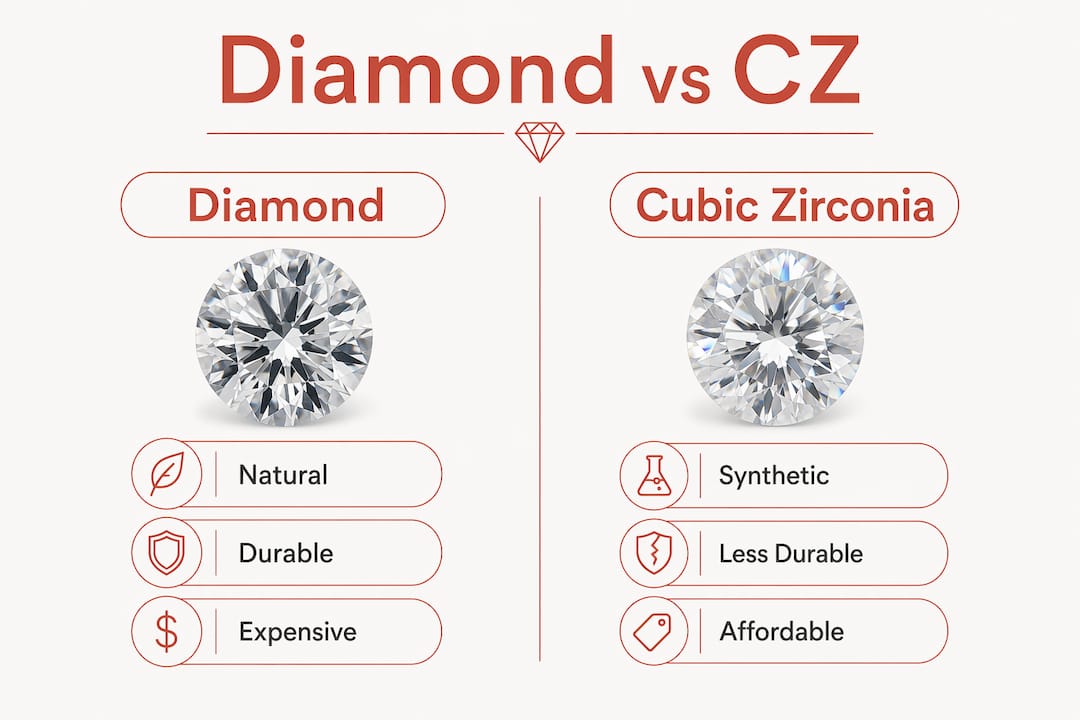
Cubic zirconia and diamonds look nearly identical at first glance, but they are fundamentally different materials. Diamond is natural carbon formed deep in the earth over billions of years. Cubic zirconia is a synthetic gemstone made from zirconium dioxide, manufactured in a lab and classified as a diamond simulant, not a counterfeit diamond. The gap between them shows up fast once you know what to look for: hardness, brilliance, price, and lifespan all tell a very different story.
| Attribute | Diamond | Cubic Zirconia |
|---|---|---|
| Composition | Natural carbon | Zirconium dioxide (lab-made) |
| Mohs hardness | 10 | 8–8.5 |
| Refractive index | 2.417–2.419 | 2.150–2.180 |
| Dispersion | 0.044 | 0.058–0.066 |
| Typical lifespan | Generations | A few years with daily wear |
| 1-carat price | $1,000–$12,000+ | $10–$20 |
| Resale value | Retains partial value | Minimal to none |
| Clarity | Inclusions common | Typically flawless |
The core trade-off is simple: CZ gives you the look of a diamond at a fraction of the cost, but it won’t last the way a diamond does, and it won’t hold any financial value.
How cubic zirconia vs diamond actually looks in the light
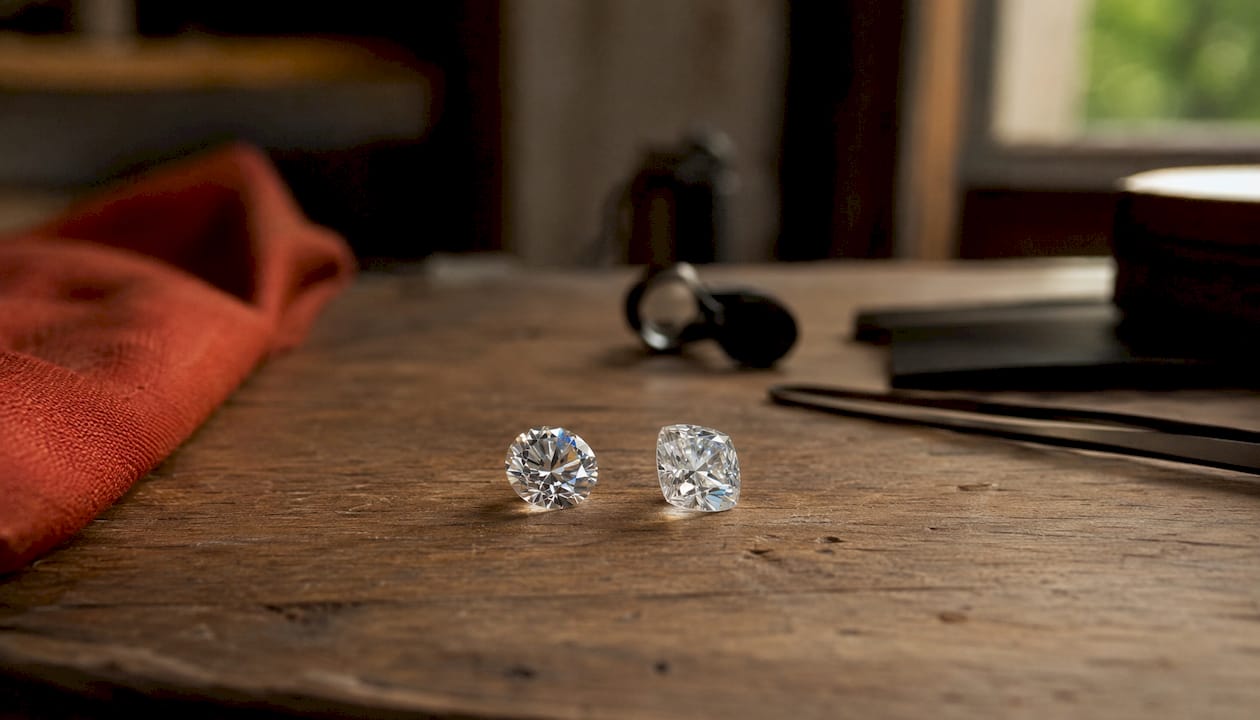
The visual difference between CZ and diamond is subtle to the untrained eye, but it is real and consistent. Here is what separates them:
- Brilliance vs. fire: Diamonds have a higher refractive index of 2.417–2.419 compared to CZ’s 2.150–2.180, which means diamonds return more white light to the eye. That sharp, intense white sparkle is called brilliance.
- Rainbow flashes: CZ has a dispersion rate of 0.058–0.066 versus diamond’s 0.044. That higher dispersion produces vivid rainbow flashes, often described as “fire.” Under direct light, CZ can look almost disco-ball bright.
- Color: Most natural diamonds carry a faint yellow or brown tint. CZ is perfectly colorless, comparable to a D color grade on the GIA scale. Paradoxically, that flawless colorlessness can make CZ look artificial to an experienced eye.
- Clarity: Natural diamonds almost always contain inclusions, tiny internal imperfections formed during their creation. CZ has none. A stone that looks completely flawless under 10x magnification is almost certainly not a natural diamond.
- Over time: A new CZ stone can genuinely fool most people. After a year or two of daily wear, micro-scratches dull its surface and the rainbow fire fades to a cloudy haze. A well-cut diamond looks the same on day one as it does on day one thousand.
Pro Tip: If you’re comparing two stones side by side under natural sunlight, the diamond will show a sharper, more controlled sparkle. The CZ will throw more color but less depth.
Durability and hardness: why the Mohs scale matters here
Diamond ranks 10 on the Mohs hardness scale, the maximum possible rating and the hardest natural material on earth. CZ scores 8–8.5. That two-point gap sounds minor, but the Mohs scale is logarithmic, so the real-world difference in scratch resistance is enormous.
- Scratch resistance: Diamond resists scratching from virtually any material encountered in daily life. CZ scratches from contact with harder surfaces, including other jewelry, countertops, and even dust particles containing quartz.
- Facet sharpness: Under magnification, a used CZ shows rounded facet edges and surface abrasion. Diamond maintains crisp, precise facet edges indefinitely because its hardness allows it to be cut to exact tolerances that hold.
- Lifespan: CZ typically lasts 2–5 years with daily wear before clouding and losing facet sharpness. At that point, it needs replacement or professional re-polishing. A diamond worn daily for fifty years still performs optically the same as when it was first set.
- Thermal conductivity: Diamonds conduct heat exceptionally well. CZ does not. Breathe on a loose stone and the fog dissipates almost instantly on a diamond, while it lingers on CZ for several seconds.
- Brittleness: CZ is also more brittle than diamond. Both stones can shatter under a sharp direct blow, but CZ chips more readily from everyday impacts.
For an engagement ring or any piece worn every single day, this durability gap is the deciding factor for most buyers.

Price and value: the real cost of choosing CZ
The price difference between CZ and diamond is not a small gap. It is a chasm.
- Per carat: A 1-carat CZ costs $10–$20. A 1-carat diamond ranges from $1,000 to $12,000 depending on cut, color, clarity, and carat weight combined.
- Resale value: CZ has negligible resale value; the gemstone itself is not considered valuable on secondary markets. Diamonds retain some value and can be resold, reset, or passed down.
- Why diamonds cost more: Natural diamonds are rare, require labor-intensive mining, and are graded individually by the 4 Cs (cut, color, clarity, carat). CZ is mass-produced in a lab with consistent, predictable results and no supply constraints.
- Heirloom potential: A diamond can be a family heirloom. It holds sentimental and monetary value across generations. A CZ ring bought today will likely need its stone replaced within a few years.
- Setting economics: CZ rings in affordable price ranges often use base metals plated with precious metals, which can wear away with time. Investing heavily in fine metal settings for CZ may be less practical due to the stone’s limited lifespan.
The upfront savings with CZ are real and substantial. The question is whether the piece is meant to last a lifetime or serve a specific, shorter-term purpose.
How to identify diamonds vs cubic zirconia at home and in the lab
To an untrained eye, CZ looks nearly identical to a diamond at first glance. Several reliable tests separate them quickly.
- Thermal conductivity test: This is the fastest and most definitive method professionals use. A standard thermal diamond tester reads CZ as “simulant” because CZ has much lower thermal conductivity than diamond. Most jewelers carry one and can test a stone in seconds.
- Weight test: CZ weighs approximately 1.7 times more than a diamond of the same dimensions. A round stone measuring 6.5mm will weigh about 1.00 carat if it’s a diamond and roughly 1.70 carats if it’s CZ. A precision scale makes this obvious.
- Fog test: Breathe on the stone. Diamond’s superior thermal conductivity clears the fog almost instantly. CZ stays foggy for several seconds.
- Magnification: Under 10x loupe magnification, look for inclusions. Natural diamonds almost always have them. A completely flawless stone is a strong indicator of CZ. Also check facet edges: rounded or abraded edges suggest CZ, while sharp edges point to diamond.
- Dispersion observation: Under a point-source light, CZ throws noticeably more rainbow fire than diamond. Trained gemologists spot this immediately. For casual observers, it takes a side-by-side comparison.
- UV fluorescence: Many diamonds fluoresce blue under long-wave UV light. CZ is typically inert under UV. This is a supporting clue, not a definitive test on its own.
Pro Tip: Never rely on the scratch test for a finished piece. It’s destructive and won’t distinguish diamond from other hard simulants. Use a thermal tester or take the piece to a certified gemologist.
When does it make sense to choose diamond vs cubic zirconia?
The right choice depends entirely on what the piece needs to do and how long it needs to do it.
Choose a diamond when:
- The piece is an engagement ring or wedding band worn every day. Diamond’s hardness and permanence match the symbolism and the physical demands of daily wear.
- You want heirloom potential. A diamond can be reset, resized, and passed to the next generation without losing its optical or structural integrity.
- Long-term value matters. Diamonds retain a portion of their market value. CZ does not.
- The setting is fine metal. Pairing a high-quality gold or platinum setting with a stone that will cloud within two years wastes the investment in the metal.
Choose CZ when:
- Budget is the primary constraint and the look matters more than longevity. CZ delivers a convincing diamond aesthetic at a price point that makes fine-looking jewelry genuinely accessible.
- The piece is for fashion or occasional wear. Travel jewelry, trend-driven statement pieces, and seasonal accessories are perfect applications for CZ. If it gets lost or damaged, replacement costs almost nothing.
- You want to experiment with bold cuts and sizes. A 3-carat CZ costs a fraction of what a 3-carat diamond costs, making it practical to wear large, dramatic stones without the financial risk.
- Ethical sourcing is a priority. CZ is lab-created, requires no mining, and raises none of the environmental or conflict concerns associated with mined diamonds. For buyers who prioritize that, CZ is a straightforward choice.
The setting metal matters regardless of which stone you choose. A quality sterling silver or stainless steel band paired with CZ will outlast a plated base-metal setting by years, even as the stone itself eventually needs replacing.
How Trinitycarter approaches affordable luxury with CZ and crystal designs
Trinitycarter was built on a specific premise: that designer-inspired jewelry should not require a designer price tag. The brand draws from the aesthetic language of high-end houses, applying it to gold-plated pieces set with crystals and CZ inlays that deliver genuine visual impact at an accessible price.
- Design over stone value: Trinitycarter’s pieces prioritize cut quality, setting craftsmanship, and overall composition. A well-set CZ in a thoughtfully designed gold-plated frame reads as luxury because the design itself carries the weight, not the stone’s certificate.
- CZ as a design tool: Because CZ can be cut into virtually any shape and produced in consistent quality, it gives designers freedom that mined stones don’t. Trinitycarter uses that flexibility to offer jewelry trends that track current styles without locking buyers into permanent, expensive commitments.
- Accessible luxury defined: The brand’s position is that affordable luxury jewelry is not a compromise. It is a different category with its own logic. CZ allows buyers to wear beautifully crafted pieces for occasions, seasons, and trends, then refresh their collection without guilt.
- Informed buying: Trinitycarter’s editorial content is built around helping buyers understand exactly what they are purchasing. Knowing that a CZ piece will look stunning for two to five years with proper care, and that it was never meant to be a diamond substitute, is what makes the purchase satisfying rather than disappointing.
- Quality signals: Well-crafted CZ jewelry uses precious metal settings that elevate the overall piece. The stone’s brilliance matters, but so does the weight of the band, the finish of the prongs, and the consistency of the plating. Trinitycarter applies those standards across its collections, from the Crystal Love Bracelet to its ring and necklace lines.
The honest framing is this: CZ jewelry from a brand that cares about construction gives you something genuinely beautiful for the price. It is not a diamond, and it should not be sold as one. But for fashion, gifting, and everyday elegance, it does exactly what it promises.
Trinitycarter’s CZ jewelry collection
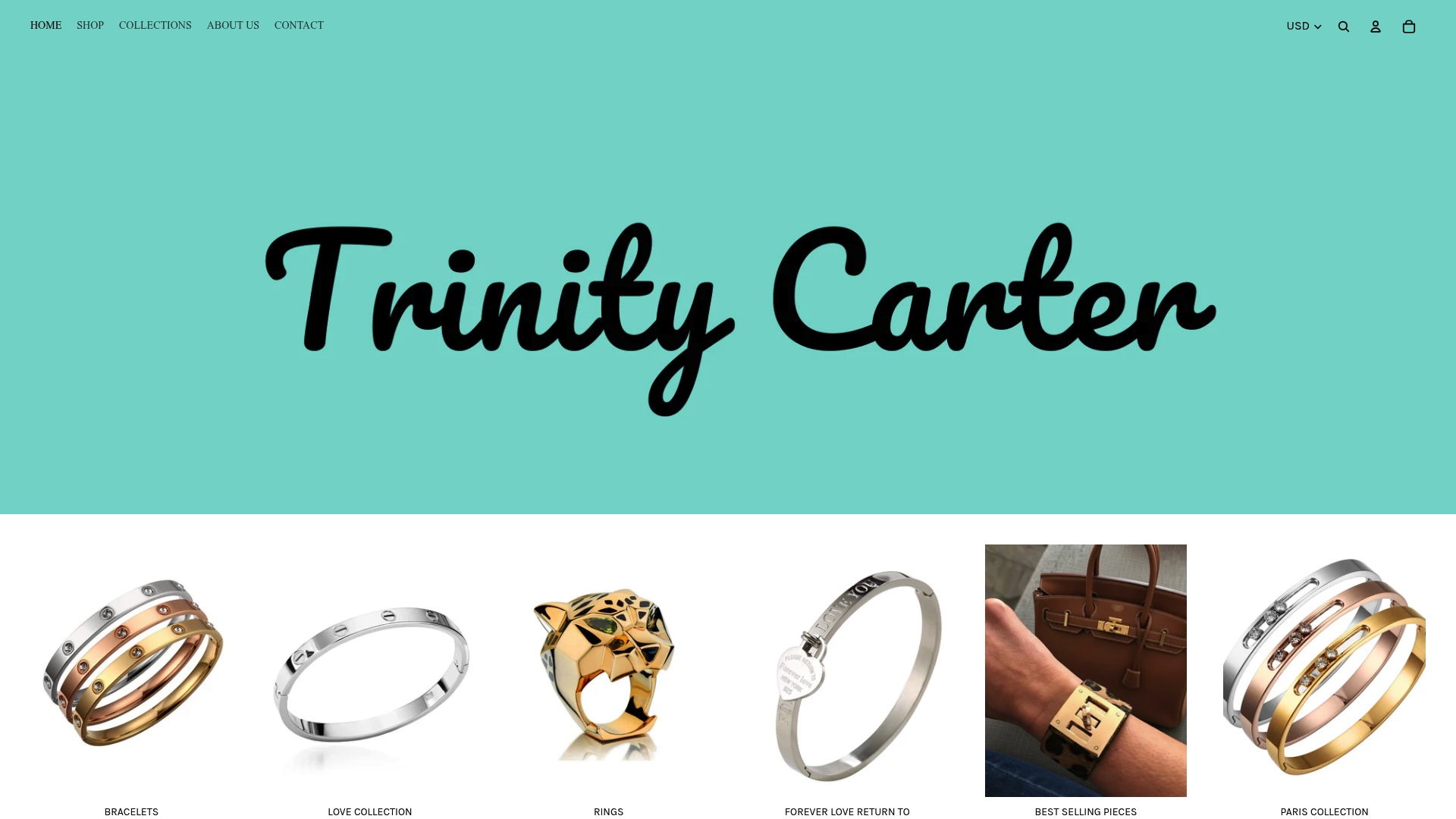
Trinitycarter’s rings collection and necklaces collection bring the CZ aesthetic into designer-inspired settings at prices that make gifting and self-treating genuinely easy. Each piece is crafted with the same attention to proportion and finish that defines the brand’s approach to affordable luxury gifts. Whether you’re looking for a sparkling everyday bracelet or a statement ring for a special occasion, the collection covers both.
Key Takeaways
Diamonds and cubic zirconia serve different purposes: diamonds offer permanent brilliance, durability, and lasting value, while CZ delivers an affordable, beautiful look suited to fashion and occasional wear.
| Point | Details |
|---|---|
| Hardness gap is large | Diamond scores 10 on the Mohs scale; CZ scores 8–8.5, making it far more prone to scratching. |
| CZ lifespan is limited | With daily wear, CZ typically clouds and loses sharpness within 2–5 years and needs replacement. |
| Price difference is dramatic | A 1-carat CZ costs $10–$20; a comparable diamond starts at $1,000 and can reach $12,000 or more. |
| Identification is straightforward | A thermal conductivity tester reads CZ as “simulant” in seconds, the fastest professional method. |
| CZ suits fashion, not heirlooms | CZ is ideal for trend-driven and occasional-wear jewelry; diamonds are the choice for lifelong pieces. |
Recommended
- Crystal Love Bracelet – Sparkling Cubic Zirconia Inlay – Trinity Carter
- Sliding Crystals Move Bracelet – Adjustable Sparkling Bangle with Movi – Trinity Carter
- Why sale jewelry retains quality: the buyer’s guide – Trinity Carter
- Shop luxury jewelry online UK: The affluent buyer’s guide – Trinity Carter
