

Ethical crystal jewelry means the stone’s origin is disclosed, the people who mined it were paid and worked safely, the extraction didn’t wreck the surrounding land, and the seller can prove all three. Before buying, ask exactly one question: where did this come from, and can you show me? If a seller can’t answer, choose a secondhand piece or a lab-grown stone instead. Trinity Carter’s own buyer guides break down these standards further for shoppers who want the fuller picture.
TL;DR:
- Choosing crystals with verified origin information and direct relationships with miners significantly reduces the risk of supporting unethical practices.
- Conflict stones like lapis lazuli from Afghanistan are highly associated with armed group funding, making specific country sourcing a critical red flag.
- Sellers who provide sourcing photos, mention cooperatives, or hold certifications like RJC or Fairmined demonstrate higher transparency and accountability.
- Buying secondhand, vintage, or lab-grown crystals avoids new mining impacts but requires scrutiny of energy use or provenance details.
- Verify sourcing claims with specific questions before purchasing and favor sellers who openly share detailed, visual, and documentation evidence.
Table of Contents
- What “Ethically Sourced” Actually Means for Crystal Jewelry
- Where Sourcing Problems Actually Happen
- Your Buyer Checklist: What to Ask and When to Walk Away
- Sustainable Buying Options and Their Trade-Offs
- Verifying Claims: Documents, Return Policies, and Price Checks
- Caring for Crystal Jewelry So It Lasts
- Trinity Carter’s Resources for Shoppers Evaluating Crystal Jewelry
- No Purchase Is Perfect, and That’s Fine
- Browse Trinity Carter’s Crystal-Accented Collections
- Sources
- FAQ
What “Ethically Sourced” Actually Means for Crystal Jewelry
There’s no government agency stamping crystals “ethical” the way there is for organic food or fair trade coffee. The term covers four separate concerns, and a seller can pass on one while failing the others entirely.
Labor conditions come first: were miners paid fairly, given safety equipment, and free of coercion? Small-scale crystal mining in many regions is informal, which means no minimum wage, no insurance, and no oversight. Environmental impact is the second pillar. Mining, even artisanal digging, clears land, kicks up dust, and can pollute nearby water sources. National Geographic’s reporting on crystal sourcing notes that operations range from small hand-dug pits to industrial quarries, and both can damage local biodiversity if unmanaged.
Human rights and conflict financing make up the third concern. Certain stones have documented links to armed groups profiting from unregulated mining. Traceability ties the other three together: without a paper trail back to a specific mine or cooperative, none of the other claims can be verified.
Because there’s no single legal definition of “ethically sourced,” the strongest signal is a seller who volunteers specifics rather than vague reassurance. According to Crystalstones, disclosed country and mine of origin, direct relationships with miners, and recognized certifications carry real weight. Look for:
- Responsible Jewellery Council (RJC) membership, which audits supply chain practices across the jewelry industry
- Fairmined certification, focused on artisanal and small-scale mining operations
- Fair Trade designation, covering labor conditions and pay
- B Corp status, which evaluates a company’s overall social and environmental accountability
None of these labels are common in the crystal trade specifically, which is exactly why a seller who holds one, or who at least names a cooperative and a country, stands out.
Where Sourcing Problems Actually Happen
Crystal supply chains break down in predictable places, and knowing the pattern helps you spot trouble before you check out.
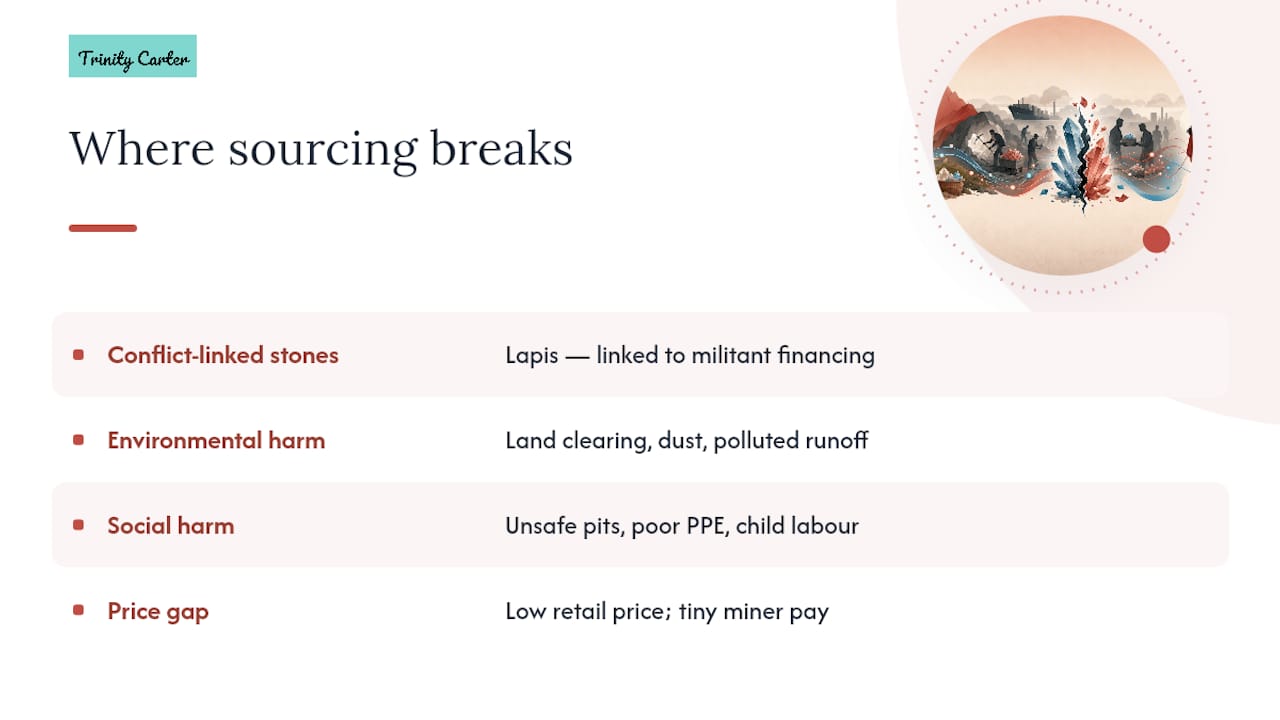
Lapis lazuli is the clearest documented example. Reporting from SBS Voices has linked lapis mining in Afghanistan to militant financing, with armed groups profiting from unregulated extraction in remote mountain regions. It’s not the only stone with a conflict footprint, but it’s the one with the most consistent paper trail connecting a specific mineral to a specific harm.
Beyond conflict financing, most sourcing problems fall into two buckets. Environmental harm shows up as land clearing, dust that damages surrounding vegetation, and water pollution from unregulated runoff near mining sites. Social harm shows up as unsafe pits with no structural support, minimal protective equipment, and, in some documented cases, child labor.
The Guardian’s investigation into the wellness crystal trade traced supply chains from Madagascar’s mines to Western wellness shelves, finding pollution and unsafe labor at the extraction end while very little of the retail price made it back to mining communities. That gap between what a stone sells for and what the miner actually earned is one of the more reliable warning signs available to a shopper. A crystal priced far below the market rate for its type usually means someone along the chain, most often the person doing the actual digging, got paid next to nothing.
Your Buyer Checklist: What to Ask and When to Walk Away
Verifying an ethical claim doesn’t require a background in supply chain audits. It requires five direct questions and a willingness to walk away when the answers are vague.
- What country, region, and mine did this stone come from? A specific answer, even a general one like “a cooperative in Zambia,” beats “imported” every time.
- Does the seller have a direct relationship with the miners or cooperative? Sellers who visit mines in person and know the operation by name are harder to fool and less likely to be passing along a laundered story.
- Can they show sourcing photos or documentation? Real photos of a real mine, ideally with people in them, are a much stronger signal than a stock image of a crystal on a velvet cloth.
- Has the stone been treated, dyed, or stabilized, and will they say so upfront? Undisclosed treatment is its own small trust violation, separate from labor and environmental questions but worth flagging.
- What do they know about worker pay or conditions? Most won’t have exact figures, but a seller who has genuinely visited a mine can usually describe general conditions; one who has never left a warehouse usually can’t.
National Geographic’s crystal sourcing guide points to sellers who visit mines directly and publish sourcing photos and cooperative names as the most trustworthy tier of the market, and that pattern holds up across most credible small sellers.
Red flags cluster around vagueness. “Imported from overseas,” no country named, no mine or cooperative named, and prices that seem too good given the stone’s size and rarity are the four most common signs of a supply chain nobody wants you looking at too closely. Investigative reporting from ABC News found that a large share of online crystal sellers simply cannot state where a specific stone came from when asked directly, which tells you how rarely this question gets asked in the first place.
Pro Tip: Send the sourcing question before you add anything to your cart, not after. A seller’s response time and specificity tell you more than their “about us” page ever will.
If the answer to two or more checklist questions is a shrug, that’s your answer. Walk away.
Sustainable Buying Options and Their Trade-Offs
Not every ethical purchase has to involve a newly mined stone. Four routes exist, and each comes with its own honest trade-offs.
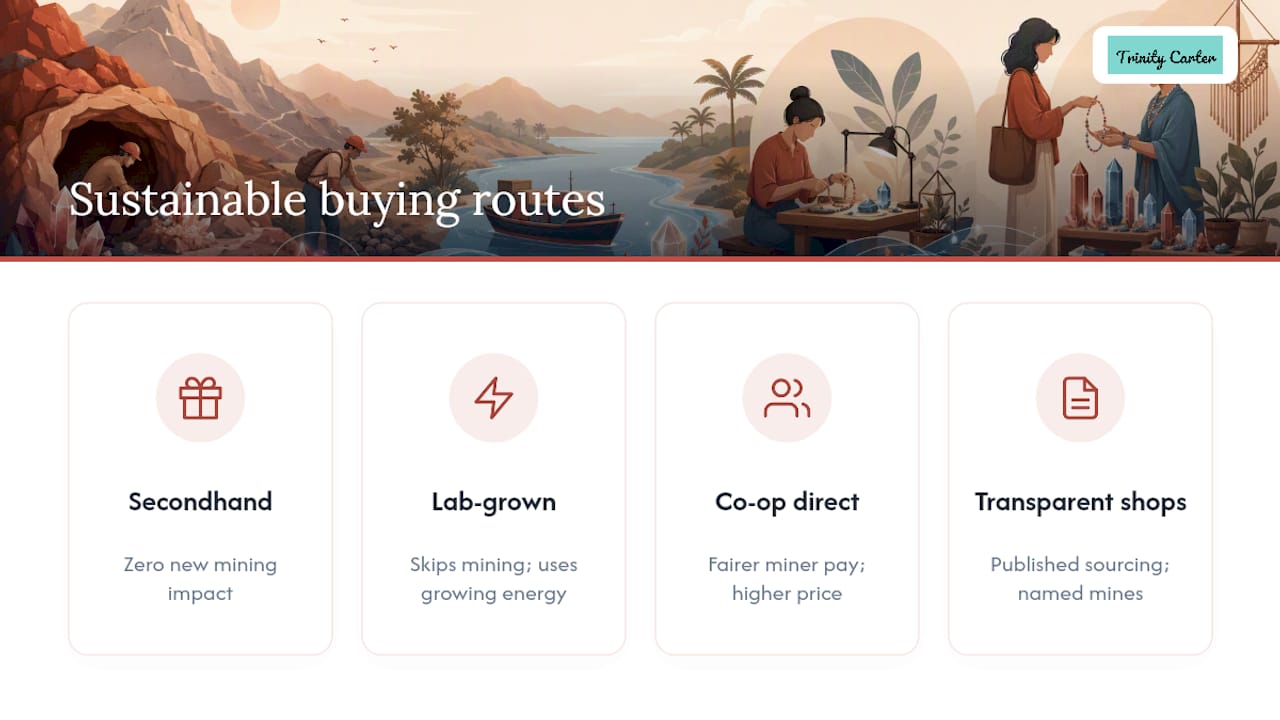
Secondhand and estate stones carry zero new mining impact, since the environmental and labor cost was already incurred years or decades ago. Estate sales, vintage jewelry shops, and mineral shows are the best places to find them, and National Geographic specifically recommends this route alongside local rockhounding or pay-to-dig sites for anyone who wants to build a collection with minimal new impact.
Lab-grown crystals skip the mine entirely, which eliminates labor and land-use concerns at the extraction stage. The trade-off is energy consumption during growth, since lab-grown stones require controlled heat and pressure environments that draw real power. Per CrystalStones.com, lab-grown options also mean no income flows to mining communities at all, which matters if part of your goal is supporting those workers rather than just avoiding harm. Ask a lab-grown seller about their energy source and production process before assuming “lab-grown” automatically means “low-impact.”
Cooperative-direct sellers buy straight from named mining cooperatives, often at prices that reflect fairer miner pay rather than the steepest possible margin. Expect these stones to cost somewhat more than mass-market listings; that price difference is frequently the clearest evidence the seller isn’t cutting corners on labor.
Small ethical shops built around transparency function similarly, typically publishing sourcing stories, mine names, and sometimes photos of the people doing the actual work.
A newly mined stone can still be an ethical purchase. Traceability and fair pricing matter more than whether the stone is new or recycled. The real disqualifier isn’t age. It’s silence about origin.
Verifying Claims: Documents, Return Policies, and Price Checks
A seller’s claims are worth exactly as much as the paperwork behind them. Before buying, request:
- An origin certificate or written statement naming the country, region, and ideally the specific mine
- The name of the miner or cooperative the seller sources from directly
- Sourcing photos taken at or near the mine, not stock imagery
- Any third-party audit reports, where they exist, particularly for larger sellers
A clear, generous return policy is a quieter but genuinely useful trust signal. Sellers confident in their sourcing and grading tend to offer straightforward returns, because they aren’t worried about a buyer discovering something that contradicts the listing. Honest disclosure of treatment, whether a stone has been dyed, heated, or stabilized, belongs in the same category. A seller willing to tell you what’s been done to a stone is more likely telling you the truth about where it came from too.
Price benchmarking is the fastest gut check available. Search two or three other listings for the same stone type, size, and quality grade before buying. If one listing runs dramatically below the others, that gap usually reflects a shortcut somewhere in the supply chain, most often unpaid or underpaid labor at the mining stage rather than a genuine bargain.
Caring for Crystal Jewelry So It Lasts
A well-cared-for piece of jewelry can last years longer than multiple low-quality replacements, reducing environmental impact. That’s the ethical case for good care, on top of the practical one.
- Keep gold-plated pieces away from perfume, lotion, and chlorine, all of which wear plating down faster.
- Store crystal jewelry separately in a soft pouch to prevent scratching between harder and softer stones.
- Clean with a soft cloth and mild soap; skip ultrasonic cleaners on treated or porous stones.
- Get loose settings resized or repaired by a trusted local jeweler instead of replacing the piece outright.
Repair, not replacement, is often the more ethical choice once you already own something well made.
Trinity Carter’s Resources for Shoppers Evaluating Crystal Jewelry
Trinity Carter publishes buyer guides specifically to help shoppers evaluate material and sourcing claims before they spend money, not to push one answer over another.
- The best crystal jewelry guide walks through how to evaluate crystal pieces and sourcing claims in designer-inspired styles.
- The sale jewelry buyer’s guide covers how to assess quality and honesty on discounted listings, which is exactly where vague sourcing claims tend to hide.
- The cubic zirconia buying guide explains how simulated stones compare to natural crystals on both cost and sourcing transparency.
These guides exist to help you ask better questions, whether you end up buying from Trinity Carter or somewhere else entirely.
No Purchase Is Perfect, and That’s Fine
No crystal in the world comes with a flawless chain of custody, and chasing perfection usually just leads to giving up entirely. What actually reduces harm is smaller and more repeatable: asking the five checklist questions, favoring sellers who name their sources, and choosing secondhand or lab-grown when a claim doesn’t hold up. If you’ve got a sourcing question about a specific piece, ask the seller directly before you buy, not after.
— Trinity
Browse Trinity Carter’s Crystal-Accented Collections
Trinity Carter designs gold-plated bracelets, necklaces, rings, and earrings with crystal and floral details, built for everyday wear. Every piece is paired with the same educational buyer guides referenced throughout this article, so you’re never choosing blind.
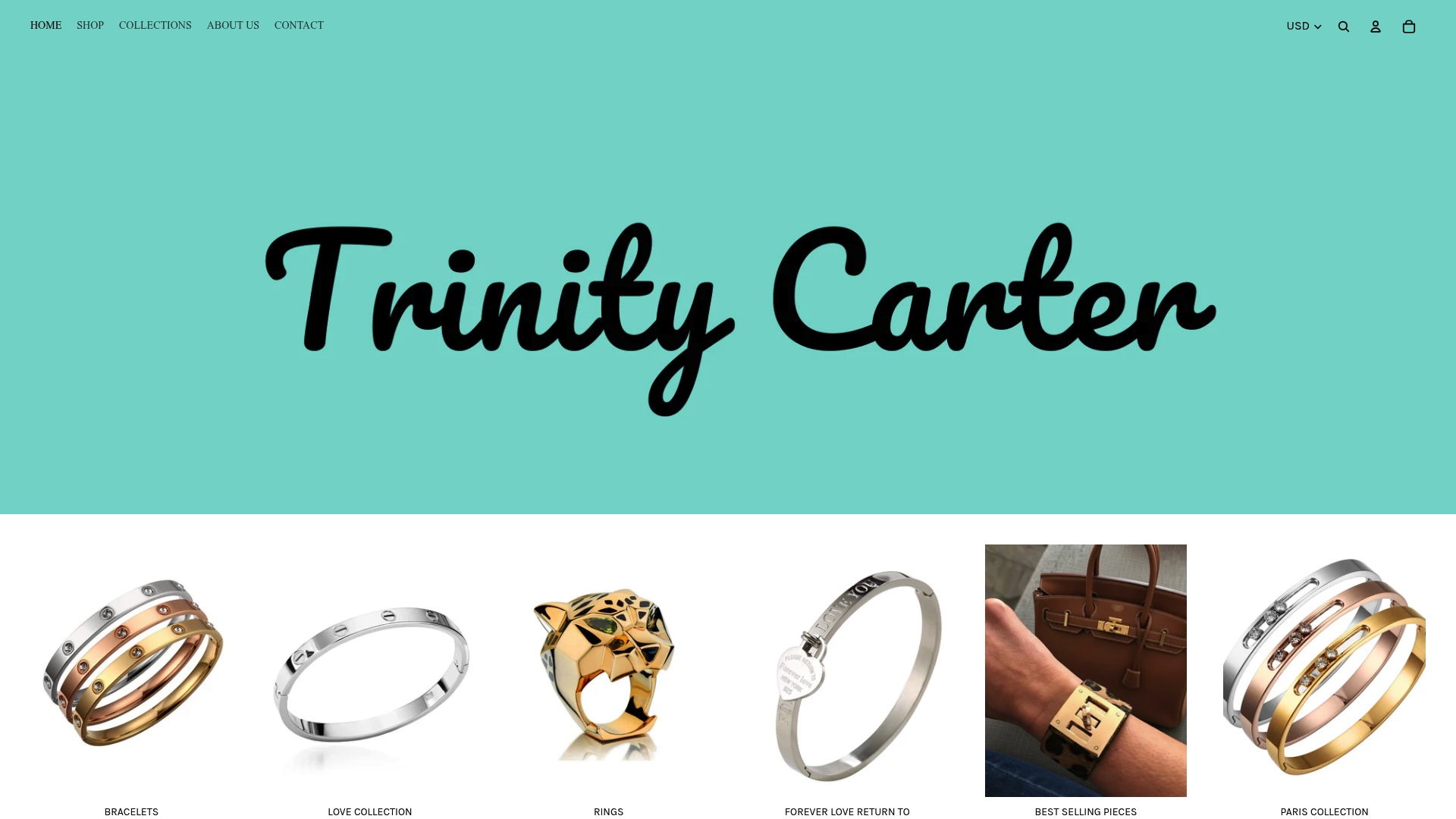
If you’re ready to look, the bracelets collection and necklaces collection both feature crystal-accented designs, including pieces like the Essential V Necklace Pendant for shoppers who want a simple, versatile starting point. Browse a piece, check the product details, and add it to your cart when you’re ready.
Sources
- How to buy crystals that don’t harm people or the planet | National Geographic
- Crystalstones
- I couldn’t see the bad karma behind my healing crystals | SBS Voices
- Dark crystals: the brutal reality behind a booming wellness craze | The Guardian
FAQ
Where can I buy ethically sourced crystals?
Look for sellers who name a specific country, region, or mine and can show sourcing photos or a cooperative relationship, since these are the strongest available trust signals in a market with no universal certification. Estate sales, mineral shows, and small transparency-focused shops tend to outperform large marketplaces on this measure.
Can crystals be ethically sourced?
Yes, when the mine or cooperative is disclosed, workers are fairly paid, and the environmental footprint is managed responsibly. National Geographic’s reporting confirms this is achievable but not automatic, which is why verification matters more than the price tag or the seller’s marketing language.
What did the Bible say about crystals?
Crystals and gemstones appear in several biblical passages, most notably in descriptions of the New Jerusalem’s foundations and the priestly breastplate in Exodus, where specific stones symbolized the twelve tribes of Israel. These references treat the stones as symbolic and decorative rather than as guidance on sourcing or ethics.
Which jewelry manufacturers are ethical?
No single manufacturer list covers the entire crystal and jewelry trade, since certifications like RJC, Fairmined, and Fair Trade remain uncommon industry-wide. Trinity Carter publishes buyer guides to help shoppers evaluate sourcing and material claims for themselves rather than relying on a single seal of approval.
