

Rhodium plated jewelry is a piece of white gold, sterling silver, or another metal coated with a thin layer of rhodium to make it brighter and more scratch resistant. It’s a genuinely good choice for most buyers: the finish is hypoallergenic, resists tarnish better than bare silver, and gives white gold that bright, icy shine it can’t achieve on its own. The catch is that plating isn’t permanent. It wears down over months or years and eventually needs replating.
TL;DR:
- Rhodium plating on jewelry typically lasts between 6 months and 2 years for rings, with less frequent wear extending lifespan.
- Thinner coatings wear out faster, and thicker layers, although more durable, come with higher costs and longer application times.
- Replating involves cleaning, polishing, and electroplating, which can usually be done within hours to days and scaled in price based on the piece size.
- Proper care, including gentle cleaning, avoiding chemicals, and separate storage, can significantly extend the plating’s brightness and durability.
- Rhodium plating is most beneficial on white gold and sterling silver, but not suitable for antique engraved pieces or jewelry with porous or heat-sensitive stones.
Table of Contents
- What Is Rhodium and Why Do Jewelers Use It?
- How Is Rhodium Plating Applied?
- Benefits and Trade-Offs of Rhodium Plated Jewelry
- How Long Does Rhodium Plating Last?
- How to Care for Rhodium Plated Jewelry
- Is Rhodium Plating Right for You?
- Our perspective on plating and upkeep
- A Lower-Maintenance Alternative Worth Considering
- Sources
- FAQ
What Is Rhodium and Why Do Jewelers Use It?
Rhodium belongs to the platinum group of metals, along with platinum, palladium, and iridium. It’s naturally silvery white, extremely hard, and resistant to corrosion. It’s also rarer and more expensive than gold by weight, which is exactly why jewelers never build a whole ring or bracelet out of solid rhodium. Instead, they apply it as a thin surface coating over a cheaper or softer base metal, getting rhodium’s brightness and hardness without the cost of using it in bulk.
Common applications include:
- White gold — rhodium plating gives it a crisp, bright white finish, since white gold on its own has a faint yellowish or gray cast.
- Sterling silver — plating adds a harder, shinier surface and slows down tarnish.
- Black rhodium — a specialty finish used for dark, gunmetal style accents on rings and men’s jewelry.
How Is Rhodium Plating Applied?
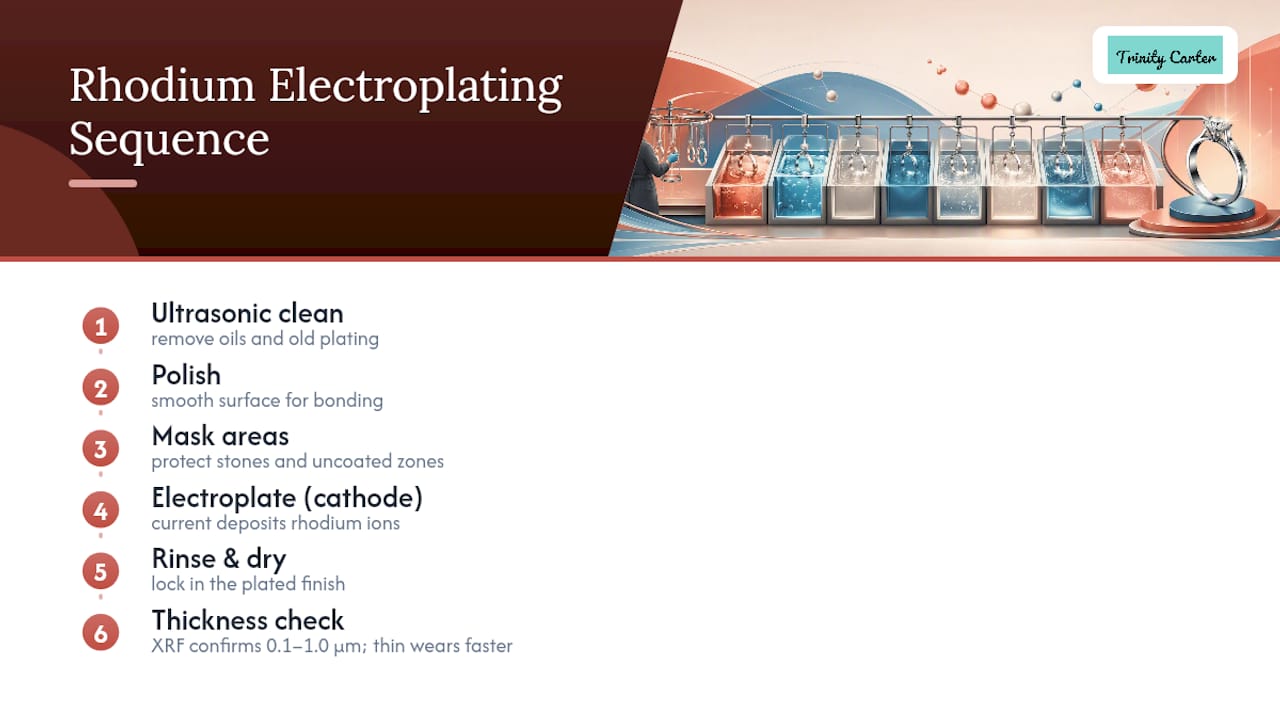
Rhodium plating is applied through electroplating, a controlled chemical process rather than a simple dip or spray. The piece is first cleaned in an ultrasonic bath to strip oils, polish residue, and old plating, then polished so the new layer has a smooth surface to bond to. Delicate stones or areas that shouldn’t be coated get masked off first.
During plating, the jewelry acts as the cathode in a rhodium solution, with an electrical current pulling rhodium ions onto the metal’s surface. Jewelers control the current and immersion time carefully, because that’s what determines thickness. After plating, the piece is rinsed and dried to lock in the finish.
Industry practice typically keeps rhodium plate thickness in the 0.1 to 1.0 micron range. Thinner coatings wear through faster; thicker ones last longer but cost more to apply. A reputable shop can confirm thickness with X-ray fluorescence testing rather than just eyeballing the shine, which is the clearest way to separate a quality plating job from a rushed one.
Benefits and Trade-Offs of Rhodium Plated Jewelry
The appeal is obvious the moment you see it next to unplated silver or white gold: rhodium gives the brightest, whitest finish available in jewelry and a hard, scratch-resistant surface. Because rhodium doesn’t react with skin, it creates a non-reactive barrier that’s often recommended for people with nickel sensitivities, letting them wear rings and bracelets that would otherwise irritate their skin.
But the trade-offs are real, and they matter more the more you wear the piece.
- Wear at friction points — rings thin out fastest since they’re constantly rubbing against hands, tools, and fabric.
- Color mismatch when it wears through — white gold underneath can look slightly yellow or gray once the rhodium wears away, which surprises people who assumed the metal itself changed color.
- Cost and time of replating — it’s routine maintenance, not a defect, but it’s an ongoing cost most buyers don’t budget for upfront.
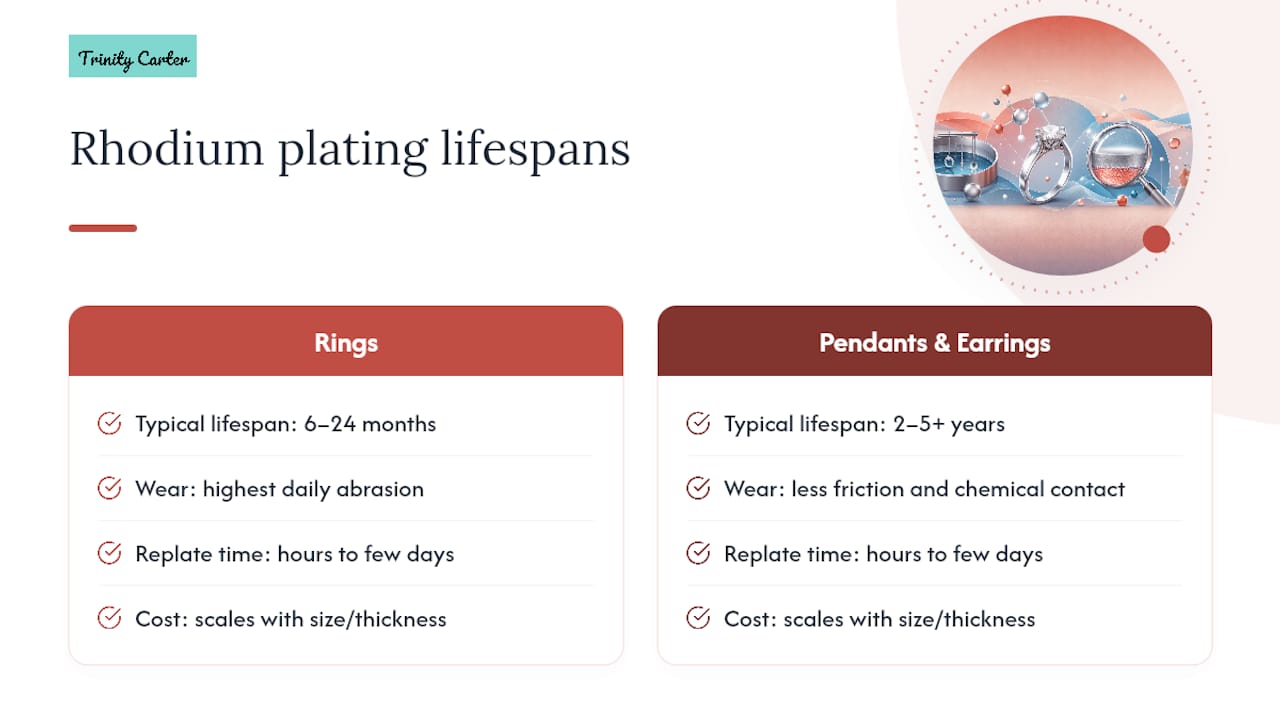
Typical lifespan: most rhodium plated pieces hold their brightness for 6 months to a few years depending on how often they’re worn and what they’re exposed to. That range is wide on purpose. A ring worn daily during manual work lives on the short end; a pendant worn occasionally lives on the long end.
How Long Does Rhodium Plating Last?
Lifespan depends heavily on what type of jewelry it is and how you treat it. Rings tend to need replating every 6 to 24 months since hands take the most daily abuse of any body part. Pendants and earrings usually hold up 2 to 5 years or longer, since they see far less friction and chemical contact.
Four factors drive most of that variation: how thick the original plate was, how much abrasion the piece takes, how often it’s exposed to chemicals, and your individual skin chemistry, since some people’s natural oils and pH break down plating faster than others.
Replating itself is straightforward. A jeweler polishes off the worn rhodium, cleans the piece, and runs it through the same electroplating process used originally. Turnaround is usually a matter of hours to a few days, and cost scales with the size of the piece and the thickness requested. Think of it the same way you’d think of resoling a good pair of shoes: not a failure, just upkeep.
How to Care for Rhodium Plated Jewelry
Extending the life of a rhodium finish comes down to a handful of habits, most of which take zero extra time once they’re routine.
- Clean gently. Lukewarm water, a drop of mild soap, and a soft cloth is all rhodium needs. Skip jewelry dips and toothpaste, both of which are abrasive enough to strip the thin coating over time.
- Keep chemicals away from it. Chlorine, household cleaners, perfume, and lotion all degrade plating faster than normal wear does, so put jewelry on last and take it off before cleaning or swimming.
- Store pieces separately. Tossing rings and bracelets into one dish lets them scratch each other; a lined box or soft pouch prevents that.
- Watch for dulling. When a once bright piece starts looking slightly cloudy or gray, that’s your cue to book a replating appointment before the base metal shows through.
Pro Tip: Take rings off before gardening, cleaning, or gym sessions. Those three activities cause more plating wear than a year of normal wear combined.
Is Rhodium Plating Right for You?
It depends heavily on the base metal. White gold benefits the most, since rhodium is what gives it that bright white look in the first place. Sterling silver also gains real value from plating, since it slows tarnish considerably. Platinum rarely needs it at all, given the metal’s natural white color and durability.
Skip plating on antique pieces with fine engraving, since repeated polishing before replating gradually softens sharp detail. It’s also worth avoiding on jewelry set with porous or heat-sensitive stones, since the plating process can affect them. If low maintenance matters more to you than the absolute brightest finish, an unplated metal might serve you better long term.
Our perspective on plating and upkeep
Rhodium plating rewards buyers who understand it as maintenance, not a one-time purchase decision. Experience with plated finishes suggests that a realistic care routine matters more than the initial shine. Anyone weighing options for sensitive skin should also look at how a piece holds up over months of real wear, not just how it looks on day one.
— Trinity
A Lower-Maintenance Alternative Worth Considering
If replating cycles and chemical restrictions sound like more upkeep than you want, some gold plated collections give a similar bright, polished look with fewer maintenance rules to remember.
Our pieces are built with clear care guidance from the start, so you know exactly what to expect before you buy, not after the shine fades. Our guide on how to clean plated jewelry walks through the same gentle habits that protect rhodium, and it applies just as well to our rings and necklaces. If you’re drawn to a bright white look specifically, our Essential V Necklace Pendant is a good place to start. Browse the current collection or reach out to our customer service team with any care questions before you check out.
Sources
- Rhodium Plating — Electroplating FAQs (Artisan Plating)
- How long will rhodium plating last? (The Diamond Guys)
- Rhodium Plating — The Electroplating Process Behind White-Metal Finish (SkyJems)
FAQ
Is Rhodium Plated Jewelry Good?
Yes, for most buyers. It gives white gold and sterling silver a brighter finish and adds a hypoallergenic barrier, though it isn’t permanent and needs periodic replating.
How Long Will Rhodium Plated Jewelry Last?
Rings typically last 6 to 24 months before needing replating, while pendants and earrings can hold their shine for 2 to 5 years or more depending on how often they’re worn.
Is Rhodium More Expensive Than Gold?
Rhodium costs more than gold by weight, which is exactly why it’s applied as a thin plated layer instead of used to make a solid piece of jewelry.
Does Rhodium Plated Jewelry Tarnish?
Rhodium itself resists tarnish well, but once the thin layer wears away, the base metal underneath can tarnish or show a different color where the coating has thinned.
