

Yes, gold-plated jewelry can tarnish. It happens once the thin gold layer wears down or the base metal underneath reacts to moisture, chemicals, or friction. How fast depends on plating thickness, the metal underneath, and how often the piece meets water, lotion, or sweat. Wipe pieces dry after wear, store them separately, and if you see the base metal peeking through, it’s time to think about replating rather than more cleaning.
TL;DR:
- Heavy plating or vermeil lasts longer, typically several years, especially with proper care and limited exposure to water and chemicals.
- Tarnishing occurs when the gold layer wears through or the base metal reacts to moisture, sweat, and chemicals, which speeds up with frequent contact and poor storage.
- Regular care involves applying products first, removing jewelry before water, storing dry separately, and cleaning gently with mild soap and microfiber cloths; abrasive cleaners damage plating.
- Once the gold layer is gone and cleaning no longer helps, replating by a professional is necessary, unless replacing the piece is more practical for inexpensive jewelry.
- Higher-quality jewelry with thicker plating and barrier layers is more resistant to tarnish and designed for regular wear, making it a better investment for longevity.
Table of Contents
- What “Gold-Plated” Actually Means
- Why Does Gold-Plated Jewelry Tarnish in the First Place?
- How Long Does Gold-Plated Jewelry Actually Last?
- How to Care for and Clean Gold-Plated Jewelry
- When Cleaning Won’t Help and Replating Becomes the Answer
- The Bottom Line on Gold-Plated Tarnish
- What I Tell Everyone Who Asks About Plated Jewelry
- Shop Gold-Plated Pieces Built for Real Wear
- Sources
What “Gold-Plated” Actually Means
Gold plating is a thin layer of real gold bonded to a base metal underneath, usually through electroplating. That base metal is doing most of the structural work. The gold on top is closer to a finish than a foundation.
Most fashion jewelry uses brass or copper as the core, though sterling silver shows up in higher-end plated pieces. Manufacturers often add a barrier layer, typically nickel or rhodium, between the base metal and the gold. That barrier slows down a process called diffusion, where atoms from the base metal migrate upward through the gold over time.
Thickness matters more than most shoppers realize:
- Standard gold plating is thin, similar to a coat of paint.
- Heavier gold plating, sometimes called “HGE,” features a thicker layer that holds up noticeably longer.
- Gold vermeil requires sterling silver underneath and a thicker gold layer by regulation, which is why it tends to outlast standard plating.
A detailed breakdown of how plating is made and how long it typically lasts goes deeper into the manufacturing side if you want the full picture before you buy.
Why Does Gold-Plated Jewelry Tarnish in the First Place?
Gold itself doesn’t tarnish. It’s one of the least reactive metals on the periodic table, which is exactly why solid gold jewelry can survive centuries in a shipwreck and still shine. The problem isn’t the gold. It’s everything underneath it.
Once the plating thins from wear, the base metal gets exposed to air, moisture, and skin oils, and that’s when you get the dulling, discoloration, or greenish tint people associate with “cheap” jewelry. There’s also a quieter process happening even before the surface wears through: silver or copper atoms can slowly diffuse upward through the gold layer itself, causing the color to shift gradually rather than all at once. Barrier layers like rhodium or nickel exist specifically to slow that migration, which is why better-made pieces resist tarnish longer even at similar plating thickness.
A handful of everyday culprits speed up the whole process:
- Sweat and body chemistry, especially around rings and bracelets that sit against skin all day.
- Perfume, lotion, and hairspray applied after the jewelry is already on.
- Chlorinated pool water and saltwater, both of which are harsh on thin metal coatings.
- Humidity and damp storage, which accelerate oxidation of the base metal.
- Abrasive cleaning or constant rubbing against clothing, skin, or other jewelry.
Pro Tip: Rings and bracelets tarnish faster than earrings or pendants simply because they take more physical contact. If you want to see where plating fails first, check the inside of a ring band or the clasp of a bracelet.
How Long Does Gold-Plated Jewelry Actually Last?
There’s no single answer, but there are realistic ranges. Plated jewelry is a budget-friendly alternative to solid gold, and with reasonable care it holds its appearance from a few months up to several years, not indefinitely.
A few factors decide which end of that range you land on:
- Daily wear vs. occasional wear. A necklace worn every day at the gym and shower will fade faster than a pair of earrings saved for special occasions.
- Plating thickness. Standard plating might show wear within months; heavy plating or vermeil often lasts a few years before needing attention.
- Base metal quality. Cheaper base alloys corrode faster once exposed, which speeds up visible tarnish even on a well-plated piece.
- High-friction spots. Ring shanks, clasp mechanisms, and bracelet undersides wear through first, long before the rest of the piece shows any change.
The clearest sign the gold layer is gone is a color shift that doesn’t wipe away, or a faint metallic gray or copper tone showing at contact points. A closer look at how long 14K gold-plated pieces typically hold up walks through what normal wear looks like versus early plating failure.
How to Care for and Clean Gold-Plated Jewelry
Most tarnish is preventable, not inevitable. The habits that matter happen before the jewelry even needs cleaning.
- Put jewelry on last. Apply lotion, perfume, and hairspray first, then add your rings, necklace, and earrings once everything else has settled.
- Take it off before water. Showers, pools, dishwashing, and workouts all accelerate tarnish, so slip pieces off beforehand.
- Store pieces dry and separated. A jewelry box with individual compartments, or soft pouches, keeps pieces from scratching each other. Anti-tarnish strips or a small silica gel packet in the drawer cut down on humidity exposure.
- Clean with mild soap and lukewarm water. A soft cloth dipped in a mild dish soap and lukewarm water solution, followed by a gentle pat dry with a microfiber cloth, is the safest routine for regular upkeep.
- Skip the kitchen-cabinet hacks. Toothpaste, baking soda, and vinegar are abrasive or acidic enough to strip plating outright, and they show up constantly in DIY cleaning advice that simply doesn’t apply to plated metal.
Pro Tip: For spot cleaning between full washes, breathe on the metal like you’re fogging a mirror, then buff gently with a dry microfiber cloth. It lifts light oils without any liquid or rubbing.
A full walkthrough on cleaning plated jewelry without dulling the finish covers technique in more detail if a piece needs more than a quick wipe.
When Cleaning Won’t Help and Replating Becomes the Answer
Cleaning fixes surface soil. It does not put gold back on a piece that’s worn through. If you’ve gently washed a piece and the discoloration is still there, or you can see a different metal color at the edges or high-contact points, the plating itself is gone, not just dirty.
At that point, replating is the real fix. A jeweler strips the piece down and applies a fresh layer of gold through electroplating, which is not a DIY project since it requires the right equipment and chemicals. Expect the jeweler to inspect the base metal first, since replating only makes sense if the underlying piece is still structurally sound.
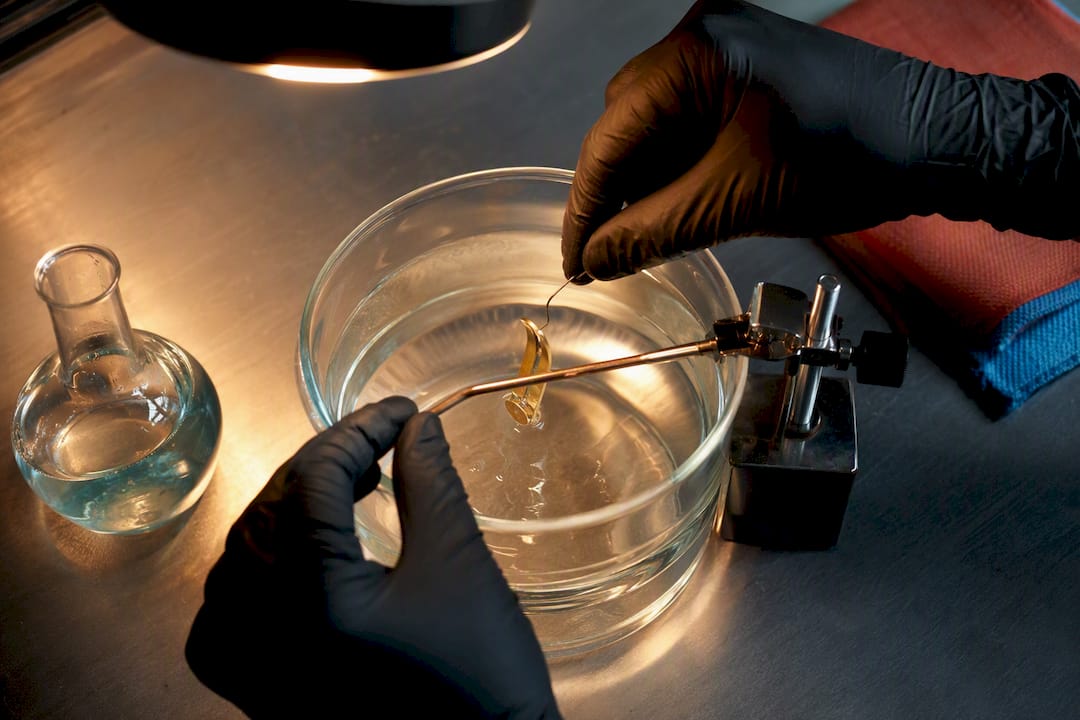
For sentimental pieces or ones with real design value, replating is usually worth it. For inexpensive fashion pieces that have run their course, replacing them is often the more practical call.
The Bottom Line on Gold-Plated Tarnish
Gold-plated jewelry tarnishes when the thin gold layer wears away or the base metal underneath reacts to moisture and chemicals. The three habits that slow it down most: keep pieces dry, apply products before jewelry goes on, and store items separately with an anti-tarnish strip nearby.
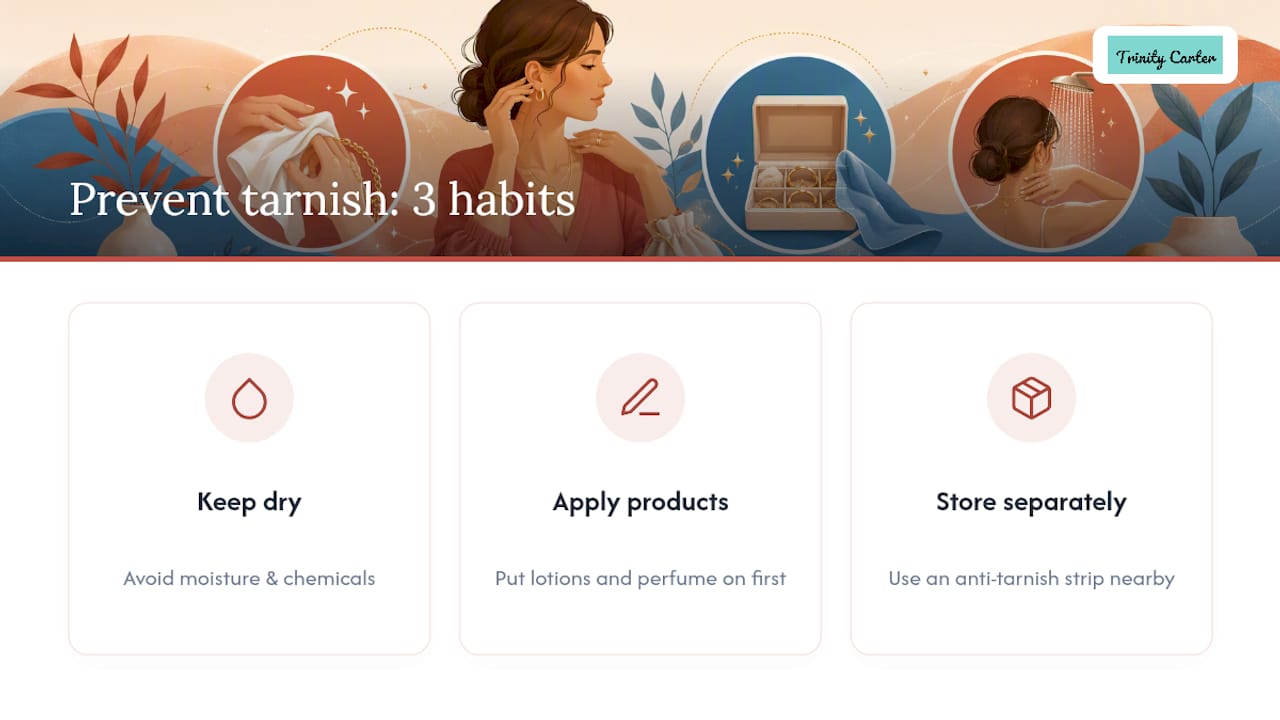
As a rule of thumb, expect months to a few years of good looks depending on plating quality and how often you wear the piece. Once the base metal shows through and cleaning doesn’t help, replating is the next step. Trinity Carter’s care guides go deeper if you want specifics for a particular piece.
What I Tell Everyone Who Asks About Plated Jewelry
The biggest misconception I run into is that tarnish means the jewelry was cheap or poorly made. Sometimes that’s true, but often it’s just physics. Any surface-coated piece, no matter the brand, will eventually show its base metal if you’re not looking after it. Knowing that upfront changes how you shop and how you care for what you already own.
We finish plated pieces with attention to thickness and barrier layers precisely because that’s what separates a ring that looks good for a season from one that looks good for years. Affordable doesn’t have to mean disposable, but it does mean you’re a partner in how long the piece lasts. Treat it well and it will hold up its end of the deal.
— Trinity
Shop Gold-Plated Pieces Built for Real Wear
If you’re picking new jewelry with everything above in mind, look for heavier plating or vermeil construction if longevity matters more to you than price. Trinity Carter’s bracelet collection and necklace collection are finished with barrier layers designed to resist the diffusion and daily wear that cause most tarnish complaints.
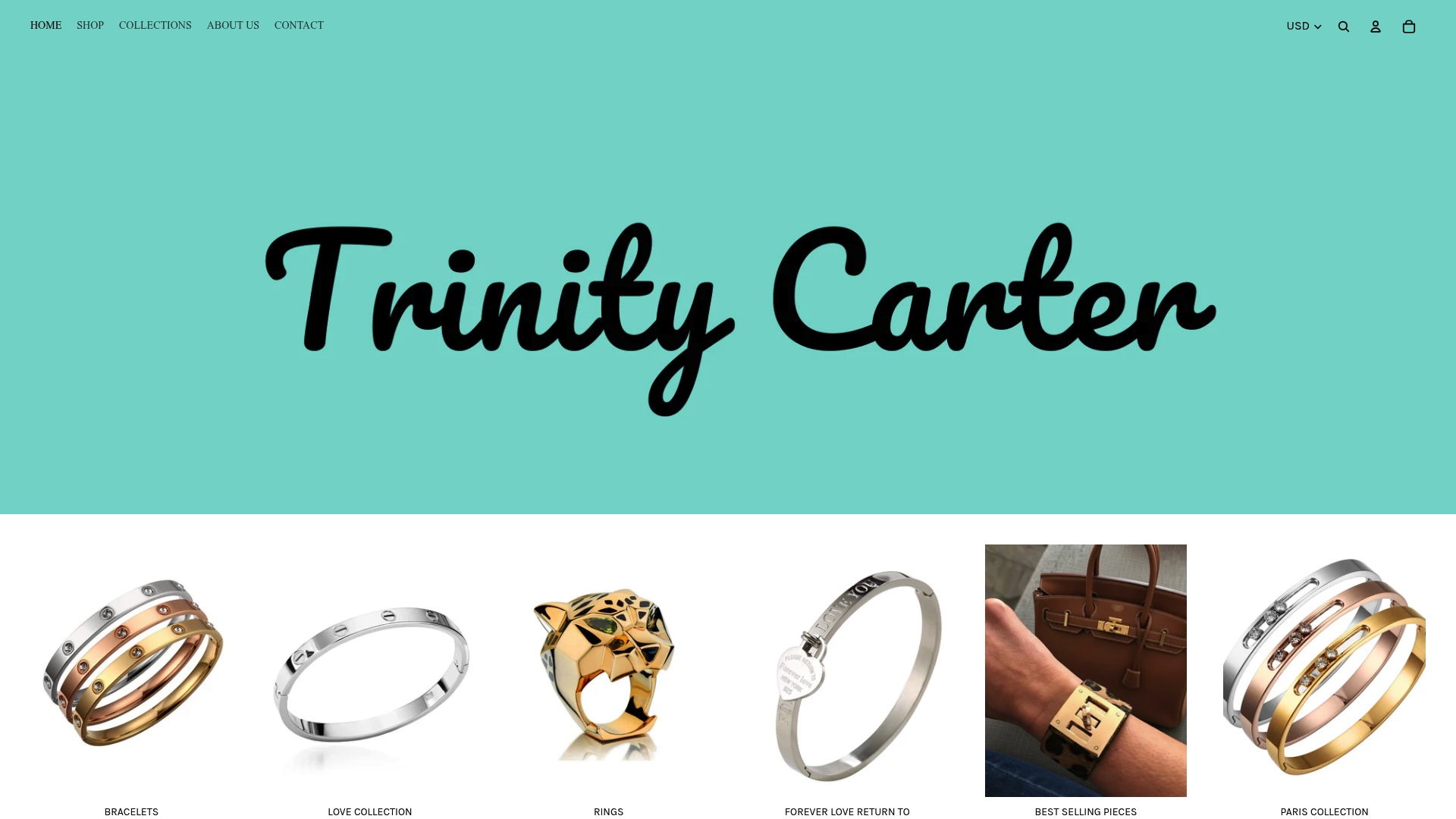
If you’re drawn to layered pieces or stackable rings, the rings collection is worth a look, since ring shanks take the most friction of any jewelry type and benefit most from quality plating. For something specific, the Essential V Bracelet and Blossom Flowergram Ring are both built with the thicker plating we recommend for everyday wear. Pair anything you order with the cleaning guide so it stays looking new for as long as possible.
Sources
- Gold plating — Wikipedia
- How to clean gold-plated jewelry | The Spruce
- How to Restore Gold-Plated Jewelry at Home (Safely) | BriteCo
