

Gold plated jewelry typically lasts for a variable period depending mostly on plating thickness and how often the piece touches skin, water, or fabric. A ring worn daily wears out fastest; a pendant worn occasionally can hold its shine for years. Good care and periodic replating stretch that window considerably.
TL;DR:
- Gold plating thinner than 1 micron tends to show wear within months, especially on rings and bracelets that experience frequent friction.
- Base metals like brass or copper tarnish faster than stainless steel or sterling silver, which resist wear longer.
- Pieces with 2 to 3 microns of gold plating can last one to three years with proper care, while vermeil can last several years or even a decade.
- Daily contact with water, sweat, perfume, or chemicals significantly accelerates tarnishing and the wearing away of the gold layer.
- Replating is recommended once the gold shows signs of dullness, base metal exposure, or patchy discoloration, typically after six months to a year depending on wear.
Table of Contents
- What Is Gold Plated Jewelry and How Is It Made?
- What Factors Determine How Long Plated Jewelry Lasts?
- How Long Will Gold Plating Actually Last in Real Use?
- How Do You Make Gold Plated Jewelry Last Longer?
- When Should You Replate Gold Jewelry Instead of Replacing It?
- Plated vs Vermeil vs Gold Filled vs Solid Gold: Which Should You Buy?
- Trinity Carter Perspective: What We Recommend When Buying Plated Pieces
- Ready to Shop Gold Plated Styles Built for Everyday Wear?
- Sources
- FAQ
What Is Gold Plated Jewelry and How Is It Made?
Gold plated jewelry starts with a base metal, usually brass, copper, or stainless steel, then gets coated with a thin layer of real gold through electroplating. An electric current bonds gold particles onto the metal’s surface. Some manufacturers now use PVD, or vacuum plating, which bonds gold at the molecular level and tends to hold up better than traditional electroplating.
That gold layer gets measured in microns, and the number on a product listing tells you almost everything about expected durability. Flash plating involves very thin layers and wears thin fast. Standard plating has a moderate thickness. Heavy plating involves thicker layers.
Two terms often get confused with plating. Vermeil is sterling silver plated with a thicker gold layer, usually at least 2.5 microns by federal standard. Gold filled jewelry mechanically bonds a much thicker layer of gold to a base metal, no electricity involved, and it survives far longer than either option.
What Factors Determine How Long Plated Jewelry Lasts?
Micron thickness is the single most useful number on any product page. Anything under a half micron will show brass or copper peeking through within weeks of regular wear. At 1 micron, you’re looking at months of solid color before fading starts. At a thicker plating, a well cared for piece can hold its finish for an extended period.
Base metal matters almost as much. Brass and copper react with skin oils and sweat, which speeds up tarnishing underneath the gold layer. Stainless steel bases resist this reaction and tend to keep their plating looking newer, longer. Sterling silver, used in vermeil, sits in between.
Piece type changes everything, too. Rings and bracelets take constant friction against desks, phones, and fabric. Necklaces and earrings mostly avoid that contact, so they age slower even with the same plating.
- Thin plating (under 1 micron) shows wear fastest, especially on high contact pieces
- Brass and copper bases tarnish faster than stainless steel or sterling silver
- Rings and bracelets wear out sooner than necklaces and earrings under similar plating
- Water, sweat, perfume, and chemicals all strip gold layers faster than dry wear
- Poor adhesion during manufacturing causes early flaking regardless of micron count
Pro Tip: Before buying, check the listing for a stated micron thickness. If a seller won’t specify it, assume flash plating and price the piece accordingly.
How Long Will Gold Plating Actually Last in Real Use?
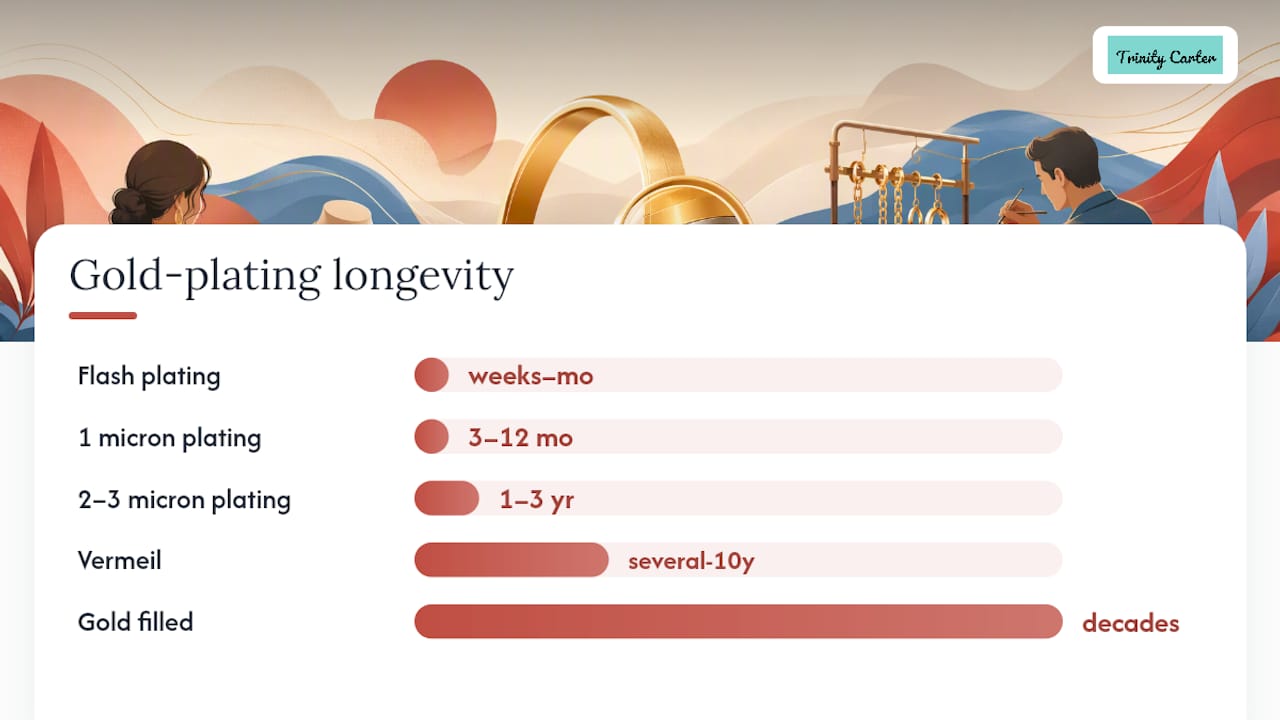
Numbers make the abstract concrete. A piece with roughly 1 micron of gold worn daily typically starts showing wear in three to six months. Heavier plating at 2 to 3 microns can push that out to one to three years with attentive care.
Flash plated pieces, the thinnest and cheapest category, often fade within weeks to a couple of months under daily contact. They’re built for a season of wear, not a decade.
- Flash plating: weeks to a few months of daily wear before visible fading
- 1 micron plating: three to twelve months depending on piece type and habits
- 2 to 3 micron plating: one to three years with careful, occasional removal for water and workouts
- Vermeil: several years, sometimes a decade with proper storage
- Gold filled: decades in many cases, closer to solid gold in longevity
Picture three real scenarios. A daily stacking ring in 1 micron plating will likely need attention inside a year, simply from friction against other jewelry and constant hand washing. A pendant necklace worn a few times a week in the same plating can look sharp for two years or more, since it never touches soap or lotion directly. A statement necklace worn daily against skin and clothing lands somewhere between those two, closer to the ring’s timeline than the occasional pendant’s.
How Do You Make Gold Plated Jewelry Last Longer?
Care habits matter as much as manufacturing quality, sometimes more. Water, sweat, and perfume all speed up how fast the gold layer wears away, so the biggest wins come from what you keep plated jewelry away from, not what you do to it afterward.
- Take it off before water contact. Showers, pools, hot tubs, and dish washing all accelerate tarnish. Put rings and bracelets on after you’re dry.
- Remove jewelry before workouts. Sweat is acidic and eats through thin plating faster than almost anything else you’ll encounter day to day.
- Apply lotion and perfume first. Let them absorb before putting jewelry on, since chemicals sitting directly against plating cause faster discoloration.
- Wipe pieces with a soft cloth after wear. This removes oils and residue before they have a chance to sit overnight.
- Store pieces separately in a dry pouch or lined box. Bathroom humidity and tangled jewelry drawers both shorten plating life.
- Skip abrasive polishes and jewelry cleaners with ammonia. These strip plating faster than the wear you’re trying to prevent.
Some people reach for clear nail polish as a topcoat to slow tarnishing. It works temporarily on inexpensive pieces, but it wears unevenly, yellows over time, and looks obvious up close. Save it for costume jewelry you’re not attached to, not a favorite piece worth protecting properly.
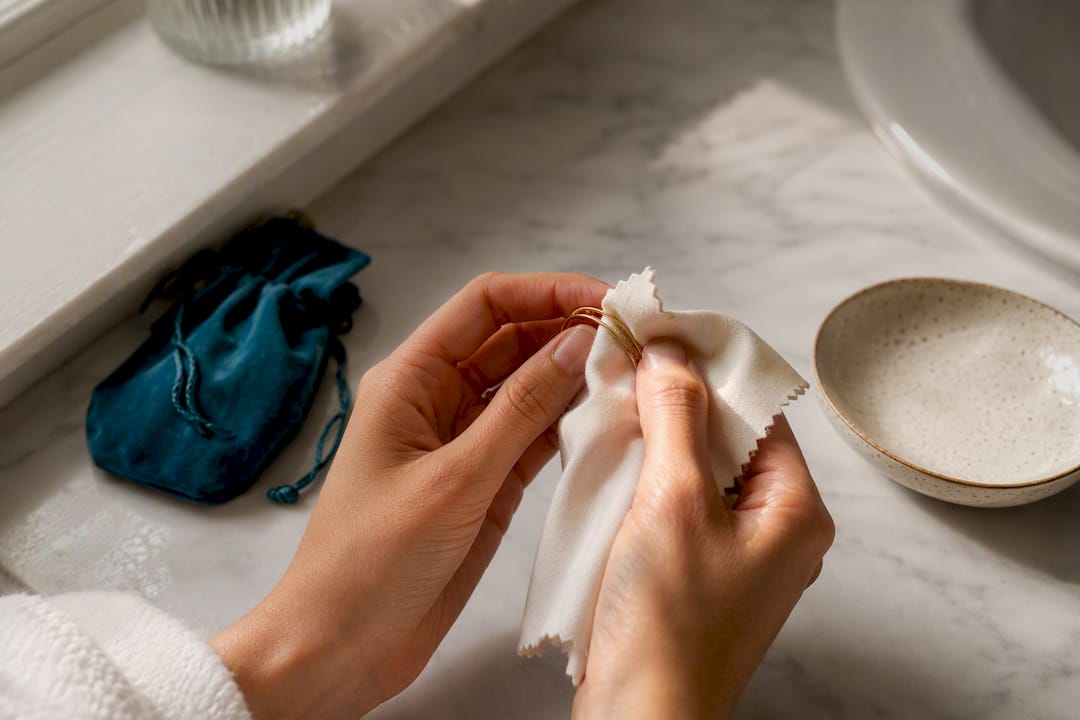
Pro Tip: Keep a soft polishing cloth in your bag or bathroom drawer. Wiping a ring or bracelet for ten seconds after you take it off does more for longevity than any cleaning product.
When Should You Replate Gold Jewelry Instead of Replacing It?
Fading, dulling, or a slightly pink or gray cast peeking through the gold are the clearest signs plating has worn thin. Once base metal shows at edges or high contact points, replating is usually worth it for a piece you still love wearing.
- Visible base metal showing through at edges, prongs, or the underside of rings
- Overall dulling that no longer responds to cleaning or polishing
- Discoloration that looks patchy rather than uniform across the surface
A jeweler strips the old plating, cleans the base metal, and reapplies a fresh gold layer, a process presented as routine maintenance rather than a rare repair. Turnaround typically runs a few days to two weeks depending on the jeweler’s queue. Costs vary widely by piece complexity, stone settings, and how many microns you’re requesting, so get a quote before assuming it’s not worth it. Replating restores shine but doesn’t change the underlying base metal, so pieces prone to fast wear may need it again down the road.
Plated vs Vermeil vs Gold Filled vs Solid Gold: Which Should You Buy?
Match the material to how you’ll actually wear the piece, not just the price tag. Standard plating suits trend pieces you’ll rotate out anyway, think seasonal statement earrings or a ring you bought to match one outfit. Vermeil and gold filled jewelry cost more upfront but last years to decades longer, which makes more sense for daily rings, wedding bands, or anything you want to hand down.
Choose based on intent: plated for affordable, on-trend style you’ll refresh periodically; vermeil or gold filled for daily wear pieces you want around for years; solid gold when budget allows and you never want to think about replating again. If a plated favorite starts fading, replating almost always costs less than replacing it with a higher grade material, unless you’ve decided it’s time to upgrade anyway.
Trinity Carter Perspective: What We Recommend When Buying Plated Pieces
The brand designs plated pieces to deliver designer-inspired style at a price point that makes trying new looks low risk. Read our breakdowns on what gold plating actually is and how 14K plated pieces hold up for deeper detail. Wipe pieces down after wear, store them dry, and replate favorites when they fade. That routine keeps plated jewelry looking good far longer than most people expect.
— Trinity
Ready to Shop Gold Plated Styles Built for Everyday Wear?
This brand designs plated pieces around the two things that actually determine how long they look good: thoughtful base metals and finishes meant for real, daily wear, not just photos. If durability matters more than trend cycling for a specific piece, our vermeil and gold filled comparison can help you decide which material fits your habits before you buy.
Browse the rings collection or necklaces collection to see current plated styles, including pieces like the Blossom Flowergram Ring. Every product page lists care guidance, so you know exactly how to keep a piece wearable for as long as possible before it ever needs replating.
Sources
- 15 Questions About Gold Plated Jewelry Answered — SageStone
- How long does gold plated jewelry last? — Brite
- How Long Does Gold Plated Jewelry Last? — SJ Jewellery
- Does gold plated jewelry tarnish? — Nelson Coleman Jewelers
FAQ
Is It Worth Buying Gold Plated Jewelry?
Yes, for trend pieces or occasional wear where you want designer-inspired style without the cost of solid gold. For daily heirloom pieces, vermeil or gold filled jewelry offers better long-term value.
Can You Shower With Gold Plated Jewelry?
It’s best to remove plated jewelry before showering, since water, soap, and steam all accelerate wear on the gold layer. Occasional exposure won’t ruin a piece immediately, but regular water contact shortens its lifespan noticeably.
What Are the Disadvantages of Gold Plated Jewelry?
The main drawback is that the gold layer eventually wears away, exposing the base metal underneath, typically within months to a few years depending on thickness and care. It also requires more maintenance than solid gold, including occasional replating to stay looking new.
Will Gold Plated Jewelry Tarnish?
Yes, most gold plated jewelry will tarnish or fade with regular wear as the thin gold layer wears thin and the base metal reacts to moisture and skin contact. Removing pieces before water exposure and wiping them after wear slows this process considerably.
